Library › Power & Strategy
Sita: An Illustrated Retelling of the Ramayana — Summary & Key Lessons
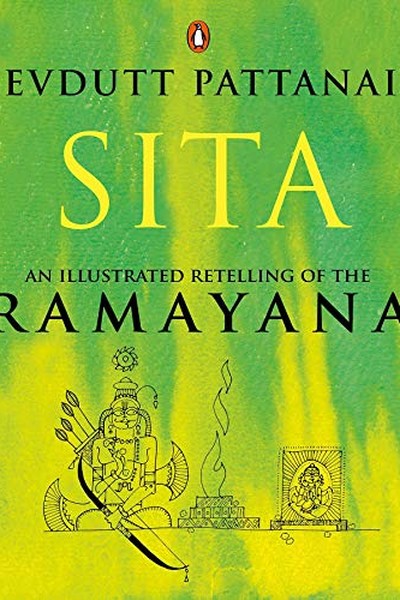
The Ramayana from Sita's seat — perspective is power.
📖 OPEN THE FULL INTERACTIVE BREAKDOWN →🌐 Read it in Hindi, Hinglish, Gujarati, Tamil & 22 more languages — free, with audio.
💡 The Big Idea
Pattanaik's retelling of the Ramayana from Sita's perspective is a radical re-reading: Sita is not a passive goddess waiting to be rescued but the story's most powerful thinker — the one who asks the questions, makes the choices, and embodies the ideal of 'Sita-tyaga' (conscious sacrifice as power, not victimhood). The book explores how the same events look entirely different from a different seat: what is 'rescue' from Ram's side is 'kidnapping' from Sita's; what is 'duty' to one is 'cruelty' to another. The lesson: perspective is the deepest form of wisdom — and the one who sees the whole story, not just their own part, is the true hero.
🧠 The 6 Key Lessons
Lesson 1: The Same Story, Different Seats: Perspective Is Power
Part 1: The Retelling
Pattanaik's core method: retell the familiar story from Sita's seat, and every event changes meaning. The lesson is universal: every situation has multiple valid perspectives, and the person who can hold them simultaneously makes wiser decisions. The meeting that looks like progress to the boss may look like erasure to the junior; the decision that looks fair to one party may look brutal to another. The leader who only sees their own seat is flying blind. Ask, before every judgment: how does this look from the other seats in the room?
📖 Example: The 'rescue' of Sita by Ram is, from her seat, a moment of profound humiliation — she is won in war, not freed in dignity. The same event, two truths, one story. Neither seat is wrong; each is partial. Read the full example →
⚡ Do this: Take your current biggest conflict and write it from the other person's seat — fully, fairly. Note what you learn that your seat hides.
Lesson 2: Silence Is Not Weakness: The Power of the Quiet Question
Part 2: The Questions
Pattanaik's Sita is not passive — she questions constantly, but quietly, and her questions are the story's engine: 'Why must I prove my purity?', 'Who decides what is right for me?'. The lesson: the most powerful people in any room are often the ones asking the questions, not giving the answers. Silence is not submission; it can be the deepest form of challenge. The person who can sit with discomfort and ask the question everyone is avoiding wields power that loud voices can't match. Questions are the spearheads of change.
📖 Example: Sita's quiet questions — about her husband's choices, about society's rules — quietly destabilize the story's certainties. She doesn't shout; she inquires — and the inquiry is the revolution. Read the full example →
⚡ Do this: In your next difficult conversation, ask one question the room is avoiding. Sit with the silence after it. The question is the power.
Lesson 3: Sita-tyaga: Conscious Sacrifice Is Not Victimhood
Part 3: The Sacrifice
Pattanaik's most controversial reframe: Sita's sacrifices are not victimhood but conscious choices — she knows what she's giving and why. 'Sita-tyaga' is the power to release what is costly to keep — status, comfort, even the husband who has wronged her — with full awareness. The lesson: sacrifice is empowering when chosen and destructive when imposed. The person who consciously releases what is no longer serving them — a job, a relationship, an identity — is exercising power; the person who is stripped of things they wanted is suffering. Choose your sacrifices; don't just endure them.
📖 Example: Sita's final choice — to return to the earth rather than live under a shadow — is presented not as defeat but as the ultimate conscious release: she decides her ending, no one else. The power is in the choosing. Read the full example →
⚡ Do this: Identify one thing you're 'enduring' that you could consciously release — a habit, a grudge, a role. Name the choice and make it deliberately this month.
Lesson 4: The Trial by Fire: Society's Judgment Is Not Truth
Part 4: The Fire
The Agni Pariksha — Sita's trial by fire — is Pattanaik's most pointed critique: a woman's worth subjected to public proof, while the accusers face no equivalent test. The lesson: social judgment is often a projection of power, not a measure of truth. The crowd that demands you prove yourself may be testing your obedience, not your virtue. The person who internalizes every public verdict becomes a puppet of the loudest voices. The mature response: know your own truth, and let the court of your own conscience be the only court that matters. Society's fire proves only society's assumptions.
📖 Example: Sita walks through fire to prove her purity — and the fire's verdict is decided before she enters, by the people who demanded the test. The trial measures the tester, not the tested. Read the full example →
⚡ Do this: Identify one 'trial' you've been performing for an audience — a proof you keep offering. Ask: who demanded this test, and what would happen if I stopped performing? Act on the answer.
Lesson 5: The Limits of Duty: When Obedience Becomes Complicity
Part 5: The Choice
Pattanaik's Ram is not a villain but a man trapped by his own dharma — and the book's question is whether duty can excuse cruelty. The lesson: duty without compassion is a machine, and the person who obeys every rule without questioning its human cost becomes the rule's enforcer, not its servant. The mature professional asks not only 'is this my duty?' but 'does this duty serve a human good?' — and when the two diverge, the divergence is the real decision. Obedience is a virtue only when the thing obeyed is virtuous.
📖 Example: Ram's decision to abandon Sita is 'correct' by the rules of kingship — and devastating by any human measure. The rule was followed; the human was lost. The gap between the two is the book's question to every reader. Read the full example →
⚡ Do this: List one 'duty' you follow without questioning. Ask: who does this duty serve, and who does it harm? If the answer is uncomfortable, name the discomfort — that's the decision waiting.
Lesson 6: The Goddess Within: The Feminine as the Story's Conscience
Part 6: The Balance
Pattanaik's closing argument: the Ramayana's deepest wisdom lives in its feminine voices — Sita's questions, the queens' counsel, the mothers' grief — which the masculine narrative of conquest constantly overlooks. The lesson: every system needs its conscience, and the perspectives excluded from power are often the ones that see clearest. The organization that listens only to its dominant voices makes dominant-sized errors; the one that includes the margins sees the whole. Balance is not charity — it is accuracy. The excluded seat is where the blind spot lives.
📖 Example: Every major decision in the Ramayana that excluded Sita's voice — the exile, the war, the abandonment — produced predictable tragedy. The voices that could have prevented each one were precisely the voices not consulted. Read the full example →
⚡ Do this: Identify the voice your team or family habitually excludes. Deliberately seek their perspective on your next significant decision — and let it change something.
✅ 5-Step Action Plan
- Write your current conflict from the other person's seat.
- Ask one question the room is avoiding — and sit with the silence.
- Consciously release one thing you've been enduring.
- Identify one 'trial' you perform for an audience — and stop.
- Seek the excluded voice on your next significant decision.
⚠️ When This Doesn't Work
Pattanaik's 'Sita's story is the story of every woman judged by others' standards' is the most feminist Ramayana retelling ever — and Sita's exile is the warning at its center: the queen who walked through fire for her husband was abandoned for the fear of what people would say. Pattanaik's illustration makes Sita's dignity radiant; the caveat is that the reader must not let the radiance hide the injustice. The book is a mirror for every leader: who are you willing to sacrifice to the court of public opinion? Sita's exile was not fate — it was a choice made by a man who valued reputation over love, and every version of that choice is still being made today.
💀 The Graveyard Proves It
🪷 Sita's Exile — The Queen Who Was Sacrificed to Reputation. Burn: A marriage shattered — the king kept his kingdom and lost his life's love. Read the full case study →
💬 Best Quotes from Sita: An Illustrated Retelling of the Ramayana
- “The same story, different seats — perspective is the deepest form of wisdom.”
- “Silence is not weakness; the quiet question is a spearhead.”
- “Society's fire proves only society's assumptions — know your own truth.”
Interactive version: mark lessons as read, listen in your language, share quote cards.