Library › Power & Strategy
The 48 Laws of Power — Summary & Key Lessons
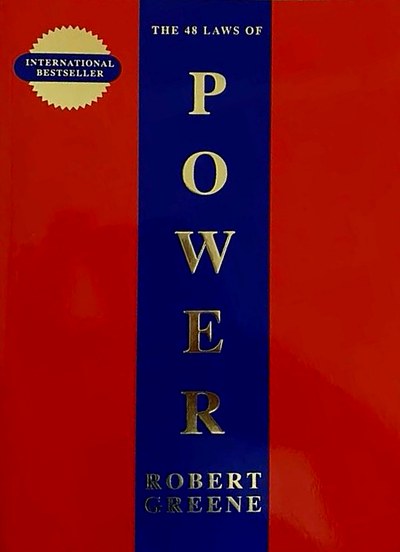
3,000 years of ruthless strategy distilled into 48 brutal laws of influence, defense, and dominance.
📖 OPEN THE FULL INTERACTIVE BREAKDOWN →🌐 Read it in Hindi, Hinglish, Gujarati, Tamil & 22 more languages — free, with audio.
💡 The Big Idea
Power is amoral — like electricity, it simply works for whoever understands it. Drawing on Machiavelli, Sun Tzu, and 3,000 years of court intrigue, Greene argues that social life is a game of strategy where appearances, emotions, and reputation matter more than good intentions. Whether you want to wield power or just avoid being crushed by it, you must know the laws.
🧠 The 16 Key Lessons
Lesson 1: Never Outshine the Master
Law 1
Make those above you feel superior. Displaying your talents too openly to a superior triggers insecurity and fear — and insecure superiors destroy brilliant subordinates. Make your masters appear more brilliant than they are and you will attain the heights of power. All masters want to appear more brilliant than other people.
📖 Example: Nicolas Fouquet, Louis XIV's finance minister, threw the most spectacular party France had ever seen to impress the king. Instead, Louis felt upstaged, arrested Fouquet on trumped-up charges, and jailed him for life. His replacement, Colbert, made sure every… Read the full example →
⚡ Do this: Let your boss take visible credit for wins. Present your best ideas so they seem to build on theirs. Shine — but never brighter than the person who controls your fate.
Lesson 2: Never Put Too Much Trust in Friends; Use Enemies
Law 2
Friends betray more quickly because envy and entitlement creep in — hire a friend and you'll discover the qualities they've been hiding. A former enemy, however, has more to prove and will be more loyal than a friend. Fear of falling back into disfavor keeps him sharp. Know how to use enemies for your own gain.
📖 Example: Byzantine emperor Michael III gave his best friend Basilius power and riches. Basilius grew entitled, then had Michael murdered and took the throne. Contrast: Abraham Lincoln famously filled his cabinet with rivals — men with everything to prove — and they… Read the full example →
⚡ Do this: Don't mix deep friendship and business by default. When you need loyalty, consider the capable rival who has something to prove.
Lesson 3: Conceal Your Intentions & Say Less Than Necessary
Laws 3 & 4
Keep people off-balance by never revealing the purpose behind your actions — if they don't know what you're up to, they can't prepare a defense. And once you're power's player, speak less: the more you say, the more common you appear and the more likely you say something foolish. Powerful people impress and intimidate by saying less. Silence makes others rush to fill the gap, revealing themselves.
📖 Example: Louis XIV would listen to ministers argue a case at length and reply only: 'I shall see.' Nobody ever knew where he stood, nobody could manipulate him, and everyone hung on his every word. Read the full example →
⚡ Do this: In your next negotiation, state your position briefly, then stop talking. Count the silence. Watch the other side fill it with concessions and information.
Lesson 4: Guard Your Reputation With Your Life
Law 5
Reputation is the cornerstone of power. Through reputation alone you can intimidate and win before a battle starts; once it cracks, you become vulnerable to attack from all sides. Build a reputation on one outstanding quality — reliability, brilliance, generosity — and make it your calling card. Meanwhile, learn to sow doubt in the reputations of your rivals, then stand aside and let public opinion do the work.
📖 Example: During the Three Kingdoms era, strategist Zhuge Liang — his city undefended — calmly sat on the wall playing a lute as an enemy army approached. His reputation for cunning traps was so fearsome the enemy general assumed an ambush and retreated from an empty… Read the full example →
⚡ Do this: Choose the one word you want attached to your name professionally. Audit everything public about you — does it reinforce that word or dilute it?
Lesson 5: Court Attention & Get Others to Do the Work
Laws 6 & 7
Everything is judged by appearance; what is unseen counts for nothing. Never let yourself get lost in the crowd — be more colorful, more mysterious, more bold than the bland masses. Any attention beats no attention. Then: use the wisdom and legwork of others to advance your cause. Never do yourself what others can do for you — but always take the credit skillfully. Your efficiency will appear godlike.
📖 Example: Thomas Edison mastered both laws: he staged spectacular public demonstrations (electrocuting an elephant to discredit rival AC current) while an army of unnamed engineers in his lab — including, famously, Nikola Tesla for a time — did much of the inventing… Read the full example →
⚡ Do this: Stop being modest about your work — package and present it memorably. And delegate ruthlessly: your job is the outcome and the narrative, not every task.
Lesson 6: Win Through Actions, Never Through Argument
Law 9
Any momentary triumph you think you've gained through argument is a Pyrrhic victory: the resentment you stir up lasts longer than any brief change of opinion. People don't want to be corrected — they want to feel right. It is far more powerful to get others to agree with you through your actions, demonstrations, and results, without saying a word.
📖 Example: An engineer told by a client that his bridge design would collapse didn't argue. He built a small-scale model and let the client watch it hold weight far beyond spec. The demonstration settled in seconds what a debate would have inflamed for weeks. Read the full example →
⚡ Do this: Next time you're tempted to win a debate, ask: can I demonstrate instead? Build the prototype, show the numbers, run the pilot. Let reality argue for you.
Lesson 7: Crush Your Enemy Totally & Avoid the Unhappy
Laws 10 & 15
Two survival laws. First: emotional states are as infectious as diseases — the perpetually miserable and unlucky will drown you with them; associate with the happy and fortunate instead. Second: if you must defeat a rival, leave nothing on the table. A half-crushed enemy recovers, nurses revenge, and strikes when you least expect it. More is lost through half-measures than through bold completion.
📖 Example: Chinese warlord Xiang Yu repeatedly spared his rival Liu Bang when he had him beaten. Liu Bang rebuilt, waited, and ultimately destroyed Xiang Yu — who fell on his own sword. Liu Bang founded the Han dynasty. Mercy toward a true rival cost Xiang Yu everything. Read the full example →
⚡ Do this: Audit your circle: who consistently drains you? Create distance. And in competition — finish decisively. Don't leave a resentful rival at half strength.
Lesson 8: Make Others Depend on You
Law 11
To maintain independence, you must be needed. The more you are relied upon, the more freedom you have. Make people depend on you for their happiness, prosperity, or function — and you have nothing to fear. Never teach them enough that they can do without you. The ultimate power is not what you hoard, but what others cannot get anywhere else.
📖 Example: Otto von Bismarck attached himself to weak king Frederick William IV and later Wilhelm I — making himself so indispensable to their rule that he, the 'servant,' effectively ran Prussia and unified Germany on his own terms. Read the full example →
⚡ Do this: Develop one rare, hard-to-replace skill at the intersection of two fields. Be the only person in the room who can do X — and keep sharpening it.
Lesson 9: Plan All the Way to the End
Law 29
The ending is everything. Most people are ruled by the moment — they react, improvise, and get blindsided. Plan all the way to your goal, accounting for every possible consequence, obstacle, and twist of fortune. When you know where the road leads, you're never overwhelmed by circumstance, and you know when to stop. Gently guide fortune by thinking far ahead.
📖 Example: In 1863, Otto von Bismarck engineered three short wars — against Denmark, Austria, then France — each planned years ahead, each ending exactly when he wanted. Crucially, after unifying Germany he stopped, refusing further conquest. He had planned the ending,… Read the full example →
⚡ Do this: For your current biggest goal, write the endgame first: what does 'done' look like, what could go wrong at each stage, and what is your exit point?
Lesson 10: Make Your Accomplishments Seem Effortless
Law 30
Your actions must seem natural and executed with ease — conceal the sweat, the practice, and the clever tricks behind your results. Visible effort invites scrutiny and makes success look attainable to imitators; effortlessness creates an aura of the superhuman. Teach no one your tricks or they will be used against you.
📖 Example: Harry Houdini spent months of brutal training holding his breath and manipulating locks with his toes — yet on stage every escape looked like magic performed casually. Rivals who revealed their mechanics were forgotten; Houdini became immortal. Read the full example →
⚡ Do this: Rehearse in private, deliver in public. Present your work polished and calm — never narrate how hard it was or exactly how you did it.
Lesson 11: Assume Formlessness
Law 48
The final law: everything with a fixed form is predictable, and everything predictable can be attacked. By being adaptable, fluid, and in motion — like water — you make yourself unattackable. Never bet on stability lasting; the moment you take a form your enemies can grasp, you're vulnerable. Power thrives on constant reinvention.
📖 Example: Sparta, the most rigid state in history, optimized everything for one form of land warfare. When the world changed around it — trade, navies, money — Sparta couldn't adapt and vanished. Meanwhile formless, flexible Athens shaped Western civilization. Read the full example →
⚡ Do this: Kill one rigid routine or identity label you've been defending. Every quarter, ask: where am I predictable? That's where you're vulnerable.
Lesson 12: Get Others to Come to You — Use Bait
Laws 8 & 12
When you force the other person to act, YOU are in control: make your opponent come to you, abandoning his own plans in the process, and lure him with fabulous gains. Impatience is the great weakness you exploit — the aggressive person who rushes at you burns energy and commits errors, while you sit calm and let him arrive on your ground. Pair this with Law 12: disarm through selective honesty and generosity. One sincere, well-timed gift or admission opens the gates of even the most suspicious mind, because a single honest gesture covers dozens of manipulations that follow. The essence of both laws: control the terrain and the emotional temperature before any contest begins.
📖 Example: Talleyrand, Napoleon's foreign minister, engineered Napoleon's escape from Elba by dangling irresistible bait — whispers that France wanted him back, that power was waiting. Napoleon rushed home... into the Hundred Days catastrophe that destroyed him… Read the full example →
⚡ Do this: In your next conflict, resist the urge to act first. Create a reason for the other side to come to you — a partial concession, an attractive opening — and negotiate on your home ground. Open a hard relationship with one act of disarming, genuine honesty.
Lesson 13: Avoid the Unhappy, Court the Powerful's Weakness
Laws 14 & 33
Two intelligence-gathering laws. Law 14: pose as a friend, work as a spy — every social encounter is a chance to gather priceless information; ask indirect questions, listen more than you speak, and let people reveal their plans and insecurities over drinks and small talk. Law 33: discover each man's thumbscrew — everyone has a weakness: an insecurity, an uncontrollable emotion, a secret pleasure, a need to be liked, a childhood gap that never filled. Once found, it's leverage you can use — or a vulnerability you can guard in yourself. The observant person at the dinner party owns everyone who came just to talk about themselves.
📖 Example: Joseph Duveen, the legendary art dealer, made a fortune from thumbscrews: before approaching tycoon Andrew Mellon, Duveen spent YEARS cultivating Mellon's staff, learning his tastes, his travel schedule, his aesthetic insecurities. He then 'accidentally'… Read the full example →
⚡ Do this: In your next three social conversations, flip the ratio: reveal little, ask much. Note what people volunteer about their frustrations and desires — you're building the most valuable database in your career. And write down your OWN thumbscrew; whoever finds it first should be you.
Lesson 14: Play the Perfect Courtier — Never Appear Too Perfect
Laws 24 & 46
The courtier thrives in a world of danger through indirection: he flatters without appearing to, yields to superiors gracefully, asserts power over others charmingly, and masters his emotions in public. Arrogance, complaining, cynicism, and visible ambition are courtier suicide. But Law 46 adds the crucial ceiling: never appear TOO perfect. Envy is the silent killer — it creates enemies who work in the dark, and unlike open rivals, they never announce themselves. The remedy: admit to harmless flaws, attribute wins to luck, ask for advice you don't need, and occasionally display a charming clumsiness. The truly powerful make their success look partly accidental — dazzling enough to admire, human enough to forgive.
📖 Example: The scientist and statesman contrast: Sir Walter Raleigh — brilliant at everything, poet, navigator, courtier, entrepreneur — flaunted every gift at Elizabeth's court and could not understand the growing wall of enemies his perfection built. They eventually… Read the full example →
⚡ Do this: This month, deliberately deflect one success ('honestly, the timing was lucky') and expose one harmless imperfection to colleagues. Watch defensiveness around you drop. Meanwhile audit your courtier basics: are you complaining upward? Outshining sideways? Fix the leak.
Lesson 15: Concentrate Your Forces & Master Timing
Laws 23 & 35
Intensity beats extensity every time (Law 23): concentrate your energies, resources, and attention at the single decisive point — a scattered portfolio of half-efforts loses to one overwhelming strike. Find the fattest cow — the single patron, market, or skill that will feed you for years — and milk it deeply rather than sampling everything. Then Law 35, the master's skill: never seem to be in a hurry — hurry betrays a lack of control over yourself and over time. Learn the three kinds of time: long time (patience while circumstances ripen), forced time (making others rush into mistakes while you wait), and end time (when the moment arrives, strike with total speed and no mercy). Power is as much WHEN as WHAT.
📖 Example: Concentration: the Rothschilds built Europe's greatest fortune by keeping the family's force unified — five brothers, five capitals, one indivisible interest, while rival houses diluted themselves across ventures and heirs. Timing: Joseph Fouché, the… Read the full example →
⚡ Do this: Name your single decisive point — the one skill, client, or project where doubled intensity would change everything — and pull resources from two scattered efforts to feed it. Then check your tempo: where are you visibly rushing? Slow the surface; let others mistake your patience for weakness while the timing ripens.
Lesson 16: Despise the Free Lunch & Enter Boldly
Laws 28 & 40
Law 40: what is offered for free is dangerous — it usually involves a hidden obligation, a trick, or the corrosive feeling of debt. The powerful pay their own way, and pay FULLY: generosity is a weapon and a signal; by paying full price you stay free of gratitude's leash, and by giving strategically you put others on it. Miserliness, meanwhile, is the anti-power aesthetic — the tightwad saves pennies and loses alliances. Law 28 is its bold twin: if you're going to act, act with audacity — everyone admires the bold and no one honors the timid. Hesitation creates gaps for doubt; boldness intimidates and creates its own momentum. Mistakes made boldly are corrected with more boldness; timidity begs to be attacked.
📖 Example: The free-lunch law in action: Francesco Borri, a 17th-century charlatan-healer, took NO payment from patients — and became the most sought-after 'healer' in Europe precisely because the free service made people assume unearthly motives and pay him fortunes… Read the full example →
⚡ Do this: Stop nickel-and-diming: this month, pay full freight where it matters (the good tool, the fair rate, the generous gesture) and notice how differently you're treated. And take your next big ask — raise, price, pitch — and increase it 30% beyond comfortable. Deliver it without hedging.
✅ 5-Step Action Plan
- Pick your ONE reputation word and protect it in every interaction.
- This week: say 30% less in every meeting. Watch what fills the silence.
- Demonstrate instead of arguing — once, deliberately.
- Map your dependencies: who needs you, and who do you need too much?
- Concentrate forces on your decisive point; make your next ask 30% bolder.
⚠️ When This Doesn't Work
These laws assume you are playing a game where power is the only scoreboard. In relationships, families or companies you actually care about, treating every interaction as a chess move destroys trust faster than it builds influence. And in a transparent, social-media world, the manipulative laws leak — one exposed move and your whole reputation burns, like WeWork's founder discovered. Use the laws to recognise games being played on you; play the long game of trust instead of winning every round.
💀 The Graveyard Proves It
🏢 Adam Neumann — WeWork: $47B of Vibes. Burn: $47B → $8B in six weeks. Read the full case study →
💬 Best Quotes from The 48 Laws of Power
- “When you show yourself to the world and display your talents, you naturally stir all kinds of resentment and envy.”
- “Always make those above you feel comfortably superior.”
- “So much depends on reputation — guard it with your life.”
Interactive version: mark lessons as read, listen in your language, share quote cards.