Library › Power & Strategy
Positioning: The Battle for Your Mind — Summary & Key Lessons
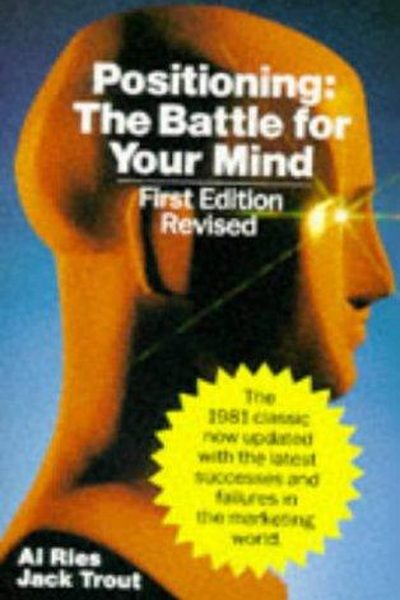
The book that rewired marketing: the battle isn't in the store — it's in the customer's mind.
📖 OPEN THE FULL INTERACTIVE BREAKDOWN →🌐 Read it in Hindi, Hinglish, Gujarati, Tamil & 22 more languages — free, with audio.
💡 The Big Idea
Ries and Trout's revolution: marketing is not a battle of products, it's a battle of perceptions — and the battlefield is the customer's mind, which is small, lazy, and nearly impossible to change. The winning move is not to be better, but to be FIRST in a category, then occupy that position relentlessly. If you're not first, find a new category to be first in, reposition the leader, or reposition yourself. The mind is a memory bank: it remembers who got there first.
🧠 The 6 Key Lessons
Lesson 1: The Battle Is in the Mind
What Positioning Is
Positioning starts with the prospect's mind, not your product: you don't create something new and different, you manipulate what's already up there and rewire connections that already exist. The mind is the battleground — products are born in factories, but positions are born in minds. Facts don't matter as much as perceptions, because people act on what they believe.
📖 Example: Hertz was first in rent-a-cars; Avis admitted 'We're number two, so we try harder' — repositioning the leader's strength (size) into a weakness (complacency) and turning #2 into a moral victory. No product changed; the perception did. Read the full example →
⚡ Do this: Ask your last three customers (or friends): what's the FIRST brand they name in your category? That's who owns the mind. Decide what that means for you.
Lesson 2: The Ladder: Climb or Create a New Rung
The Mind's Limitations
The mind runs on ladders: for each category, it stacks brands — usually just two or three rungs that anyone remembers. Your product must be ON the ladder; being rung #7 means being invisible. If you can't climb the existing ladder, build a new one: create a new category where you're the only rung, then the top rung by default.
📖 Example: 7-Up wasn't a #3 cola — it repositioned itself as 'The Uncola,' a category of one. Red Bull wasn't a #5 soft drink — it invented 'energy drinks' and sat alone on the top rung for years. Read the full example →
⚡ Do this: Write the ladder of your category — the 3 names people actually remember. Then write a NEW category name where you could be #1. Test that name on one friend.
Lesson 3: Be First, Then Never Change the Story
The Mind's Limitations
The single most powerful positioning idea: it's easier to get into the mind first than to convince someone you're better than whoever is already there. First in the mind = the default, the standard, the name the category is remembered by. And once you own a position, the graveyard is full of brands that repositioned themselves into oblivion by abandoning it.
📖 Example: Coca-Cola = cola, Xerox = copier, Kleenex = tissue, Google = search — all first-in-mind brands whose names became verbs. Meanwhile brands that chased a new position (like Oldsmobile trying to be young) lost the one they had and died. Read the full example →
⚡ Do this: Write your position in 5 words ('The ___ that ___'). Has it changed in the last 3 years? If yes, ask why — and consider going back.
Lesson 4: The No-Name Trap: Don't Line-Extend Into Oblivion
The No-Name Trap
The book's warning: the mind remembers a NAME for one thing. Line extensions — putting your brand on everything — blur the position until the mind forgets what you are. Ries and Trout are brutal on this: most line extensions are traps that weaken the core brand, even when the extension sells, because they steal the mind's slot from the original.
📖 Example: The authors trace brands like Dial soap (dial became deodorant, shampoo, wipes...) and Bayer (aspirin... then everything). The opposite strategy: Tylenol stayed 'the pain reliever hospitals use' — one clear slot, defended for decades. Read the full example →
⚡ Do this: List everything your brand (or you) claims to be. Circle the ONE you want the mind to remember. Say 'no' to the rest publicly this quarter.
Lesson 5: Reposition the Leader — and Yourself
Repositioning
If you're not first, don't fight the leader head-on — move the leader: find a weakness in their strength and turn it into a repositioning of THEM. Tylenol did it to aspirin ('the pain reliever that doesn't harm your stomach'); Avis did it to Hertz. And when your own position is stale, reposition yourself before the market does — but only into a position you can defend.
📖 Example: After Jell-O became 'the dessert,' its growth stalled; repositioning it as 'the snack' re-opened the market. The leader's strength is often its blind spot — attack the strength, not the weakness, because strengths are what leaders can't change. Read the full example →
⚡ Do this: List your biggest competitor's three strengths. Find the hidden weakness inside each ('they're big = they're slow; they're cheap = they're cheap'). Build one message around it.
Lesson 6: The First Brand Into the Mind Wins the Category
The Law of Leadership
Ries and Trout's founding law: it's easier to be first in the mind than it is to be better. The leader in a category owns the mental slot — people remember the first space flight, the first search engine, the first name that comes to mind. If you can't be first in a category, create a new category you can be first in.
📖 Example: People can name the first man on the moon but struggle with the second; the first search engine many remember is Google, not the technically earlier ones. The lesson for brands: leadership is a mind game played before the product battle. Read the full example →
⚡ Do this: Define the category you want to be first in — even a narrow one — and make that your positioning message.
✅ 5-Step Action Plan
- Find who actually owns your category in people's minds.
- Write your category ladder — then invent a category where you're #1.
- Define your position in 5 words and refuse to change it.
- Cut one line extension (offering, claim) that blurs your slot.
- Attack your competitor's strength, not their weakness.
⚠️ When This Doesn't Work
Ries & Trout's 'win the mind, not the product' is marketing gospel — and New Coke was the greatest positioning failure in history precisely because the positioning was flawless: brilliantly researched, perfectly launched, backed by the strongest brand in the world. It collapsed in weeks because the mind already owned 'Coca-Cola,' and the product change broke the mental contract. Positioning is not a substitute for product truth; it's a lens on what the customer already believes. The book's framework works when the belief matches reality — and it can make you believe the spin instead of the substance.
💀 The Graveyard Proves It
🥤 New Coke — They Fixed the Thing That Wasn't Broken. Burn: 79 days of chaos, permanent lesson. Read the full case study →
💬 Best Quotes from Positioning: The Battle for Your Mind
- “Positioning is not what you do to a product. Positioning is what you do to the mind.”
- “The mind hates confusion... The mind is like a computer memory bank — it will accept only information that fits its prior experience.”
- “Being first into the mind is everything.”
Interactive version: mark lessons as read, listen in your language, share quote cards.