Library › Productivity
Kaizen — Summary & Key Lessons
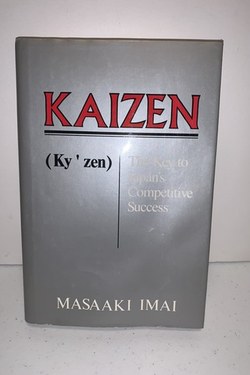
The Japanese concept that rebuilt industry: continuous improvement by everyone, every day, in small steps.
📖 OPEN THE FULL INTERACTIVE BREAKDOWN →🌐 Read it in Hindi, Hinglish, Gujarati, Tamil & 22 more languages — free, with audio.
💡 The Big Idea
Imai's book introduced the West to the idea that turned Japanese manufacturing into a global force: improvement is not a special event by experts, but a daily discipline by everyone. Small standardised improvements, measured relentlessly, outrun occasional big innovations. The three pillars: eliminate waste (muda), standardise the best-known way, and treat problems as treasures — a problem now visible is progress.
🧠 The 9 Key Lessons
Lesson 1: Small Steps Beat Big Leaps
Chapter 1: The Concept
Kaizen's radical claim: constant small improvements beat occasional large ones. Why? Big leaps need big capital, big risk and big resistance; small steps can be done by anyone, today, cheaply. Compound over five years and the 'slow' company has moved further than the one that waited for the perfect innovation.
📖 Example: Toyota's improvement of one second per process, by every worker, produced advantages no single breakthrough could match. Read the full example →
⚡ Do this: Choose one process you own and find one 1% improvement you can make this week.
Lesson 2: Waste Is the Enemy
Chapter 2: The 3MU
The Japanese trinity: muda (waste), mura (unevenness), muri (overburden). Waste is any activity that adds cost without value — waiting, rework, over-production, excess motion. Unevenness creates waste by planning; overburden creates waste by burnout. The audit question for every task: what would the customer (or the patient, or the user) not pay for?
📖 Example: A team that queues work, then re-does it in a firefight, has muda and mura working together. Read the full example →
⚡ Do this: Map one workflow; label each step value-add or waste; remove one waste.
Lesson 3: Problems Are Treasures
Chapter 3: The Mindset
In kaizen culture, a hidden problem is a liability; a surfaced problem is an asset — because now it can be solved. This inverts the normal instinct to hide errors. The famous practice: andon cords on assembly lines allow any worker to stop the line for a defect, and the line stops only briefly because the problem is fixed at the source.
📖 Example: A company where employees hide mistakes repeats them; one where they are celebrated solves them forever. Read the full example →
⚡ Do this: Make one problem visible this week — with its owner and a date — instead of quietly absorbing it.
Lesson 4: Standardise, Then Improve
Chapter 4: SDCA/PDCA
Kaizen's engine is the cycle: standardise (SDCA) then improve (PDCA) — you cannot improve a process you have not defined. Plan, Do, Check, Act: the check is where kaizen lives. Without a standard, every improvement evaporates; with one, each improvement becomes the new floor.
📖 Example: A recipe is a standard; each chef's tweak that works becomes the new standard — the dish improves forever. Read the full example →
⚡ Do this: Write the standard for one recurring task, run the PDCA cycle once, and update the standard.
Lesson 5: Gemba: Go and See
Chapter 5: The Real Place
The final kaizen discipline: truth lives at the gemba — the actual place where value is created, not in the meeting room or the report. Managers must walk the floor, see the work, talk to the people doing it. Data can lie by omission; direct observation rarely does.
📖 Example: A factory manager who watches the line for one hour finds in ten minutes what months of reports hid. Read the full example →
⚡ Do this: Spend 15 minutes at your 'gemba' this week — the actual work, the actual customer, the actual code.
Lesson 6: Standardization: The Unsexy Engine
The Kaizen Umbrella
Imai's most practical rule: an improvement becomes permanent only when it is standardised. Kaizen is not a series of one-off wins — every win must be written into the standard, or the process silently reverts to the old way within weeks. Standardized work is the difference between companies that keep their gains and companies that keep re-discovering them.
📖 Example: Toyota's floor workers write every improvement into the standard operating procedure; that is why their gains survive leadership changes and layoffs. Read the full example →
⚡ Do this: Write your last improvement as a one-line standard, and put it where you will see it every day.
Lesson 7: The Kata: Daily Practice as the System
Chapter 4: Kata and Coaching
Mike Rother's refinement of kaizen — the kata — turns improvement from an event into a routine: a target condition, a daily experiment, a coached reflection. Kata thinking is the Toyota habit made personal: instead of 'improve sometime', you set a specific next condition and run one small experiment toward it today, then ask what the experiment taught.
📖 Example: A developer's daily kata: 'Today's condition — response time under 300ms. Experiment: preload the images. Result: 400ms. Tomorrow: compress instead.' Read the full example →
⚡ Do this: Write tomorrow's target condition in one measurable sentence, plus one experiment to run toward it. Repeat daily.
Lesson 8: The Second Question: Why, Then Why, Then Fix
Chapter 3: The Root Cause
Kaizen's 5 Whys looks simple and is rarely done: instead of fixing the symptom, ask why five times and fix the system that produced it. The discipline survives because the first why is comfortable — 'the machine broke' — and the fifth why is uncomfortable — 'we never trained anyone'. The payoff is that root-cause fixes stay fixed; symptom fixes return on schedule.
📖 Example: A missed deadline: why? Late input. why? Vendor late. why? We approved too late. why? No approval owner. why? — the process, not the vendor, gets fixed. Read the full example →
⚡ Do this: Take one recurring problem and run the 5 Whys in writing. Fix the fifth answer, not the first.
Lesson 9: The Culture of the Kaizen Mind
Chapter 6: The People
The deepest kaizen truth: improvement is not a department, it is a culture — the people doing the work know the problem best, and the leader's job is to create safety to say so. Toyota's real secret is not tools but the absence of blame: every problem surfaced is a treasure, every suggestion is heard. The manager who punishes the messenger of a problem kills tomorrow's fix.
📖 Example: The assembly line worker who stops the line to flag a defect is not slowing production — he is the system's immune system. Read the full example →
⚡ Do this: Next time someone brings you a problem, thank them and ask 'what do you think should change?' before offering your own answer.
✅ 5-Step Action Plan
- Find and ship one 1% improvement weekly.
- Map one workflow and remove one waste step.
- Surface one hidden problem with owner and date.
- Standardise one task; run PDCA; update the standard.
- Visit the gemba for 15 minutes weekly.
⚠️ When This Doesn't Work
Kaizen was written for manufacturing; service and knowledge work need adaptations (and the 'waste is bad' lens can lead to cutting necessary slack and rest). The continuous-improvement principle, not every technique, transfers.
💀 The Graveyard Proves It
🚗 Toyota (2009-2011) — The Quality King Who Forgot the Andon Cord. Burn: $1.2B DOJ settlement, ~$2B in recall costs, dozens of deaths attributed Read the full case study →
💬 Best Quotes from Kaizen
- “KAIZEN means improvement. Moreover, it means continuing improvement in personal life, home life, social life, and working life.”
- “When improvement is standardised, it becomes the new baseline for the next improvement.”
- “To go to work day after day and do the same thing the same way, without improvement, is not management.”
Interactive version: mark lessons as read, listen in your language, share quote cards.