Library › Productivity
The 5 AM Club — Summary & Key Lessons
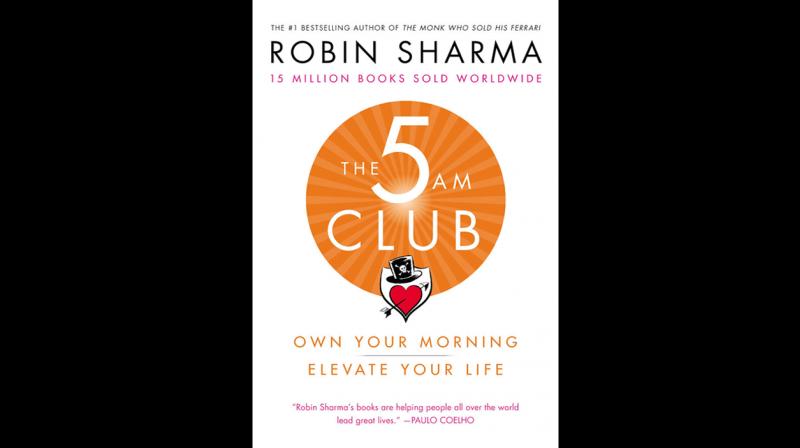
Own your morning, elevate your life — the 20/20/20 formula that turns 5 AM into a competitive advantage.
📖 OPEN THE FULL INTERACTIVE BREAKDOWN →🌐 Read it in Hindi, Hinglish, Gujarati, Tamil & 22 more languages — free, with audio.
💡 The Big Idea
Told as a fable — a burned-out entrepreneur and a frustrated artist mentored by an eccentric billionaire — Sharma's system weaponizes the day's first hour: at 5 AM, willpower is fresh, distractions are zero, and the brain's quieter state is primed for deep programming. The core protocol is the 20/20/20 formula: Move (intense exercise to flush cortisol and spike focus chemistry), Reflect (journaling, meditation, planning in silence), Grow (study — because the best earners are the best learners). Around it: the Four Interior Empires (Mindset, Heartset, Healthset, Soulset — success needs all four, not just positive thinking), the Twin Cycles of Elite Performance (world-class results demand deep REST, not just deep work), and the 66-day habit-installation arc through destruction, installation, and integration. Own your morning; the day, then the life, follows.
🧠 The 6 Key Lessons
Lesson 1: Why 5 AM: The Science of the Victory Hour
Chapters 4–7: The Spellbinder's Case for Morning
The hour's magic is convergence: willpower is a depleting resource at its daily maximum after sleep; the world is silent (zero inbound demands, the rarest modern condition); and the pre-dawn brain state favors calm focus over reactive noise — the transient quiet lets you think, plan, and create from intention instead of reaction. Sharma frames it as solitude economics: the 5 AM riser buys a daily hour of the scarcest asset (undistracted self-directed time) at the cheapest price (earlier sleep). The deeper argument is identity: how you begin anything disproportionately shapes it — days included. You don't rise at 5 for productivity theater; you rise to install yourself as the person who runs the day before the day runs them.
📖 Example: The fable's billionaire mentor puts the two students through the ritual on a beach in Mauritius, but Sharma's supporting cast is historical: Mandela's lifelong pre-dawn exercise (even in prison), the CEOs, athletes, and artists whose biographies repeat the… Read the full example →
⚡ Do this: Start with 5:30 or even 6, but win it: tonight, set the alarm 30 minutes earlier, put the phone outside the bedroom, and pre-decide the first hour on paper. The rule is simple — no inputs (phone, news, mail) until the hour is yours.
Lesson 2: The 20/20/20 Formula
Chapter 12: The 20/20/20 Formula
The Victory Hour has architecture — three 20-minute pockets, in strict order. MOVE (5:00–5:20): sweat hard; intense exercise burns off residual cortisol (highest at dawn), releases BDNF (fertilizer for brain cells), and spikes dopamine and serotonin — you're literally manufacturing the neurochemistry of focus before work begins. REFLECT (5:20–5:40): in the calm after exertion — journal (dump worries, name gratitudes, declare intentions), meditate, pray, or plan; this pocket turns ambition inward and is where clarity and emotional governance are built. GROW (5:40–6:00): study — books, courses, podcasts, case studies; the 'best leaders learn daily' pocket that compounds into unassailable expertise over years. Order matters: sweat unlocks the brain, silence steadies it, study loads it. Skip pockets and the hour degrades into either exercise-only or reading-in-fog.
📖 Example: Sharma's characters resist exactly as readers do — the artist hates exercise, the entrepreneur 'has no time to journal' — and the mentor holds the line on sequence: the artist who reads first (skipping sweat) reports foggy retention; once flipped, the same… Read the full example →
⚡ Do this: Run the full formula for 14 days: 20 minutes of genuinely sweaty movement, 20 of journal/meditation (use three prompts: what I'm grateful for, what I intend today, what I'm letting go), 20 of study in your field. Judge nothing until day 14.
Lesson 3: The Four Interior Empires
Chapter 8: The 4 Interior Empires
The self-help industry sells Mindset as the whole game; Sharma calls it one empire of four. MINDSET (beliefs, self-talk, psychology) matters — but sits atop HEARTSET (emotional life: unprocessed anger, grief, and resentment sabotage the finest psychology; healing and gratitude work are performance work), HEALTHSET (physical vitality: energy is the currency genius spends — longevity practices, exercise, nutrition are career strategy, not vanity), and SOULSET (spirituality broadly: connection to purpose, service, stillness — the reservoir that makes success feel like something rather than more numbers). Elite performance requires calibrating all four; the collapsed executive with a bulletproof mindset and a bankrupt heartset is the book's recurring cautionary figure. Genius, in Sharma's ledger, is a full-stack phenomenon.
📖 Example: The fable's entrepreneur arrives mindset-rich — affirmations, goals, strategy — and near breakdown anyway: the neglected empires (grief unprocessed, body running on caffeine and four hours of sleep, purpose long since buried under metrics) had been billing… Read the full example →
⚡ Do this: Score yourself 1–10 in each empire today. Your lowest score is this quarter's project: pick one concrete practice for it (heartset: nightly forgiveness journaling; healthset: fixed sleep window; soulset: weekly service or stillness) and attach it to your existing morning hour.
Lesson 4: Deep Work Needs Deep Rest: The Twin Cycles
Chapters 10, 14: The Twin Cycles of Elite Performance
Sharma's correction to hustle culture comes from athletics: growth happens in RECOVERY, not in performance. Elite performers oscillate between the High Excellence Cycle (intense, focused, undistracted work sprints — 90 minutes of monomaniacal focus beats a scattered day) and the Deep Refueling Cycle (real rest: sleep as non-negotiable infrastructure, nature, massage, play, digital fasts). Refusing recovery doesn't buy more output — it converts tomorrow's capacity into today's mediocre overtime, and cortisol-soaked always-on work produces busy exhaustion, not assets. The 5 AM Club's hidden second rule is therefore an EARLY NIGHT: the victory hour is financed the evening before. Rest, in this model, isn't the absence of work; it's when the work gets consolidated into growth.
📖 Example: The mentor's teaching prop is the athlete's training log: muscle is torn in the gym but BUILT in sleep — train relentlessly without recovery and performance falls while effort rises, the overtraining curve every burned-out executive is unknowingly riding.… Read the full example →
⚡ Do this: Engineer the night that funds the morning: set a digital sunset 90 minutes before bed and a fixed sleep window (aim 7.5+ hours). Then structure tomorrow as twin cycles: one 90-minute distraction-free work sprint, followed by a genuine 15-minute refuel — repeat, don't marathon.
Lesson 5: 66 Days: Destruction, Installation, Integration
Chapters 11, 13: How to Make a Habit Stick
Sharma's habit-installation arc rejects the 21-day myth: automaticity takes ~66 days, crossing three equal phases. DESTRUCTION (days 1–22): the old pattern fights back — this is the hardest stretch, where the wake-up feels like self-violence and quitting feels rational ('all change is hard at first'). INSTALLATION (days 23–44): messy middle — inconsistent, two-forward-one-back, where most people misread turbulence as failure ('messy in the middle'). INTEGRATION (days 45–66): the ritual begins running you — identity shifts from 'person forcing a habit' to 'person who does this' ('gorgeous at the end'). Support structure throughout: implementation is easier with accountability (the fable's characters do it together), pre-commitment (clothes laid out, alarm across the room), and self-compassion on stumbles — one missed dawn is data, not verdict. Past day 66, the habit protects itself.
📖 Example: The fable dramatizes each phase through its students: week two, the artist nearly quits (destruction's peak — 'my body is at war with me'); week five, the entrepreneur strings four perfect days, misses two, and spirals until the mentor reframes it… Read the full example →
⚡ Do this: Commit to the full 66 days on a visible tracker labeled with the three phases — so you EXPECT the day-15 misery and the day-35 wobble instead of quitting inside them. Recruit one partner for daily two-word check-ins ('done' / 'missed'), and pre-commit tonight: alarm across the room, clothes laid out.
Lesson 6: The 20/20/20 Formula Sets Your Day's Trajectory
The Morning Routine
Sharma prescribes the first hour after waking split into three twenty-minute blocks: move (sweat), reflect (journal or meditate), and grow (read or study). This sequence primes the brain with energy, clarity and new input before the world starts demanding attention. How you start determines how you finish.
📖 Example: A founder who sweats for twenty minutes, writes three pages of journaling and reads fifteen pages before checking his phone walks into the day with calm focus, while the colleague who wakes to notifications starts already reacting. The morning order is the… Read the full example →
⚡ Do this: Tomorrow, before touching your phone: 20 minutes of movement, 20 of journaling, 20 of reading. Repeat for five days and compare your focus.
✅ 5-Step Action Plan
- Move the alarm 30 minutes earlier tonight; no inputs until the hour is won.
- Run 20/20/20 for 14 days before judging: sweat, silence, study.
- Score your four empires; assign one practice to the weakest.
- Install the digital sunset and twin-cycle work rhythm.
- Track 66 days through destruction, installation, integration — with a partner.
⚠️ When This Doesn't Work
The 5 AM Club turns discipline into a costume: waking at dawn, cold showers, victory rituals — while the actual work stays unexamined. Polaroid was the most disciplined, ritualistic company in America, and its 5 AM energy didn't save it from missing digital. Early rising is a preference, not a virtue; night owls with real output beat morning people with perfect routines. If your morning ritual is more impressive than your afternoon output, you've built the costume, not the club.
💀 The Graveyard Proves It
📸 Polaroid — Died Guarding the Film That Funded It. Burn: Bankruptcy; brand sold for parts. Read the full case study →
💬 Best Quotes from The 5 AM Club
- “Take excellent care of the front end of your day, and the rest of your day will pretty much take care of itself.”
- “All change is hard at first, messy in the middle and gorgeous at the end.”
- “The moment when you most feel like giving up is the instant when you must find it in you to press ahead.”
Interactive version: mark lessons as read, listen in your language, share quote cards.