Why Did HMT Watches Fail?
The People's Watchmaker - 50 Years of Monopoly, Then Obsolete
📜 What Happened
HMT (Hindustan Machine Tools) was once the watchmaker of India: from 1961, its watches were a national institution - the wedding gift, the retirement gift, the symbol of Indian self-reliance. For decades it had a near-monopoly, with waiting lists for its most popular models. Then the world changed: quartz watches arrived from Japan, electronic watches from everywhere, and eventually mobile phones that made watches optional. HMT's response was decades of denial - it kept making mechanical watches, kept its bloated workforce, and kept refusing to accept that its monopoly was gone. Losses mounted year after year; governments propped it up through political cycles. Finally in 2016, after losing ₹20 crore a year, the government shut the watch division down. The brand that defined Indian time became a museum piece.
☠️ The Fatal Mistake
Treating a monopoly as a permanent right - the waiting lists and the brand loyalty fooled management into believing the market would always wait for them.
🧠 The Lesson (Free for You)
Monopolies are weather, not geography: they change. HMT's lesson is that 'national institution' is not a business model - when the technology shifts, the institution that refuses to shift becomes the museum. The only durable moat is the willingness to make yourself obsolete before the market does.
The Antidote Book
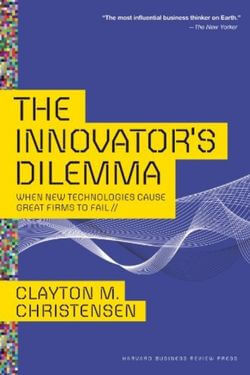
Christensen's Harvard research began with a paradox: why do well-run market leaders - companies that listen to customers, invest in R&D, and chase profits rationally - get destroyed by scrappy newcomers with WORSE…
📖 OPEN THE FULL INTERACTIVE BREAKDOWN →Questions people ask about HMT Watches
Why did HMT Watches fail? Treating a monopoly as a permanent right - the waiting lists and the brand loyalty fooled management into believing the market would always wait for them.
How much was lost? Thousands of workers; a national icon liquidated after decades of losses
What is the lesson? Monopolies are weather, not geography: they change. HMT's lesson is that 'national institution' is not a business model - when the technology shifts, the institution that refuses to shift becomes the museum. The only durable moat is the willingness to make yourself obsolete before the market does.
HMT Watches kyun fail hua? In simple English: Treating a monopoly as a permanent right - the waiting lists and the brand loyalty fooled management into believing the market would always wait for them. The cost was Thousands of workers; a national icon liquidated after decades of losses.
Keep digging
More business failures · Open the full Graveyard
Read the antidote book summary: The Innovator's Dilemma
Related failures
- Why did Skype fail? 2025 · The Verb That Lost a Pandemic It Should Have Owned
- Why did JOANN fail? 2025 · The Craft Shelf Lost Its Footing
- Why did rue21 fail? 2024 · Three Bankruptcies Were the Market's Answer
- Why did Zee-Sony Merger fail? 2024 · A $10B Media Titan Blown Apart by Promoter Egos
- Why did Tupperware fail? 2024 · The Party Ended After 78 Years
- Why did The Body Shop fail? 2024 · The Ethical Beauty Pioneer That Couldn't Outlive Its Founder's Shadow
Searchable, filterable, simple to read - they paid billions; you get the lesson.