Why Did Grenfell Tower and the Cladding Economy Fail?
The Tower Everyone Was Warned About
What happened
Grenfell Tower, a 24 storey council housing block in North Kensington, London, was refurbished in 2015 to 2016 with aluminium composite cladding panels containing a polyethylene core, a material that burns like solid petrol, installed over combustible insulation, partly to improve the tower's appearance for its wealthier neighbours. In the early hours of 14 June 2017 a fridge freezer fire in a fourth floor flat escaped through a window and ignited the cladding. The fire raced up the outside of the building, re entered flats through windows, and defeated the stay put policy that assumed each flat was a fireproof box. Seventy two people died. Residents had warned the landlord's management organisation for years, in writing, about fire safety, power surges and blocked exits; their blog predicted a catastrophe would be required before anyone listened. The public inquiry documented a decades long system failure: deregulated building control, manufacturers who gamed fire tests and mis-sold products, cost cutting at every hand off, and a state that treated social housing residents as a nuisance to manage. Prosecution decisions have taken most of a decade. Millions of people elsewhere discovered their own buildings wore similar skins.
The fatal mistake
Every layer of the system sold its responsibility to the next. Manufacturers tested dishonestly and marketed combustible panels for high rise use. Designers and contractors value engineered the safer zinc cladding originally specified into the cheaper combustible system to save a modest sum. Building control, partly privatised and competing for clients, approved what it should never have passed. The tenant management organisation treated complaining residents as adversaries and let fire risk assessments rot. The government ignored coroners' recommendations from a previous tower fire in 2009. The deepest failure is written in the residents' own archive: the people who knew, said so, in writing, for years, and were filed under difficult.
The lesson
A resident complaint is a sensor, and a landlord that files sensors under difficult has disabled its own alarm system. Value engineering on life safety components is not savings; it is the purchase of a future inquiry at a discount. Test results from manufacturers must be verified as if they were advertising, because in this case they were. Stay put policies depend entirely on the building actually performing as assumed; strategy cannot outrun materials. And listen for the Grenfell sentence in your own organisation: it will take a catastrophe for anyone to listen. When you hear it, you are already in the timeline.
The antidote book
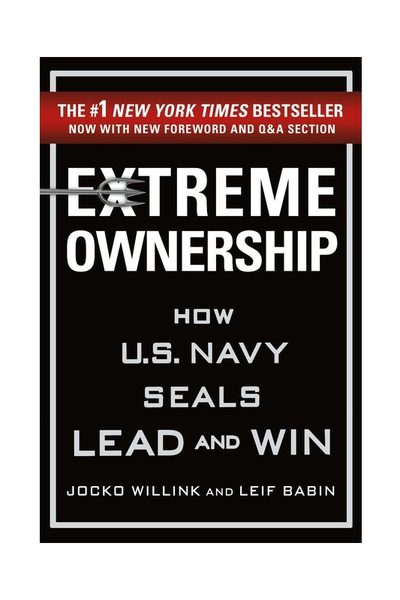
There are no bad teams, only bad leaders. Own everything in your world - the blame, the fix, and therefore the power.
READ THE SUMMARY OPEN INTERACTIVE BOOKQuestions people ask about Grenfell Tower and the Cladding Economy
Why did Grenfell Tower and the Cladding Economy fail? Every layer of the system sold its responsibility to the next. Manufacturers tested dishonestly and marketed combustible panels for high rise use. Designers and contractors value engineered the safer zinc cladding originally specified into the cheaper combustible system to save a modest sum. Building control, partly privatised and competing for clients, approved what it should never have passed. The tenant management organisation treated complaining residents as adversaries and let fire risk assessments rot. The government ignored coroners' recommendations from a previous tower fire in 2009. The deepest failure is written in the residents' own archive: the people who knew, said so, in writing, for years, and were filed under difficult.
How much was lost? 72 lives in one tower, every warning on file
What is the lesson? A resident complaint is a sensor, and a landlord that files sensors under difficult has disabled its own alarm system. Value engineering on life safety components is not savings; it is the purchase of a future inquiry at a discount. Test results from manufacturers must be verified as if they were advertising, because in this case they were. Stay put policies depend entirely on the building actually performing as assumed; strategy cannot outrun materials. And listen for the Grenfell sentence in your own organisation: it will take a catastrophe for anyone to listen. When you hear it, you are already in the timeline.
Grenfell Tower and the Cladding Economy kyun fail hua? In simple English: Every layer of the system sold its responsibility to the next. Manufacturers tested dishonestly and marketed combustible panels for high rise use. Designers and contractors value engineered the safer zinc cladding originally specified into the cheaper... The cost was 72 lives in one tower, every warning on file.
Keep digging
More trust and safety failures · Open the full Graveyard
Read the antidote book summary: Extreme Ownership
Related failures
- Why did The City of Troy fail? ~1180 BC · The Original Free Gift
- Why did Juul fail? 2022 · The $38B Vaping Empire That Vaporized to Zero
- Why did Jet Airways fail? 2019 · The Founder Who Couldn't Let Go
- Why did Cambridge Analytica fail? 2018 · Harvested 87 Million Friends of Friends
- Why did Wells Fargo fail? 2016 · 3.5 Million Fake Accounts, Opened by Its Own Staff
- Why did The Lead in the Water: Flint and the Long History of Poisoned Children fail? 2016 · The Poison in the Paint and the Petrol
Questions this case answers
They paid full price. You get the lesson in simple English.