Why Did The Emergency of 1975 Fail?
The 21 Months When India's Democracy Was Suspended
📜 What Happened
On the night of 25 June 1975, Prime Minister Indira Gandhi declared a state of emergency — the Indian constitution, the world's longest, suspended; opposition leaders arrested in a single sweep; the press censored; forced sterilizations carried out in the name of population control. The Emergency lasted 21 months, and the justification — 'the nation is in danger' — was the classic line of every autocrat in history. What happened next is the part worth studying: when elections were finally called in 1977, the Indian people — including the poor, the illiterate, the supposedly uninformed — voted the regime out in one of democracy's great vindications. The institutions bent but did not break; the press recovered its nerve; and the Emergency became a permanent scar that has disciplined every subsequent government. The system survived because the people remembered what it was for.
☠️ The Fatal Mistake
Using a genuine crisis as a licence for power — the emergency was real for the politicians, not for the country.
🧠 The Lesson (Free for You)
The Emergency's lesson is not that democracy is fragile — it is that democracy is a memory, and memories must be kept alive. Every generation that does not study what happened in 1975 becomes eligible to repeat it. The institutions that protected India were not the laws — they were the people who remembered, the press that recovered, the voters who punished. The best defence of any free system is not the constitution; it is the citizen who knows that 'for your safety' is the oldest lie in politics.
📕 The Antidote Book
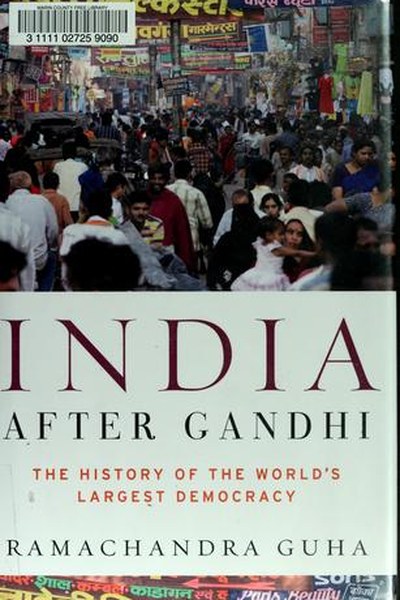
India's survival as a democracy was the least likely outcome of the 20th century — a poor, illiterate, multilingual subcontinent was supposed to fracture. Guha shows why it didn't: a mix of visionary leaders, flexible…
📖 OPEN THE FULL INTERACTIVE BREAKDOWN →Searchable, filterable, free to read — they paid billions; your lesson is free.