Why Did The Harappan Collapse Fail?
The Advanced Civilization That Vanished Into Its Own Success
📜 What Happened
The Indus Valley (Harappan) civilization was the most advanced of its age: planned cities with drainage that rivals modern engineering, standardized weights and measures, writing, and trade spanning three thousand kilometres. For 700 years it flourished. Then, around 1900 BCE, it collapsed — and the mystery is that there was no obvious enemy, no invasion, no fire. The leading evidence: a slow environmental decline — the monsoons weakened, the river systems shifted, the floodplains that fed millions became marginal. The cities kept their sophisticated infrastructure right up to the end, but the environment that the infrastructure depended on had quietly changed. A civilization that had perfected its systems never adapted its systems to the new reality, and the great cities were abandoned — their writing lost for four thousand years.
☠️ The Fatal Mistake
Optimizing for the world as it was — the Harappans had no enemies, no wars, and no answer for environmental change.
🧠 The Lesson (Free for You)
The most dangerous moment for any system is not the crisis — it is the slow drift of the conditions the system was built for. Empires, companies and careers rarely collapse from a single blow; they collapse when the environment shifts and the people in charge keep optimizing yesterday's model. The Harappan lesson: your greatness is a report on the past. The question is not 'are we the best at what we do' but 'is what we do still what the world needs.'
📕 The Antidote Book
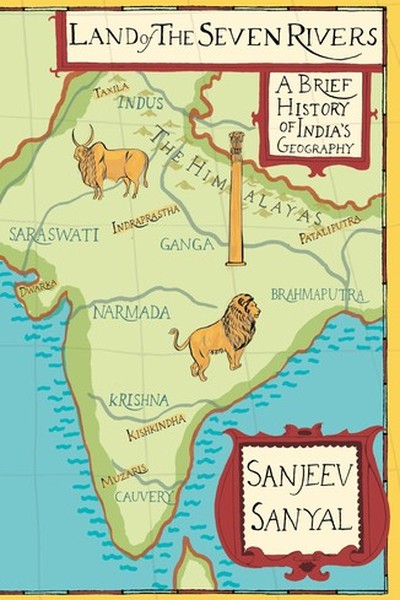
Sanjeev Sanyal's sweeping rewrite of Indian history argues that the subcontinent's story is best understood through its geography — the seven great rivers (Sindhu, Saraswati, Ganga, Yamuna, Brahmaputra, Narmada,…
📖 OPEN THE FULL INTERACTIVE BREAKDOWN →Searchable, filterable, free to read — they paid billions; your lesson is free.