Library › Self-Improvement
The Three Thousand Stitches — Summary & Key Lessons
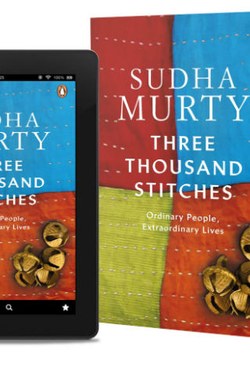
Sudha Murty's life stories: kindness as engineering, wealth as a tool, and the small stitch that holds a life together.
📖 OPEN THE FULL INTERACTIVE BREAKDOWN →🌐 Read it in Hindi, Hinglish, Gujarati, Tamil & 22 more languages — free, with audio.
💡 The Big Idea
The title story — a woman whose daughter's wedding quilt carried three thousand stitches from strangers — is a metaphor for the book: a life is stitched together by small, invisible acts of generosity. Murty's essays distill her core philosophy: money is only meaningful when it flows; education is the one thing nobody can take; and power is measured by what you do for people who can do nothing for you.
🧠 The 10 Key Lessons
Lesson 1: Start From Where You Are
Story 1: The Beginning
Murty's essays repeatedly show her starting small: one teacher, one village, one engineering seat won on merit. She rejects the idea that you need permission or capital to do good — you need attention. The greatest leaders she writes about began by noticing a problem close enough to touch.
📖 Example: She began philanthropy by funding one student's education; the foundation grew from that single stitch. Read the full example →
⚡ Do this: Pick one problem within arm's reach and do one concrete thing for it this week.
Lesson 2: Education Is the Inheritance
Story 2: The Gift
Across her stories, the same theme recurs: parents who can offer nothing else can offer education, and education converts poverty into possibility. She distinguishes between schooling and learning — certificates alone do not free you; curiosity, values and skill do. The best education she honours is the one that teaches you to think for others.
📖 Example: A daughter of a daily-wage father becomes a doctor because someone funded her school books — one generation breaks the chain. Read the full example →
⚡ Do this: Fund or mentor one learner this year — by time, money or knowledge.
Lesson 3: Wealth Is a River
Story 3: Money That Flows
Murty's philosophy of money is flow: wealth that is hoarded becomes stagnant and corrupting; wealth that flows through education, health and dignity multiplies in human terms. The Infosys Foundation gives systematically, like a business with a different bottom line. She warns that sudden wealth without values destroys more families than poverty does.
📖 Example: A lottery winner's family often fractures; a family that builds slowly with discipline stays whole. Read the full example →
⚡ Do this: Set a 'flow rule': a fixed share of your income that must move to others, automatically.
Lesson 4: Humility Is the Management Skill
Story 4: The Powerful and the Humble
Her essays about industrialists and village women share one insight: real stature shows in how someone treats people who can offer nothing. The CEO who remembers the cook's name, the billionaire who sits on the floor — those are the measures. Humility is not self-deprecation; it is accurate self-regard plus genuine interest in others.
📖 Example: A young engineer who thanks the cleaning staff by name gets better work and better lives than the one who ignores them. Read the full example →
⚡ Do this: Deliberately learn and use the names of people who serve you — this week, every time.
Lesson 5: Stitch by Stitch
Story 5: The Quilt
The title story's lesson is patience with ordinary means: no grand endowment, just thousands of small contributions creating a whole. Change is never one heroic act; it is a fabric of unglamorous repetitions. Murty's optimism is earned — she has watched small stitches hold families, villages and institutions together.
📖 Example: A school library that grows by one donated book a week becomes, in five years, a treasure. Read the full example →
⚡ Do this: Choose one long-term project and commit to one small weekly stitch; track the quilt.
Lesson 6: The Mantra That Never Ran Out
Chapter 2: The Daily Practice
Sudha Murty's grandmother's phrase — 'three thousand stitches' — is a philosophy of cumulative effort disguised as a sewing proverb. One stitch fixes nothing; three thousand fix everything. The book's inner teaching: big troubles are seldom solved by one grand gesture, but by thousands of small stitches applied patiently, day after day, without applause.
📖 Example: Infosys's earliest days were a long series of small stitches — one client, one project, one reputation at a time — before it became a giant. Read the full example →
⚡ Do this: Name your 'trouble garment' and commit to one small stitch daily, this week, no matter how trivial it looks.
Lesson 7: The Value of the Ordinary Teacher
Chapter 5: Teachers I Remember
The book is full of teachers nobody famous: a schoolmaster who taught compassion, a colleague who taught integrity by example. Sudha Murty's point is that character is caught, not taught — and that the teachers who shape us most are rarely the celebrated ones. She also gives back: value ordinary founders, ordinary helpers, ordinary mentors.
📖 Example: She recalls teachers who took personal interest in a village girl's education — the interest, not the syllabus, was the lesson. Read the full example →
⚡ Do this: Write the names of three teachers who shaped you and send one of them a message this week. Teachers rarely hear it.
Lesson 8: Money Is a Means With a Mind of Its Own
Chapter 8: The Corporate Lessons
She treats money with clear-eyed respect: earn it, understand it, but never worship it. The book's corporate wisdom is that money follows value — and that chasing money directly is the slowest way to it. Her practice of corporate responsibility: measure profit in years, not quarters, and take responsibility for people, not just balance sheets.
📖 Example: Infosys's early practice of sharing profits with employees and treating clients with long-term honesty built a trust premium no advertisement could buy. Read the full example →
⚡ Do this: This week, ask of one financial decision: 'Does this create value, or just extract it?' Let the answer guide you.
Lesson 9: The Quiet Power of Giving Back
Chapter 9: The Foundations
The second half of the book is about circulation: wealth that returns to society gains a purpose, and purpose is what makes wealth sustainable. Her foundation work shows that giving is not charity — it is infrastructure-building: schools, libraries, toilets, dignity. The test of a society is not how much it earns but how well it redistributes its surplus.
📖 Example: A library built in a village changed the trajectory of children no scholarship scheme could reach. Read the full example →
⚡ Do this: Take 5% of one month's income — time or money — and invest it in one concrete, local thing. Not an emergency, a structure.
Lesson 10: The Stitches Are the Story
Conclusion: The Philosophy
Read as a whole, the book argues that a meaningful life is not a single plotline — it is an accumulation of small, deliberate acts of decency. Every chapter is a stitch: honesty in a sale, kindness to a subordinate, respect for a poor woman's money. The thread that ties them is that nothing was too small to be done right.
📖 Example: The woman who returned a wrong payment with a complaint about honesty built more trust in one act than a decade of marketing. Read the full example →
⚡ Do this: Choose your thread: integrity, generosity, or service. Make exactly one small act this week that only you know about.
✅ 5-Step Action Plan
- Do one concrete act for a problem within arm's reach.
- Fund or mentor one learner within a year.
- Automate a 'flow rule' — a set % of income that moves to others.
- Learn and use five names of people who serve you.
- Start one weekly-stitch project and log each stitch.
⚠️ When This Doesn't Work
Murty's essays are warm and anecdotal rather than systematic — they inspire more than they analyse. Some stories are told from memory; treat them as parables, not records.
💀 The Graveyard Proves It
🌿 The Body Shop — The Ethical Beauty Pioneer That Couldn't Outlive Its Founder's Shadow. Burn: Sold for £207M in 2006, bought for £1 in 2023, bankrupt by 2024 Read the full case study →
💬 Best Quotes from The Three Thousand Stitches
- “Money is a means, not an end — it gains meaning only when it is used for others.”
- “There is no greater gift than education, because it can never be taken away.”
- “Kindness is not a weakness; it is the highest form of strength.”
Interactive version: mark lessons as read, listen in your language, share quote cards.