Library › Business & Startups
That Will Never Work — Summary & Key Lessons
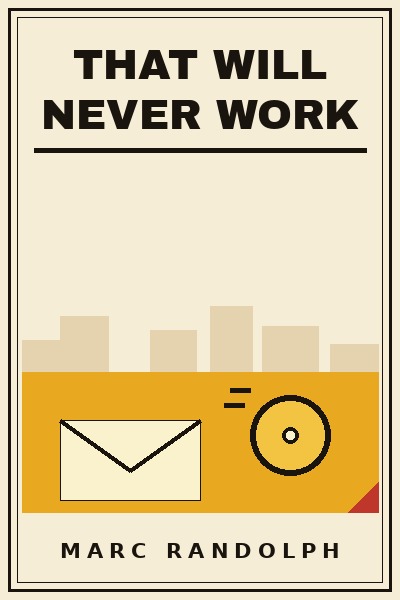
The birth of Netflix and an amazing story of an idea told no. Everyone said it would never work. Here's how it did.
📖 OPEN THE FULL INTERACTIVE BREAKDOWN →🌐 Read it in Hindi, Hinglish, Gujarati, Tamil & 22 more languages — free, with audio.
💡 The Big Idea
Randolph, Netflix's first CEO, tells the founding story with the dust on it: the carpool brainstorm, the survived-barely-first-days (a broken DVD envelope test, a near-bankruptcy, trying to sell to Blockbuster for 50 million and being laughed out of the room), the pivotal pivots (no late fees, subscription model, streaming bet), and the partnership with Reed Hastings that became a handover of power most founders never survive giving. The lessons are startup truths with receipts: ideas are cheap and overrated, culture is built in the first ten hires, and the market votes with behaviour, not opinions.
🧠 The 10 Key Lessons
Lesson 1: Ideas Are Cheap; Tests Are Truth
Part 1
The Netflix concept (rent DVDs by mail) was one idea on a long carpool list. What mattered was not the idea's brilliance but how fast and cheaply they tested whether people would actually behave differently.
📖 Example: The famous Pachinko test: they mailed a CD to Randolph's house to see if a DVD would survive the post. It arrived intact, and a company existed. Read the full example →
⚡ Do this: For your idea, design the cheapest test that produces real behaviour (an order, a signup, a stamped envelope) within two weeks.
Lesson 2: When Everyone Says It Will Never Work
Part 1
Experts dismissed Netflix: shipping margins are impossible, late fees are the business model, Blockbuster will crush you. The pattern: incumbents can't see past their own profit pools, and that blindness is the opening.
📖 Example: Blockbuster executives literally laughed at the 50 million dollar buyout offer; a few years later the joke reversed. Read the full example →
⚡ Do this: List why your idea can't work, then sort: physics problems (kill it) vs habit problems (test it) vs incumbent denial (exploit it).
Lesson 3: Kill Late Fees: Willing to Lose the Business Model
Part 2
Late fees were a huge revenue line and customers hated them. Netflix killed them by moving to subscriptions: a bet that trust compounds. Willingness to attack your own revenue is a survival trait.
📖 Example: The subscription test, unlimited rentals for a flat fee, first as a side experiment, then as the entire model, changed the industry. Read the full example →
⚡ Do this: Name the fee or policy your customers hate most. Design the experiment where you stop charging for it and charge for something better.
Lesson 4: Pivot Without Killing the Company
Part 2
Netflix pivoted from mail-order to DVDs to subscription to streaming without dying: each pivot was a response to data, funded by the still-working previous model. Pivots are metabolized, not gambled.
📖 Example: They launched streaming as a free add-on while DVDs still printed money, using today's profits to buy tomorrow's model. Read the full example →
⚡ Do this: Fund one experiment this quarter from your current profitable line that could eventually replace it.
Lesson 5: Culture Is the First Ten Hires
Part 3
Early hires set permanent behavior patterns: who you hire when you're small teaches everyone who comes later what's normal. Netflix's candor-first culture started as Randolph's team habits, later codified by Hastings.
📖 Example: The engineer hire who argued openly with the CEO in meetings set a candor norm that survived years and hundreds of employees. Read the full example →
⚡ Do this: Write down the three behaviors you'd want a 500-person company to have. Hire your next person only if they show all three.
Lesson 6: The CEO Handoff That Worked
Part 3
Randolph stepped aside for Hastings because Hastings was better suited to scale, a decision made from the company's interest, not the founder's ego. Most founders can't do it; the ones who can save their companies.
📖 Example: The transition was planned openly, with roles defined by strengths: Randolph as product heart, Hastings as operating machine. Read the full example →
⚡ Do this: If you're the founder, write one sentence: what does the company need from its CEO at 10x today's size? If that's not you, plan the handoff now.
Lesson 7: Constraints Breed Creativity
Part 2
Netflix had no money for marketing, so they engineered viral hacks: buying pre-paid postage, charging for used DVDs, partnering with electronics makers. Scarcity forced invention that abundance never would have.
📖 Example: The DVD giveaway bundled with new DVD players, negotiated for free, seeded thousands of users at zero marketing cost. Read the full example →
⚡ Do this: Cut your marketing budget for one initiative to zero. Solve distribution with partnerships and product design instead.
Lesson 8: Data Over Opinions, Behaviour Over Words
Part 2
Customers said they wanted one thing and did another. Netflix learned to watch choices (what people rent, return, finish) instead of surveys, and to let behaviour veto strategy.
📖 Example: The vast catalog of art films attracted signups; the mainstream hits drove actual viewing. Behaviour rewrote the inventory strategy. Read the full example →
⚡ Do this: Find the gap between what your customers say and what they do, then rebuild your roadmap around the doing.
Lesson 9: Partnership With a Rival's Blind Spot
Part 3
Netflix survived Blockbuster's entry into mail rental because Blockbuster protected its late-fee cash cow: they launched a half-hearted clone that couldn't kill its own model. Attacks fail when attackers protect their old profits.
📖 Example: Blockbuster Online launched late, underfunded and internally conflicted; Netflix's head start and model purity held. Read the full example →
⚡ Do this: If a giant can copy you, ask what sacred revenue of theirs your model breaks. That sacred cow is your protection.
Lesson 10: The Long Game: Streaming Was Always the Point
Epilogue
The DVD business was always a stepping stone: the founders dreamed of movies over the internet from day one but waited for bandwidth to catch up. Strategic patience: run the business you can today to build the one you believe in.
📖 Example: Years of disciplined DVD profits and subscriber growth bought the rights, the tech and the user base that made streaming viable. Read the full example →
⚡ Do this: Write your 10-year version of your business. Then identify which part of today's work is building toward it, and which is just today's rent.
✅ 5-Step Action Plan
- Design and run one real-behaviour test of your idea within two weeks.
- Kill or redesign the one policy your customers hate most.
- Write the three behaviors your first ten hires must show, and hire only against them.
⚠️ When This Doesn't Work
A founder memoir with founder hindsight; Hastings's view of the same events is different in emphasis. The DVD-era tactics are dated, the testing culture is not.
💀 The Graveyard Proves It
📷 Blockbuster — The $50M 'No' Worth $150 Billion. Burn: 9,000 stores → 1. Read the full case study →
💬 Best Quotes from That Will Never Work
- “Ideas are the easy part. Almost everyone has ideas.”
- “Culture is the behaviour you reward and tolerate.”
- “When you're a startup, you don't need a plan. You need a test.”
Interactive version: mark lessons as read, listen in your language, share quote cards.