Library › Business & Startups
Zero to One — Summary & Key Lessons
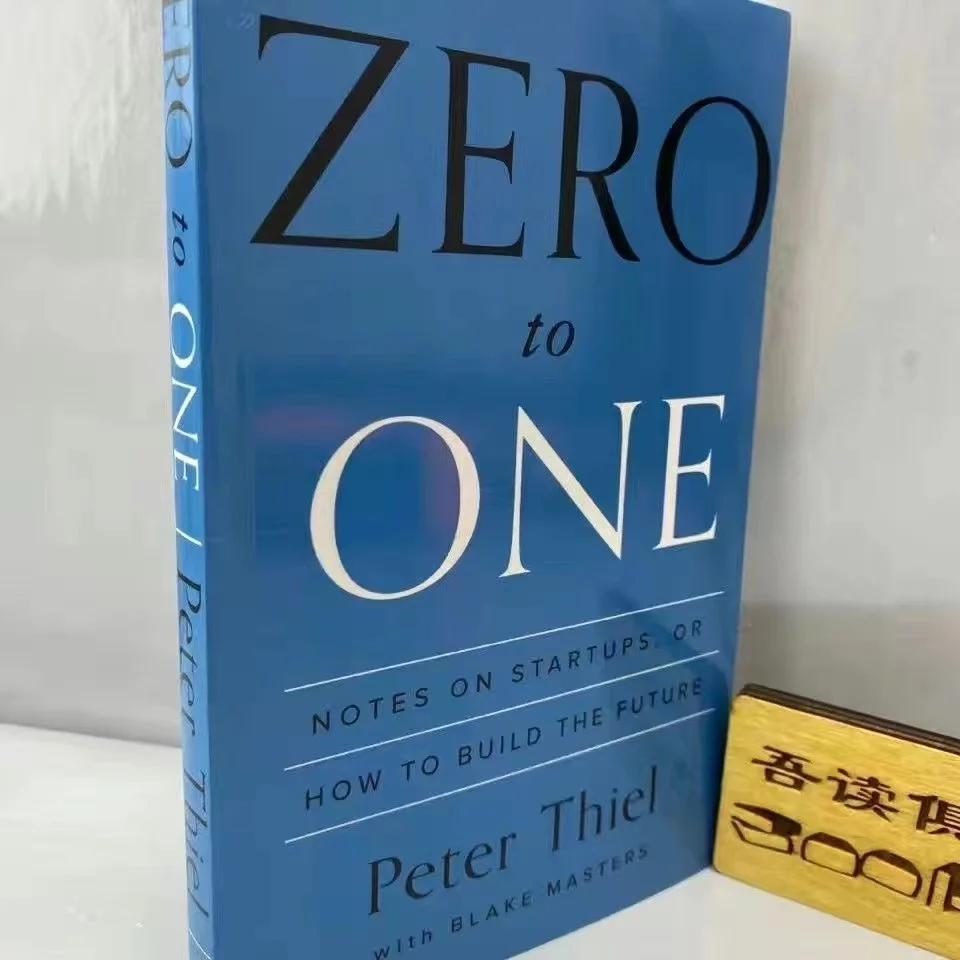
Notes on startups, or how to build the future — why copying never creates value, and monopoly is the goal.
📖 OPEN THE FULL INTERACTIVE BREAKDOWN →🌐 Read it in Hindi, Hinglish, Gujarati, Tamil & 22 more languages — free, with audio.
💡 The Big Idea
Every moment in business happens only once. The next Bill Gates won't build an operating system; the next Zuckerberg won't build a social network. Copying existing models takes the world from 1 to n — real value comes from creating something entirely new: going from 0 to 1. Thiel's contrarian gospel: competition is for losers, monopolies drive progress, and the best startups are built on secrets nobody else believes.
🧠 The 8 Key Lessons
Lesson 1: The Challenge of the Future: 0 to 1 vs 1 to n
Chapter 1: The Challenge of the Future
Horizontal progress (globalization) means copying things that work — 1 to n. Vertical progress (technology) means doing something nobody has done — 0 to 1. If China spends the next 20 years copying the developed world, that's globalization; if you build something new, that's technology. Startups exist because new thinking is hard inside big organizations: a startup is the largest group of people you can convince of a plan to build a different future.
📖 Example: One typewriter → 100 typewriters is 1 to n. One typewriter → a word processor is 0 to 1. The 1990s dot-com survivors who mattered (Google, Amazon, PayPal) weren't better copies of existing businesses — they were categorically new things. Read the full example →
⚡ Do this: Answer Thiel's interview question in writing: 'What important truth do very few people agree with you on?' Your best opportunities hide in your answer.
Lesson 2: Competition Is for Losers — Aim for Monopoly
Chapters 3–4: All Happy Companies Are Different
Under perfect competition, profits get competed away to zero — restaurants fight for scraps. A creative monopoly (Google in search) earns fat profits it can reinvest in the future. Monopolists lie ('we're just one player in a huge tech market') to avoid scrutiny; competitors lie to themselves ('we're totally unique') to survive psychologically. Competition is an ideology drilled into us by school — we compete because everyone else does, not because it's valuable.
📖 Example: US airlines move millions of people and earned about 37 cents per passenger trip in 2012. Google, in the same era, kept ~21% of revenue as profit — over 100x the airline industry's margin. Airlines compete; Google doesn't. Read the full example →
⚡ Do this: Stop asking 'how do I beat my rivals?' Ask 'what market can I own completely?' If you're fighting hard for market share, you may be in the wrong market.
Lesson 3: Start Small and Monopolize
Chapter 5: Last Mover Advantage
Every monopoly starts by dominating a small market, then expands in concentric circles. Great monopolies share 4 traits: proprietary technology (10x better than the next best), network effects, economies of scale, and branding. And forget 'first mover advantage' — it's better to be the LAST mover: the company that makes the final great development in a market and enjoys years of monopoly profits.
📖 Example: Amazon began with just books — a niche it could totally dominate — then expanded to CDs, electronics, everything. Facebook started with one college campus (Harvard). PayPal started with a few thousand eBay power-sellers. Small market first, world later. Read the full example →
⚡ Do this: Define your first market so narrowly you can own 80% of it within a year. If your pitch says 'we only need 1% of a $100B market,' start over.
Lesson 4: The Power Law: One Bet Beats the Portfolio
Chapter 7: Follow the Money
Returns in venture capital — and life — follow a power law: the best single investment in a fund equals or outperforms the entire rest of the fund combined. This means diversification is overrated for individuals too: you cannot diversify your own life into 20 careers. It matters enormously WHAT you do — find the one thing where you can be exceptional, and pour everything into it.
📖 Example: In Founders Fund's 2005 portfolio, Facebook alone returned more than every other investment combined. The second-best (Palantir) returned more than the sum of all the remaining ones. Two decisions mattered; dozens didn't. Read the full example →
⚡ Do this: List your projects/skills. Which single one has power-law potential? Cut two mediocre commitments this month and reinvest the hours there.
Lesson 5: Secrets: The Best Companies Are Built on Them
Chapter 8: Secrets
A secret is an important truth few people agree with you on. There are secrets of nature (undiscovered science) and secrets about people (things people don't know about themselves or hide). We've been taught secrets don't exist — school says everything worth knowing is known. Wrong: every great business is a conspiracy to change the world built around a secret hidden in plain sight.
📖 Example: Airbnb's secret: people would happily rent rooms to strangers, and homeowners had untapped supply — everyone 'knew' this was impossible until it wasn't. Uber and Lyft saw the same about car rides. The taxi industry never saw either coming. Read the full example →
⚡ Do this: Ask: 'What valuable company is nobody building?' and 'What do I know from my field/city/community that outsiders dismiss?' Write down 3 candidate secrets.
Lesson 6: Foundations, Culture & the Mafia
Chapters 9–10: Foundations / The Mechanics of Mafia
Thiel's Law: a startup messed up at its foundation cannot be fixed. Choose co-founders like a marriage — misaligned founders kill more startups than competition does. Keep boards small (3 ideal), make everyone full-time and equity-aligned, and build a culture so distinct it feels like a cult. 'Company culture' isn't free snacks; it's a shared mission that makes talented people turn down better salaries elsewhere.
📖 Example: The 'PayPal Mafia' — Thiel, Musk, Hoffman, the YouTube/Yelp founders — went on to build Tesla, SpaceX, LinkedIn, Palantir, YouTube and more. Not because they were mercenaries, but because PayPal hired people genuinely obsessed with the same mission, forming… Read the full example →
⚡ Do this: Before any partnership, ask: how well do I actually know this person? Would I want to be stuck with them when everything goes wrong? If unsure, don't found.
Lesson 7: Distribution: Sales Matters as Much as Product
Chapter 11: If You Build It, Will They Come?
Engineers dream that great products sell themselves — this is a lie. Every product needs distribution engineered as deliberately as the product itself. Sales works best when hidden (the best salespeople don't look like salespeople). Rule of thumb: whoever can pay customer acquisition cost profitably owns the channel — and if you can't get even ONE distribution channel to work, you have no business, however good the product.
📖 Example: Tesla didn't just build a great car — Musk mastered distribution: owning showrooms instead of dealerships, and turning himself into the marketing channel. Meanwhile, superior products with no distribution (countless better search engines before Google's ad… Read the full example →
⚡ Do this: Decide your ONE channel: viral, marketing, or sales. Calculate CLV vs CAC honestly. Nail one channel before touching a second.
Lesson 8: The Founder's Paradox & Seven Questions
Chapters 13–14: Seeing Green / The Founder's Paradox
Every great business must answer seven questions: Engineering (10x breakthrough?), Timing (why now?), Monopoly (big share of small market?), People (right team?), Distribution (how to deliver?), Durability (defensible in 10–20 years?), and Secret (what unique opportunity do others miss?). Cleantech companies of the 2000s failed 5–7 of these and burned billions. Founders are extreme, strange people — and that's necessary: only unconventional people make the unconventional bets that go 0 to 1.
📖 Example: Solyndra and the cleantech bubble: vague 'huge energy market' pitches, 2x improvements instead of 10x, no distribution plan, no secret. Tesla, attacking the same sector, answered all seven questions — and became the exception that thrived. Read the full example →
⚡ Do this: Score your current idea 0–7 against the seven questions. Anything below 5–6: fix the gaps or kill the idea before it kills your savings.
✅ 5-Step Action Plan
- Write your contrarian truth: what do you believe that almost nobody agrees with?
- Define a market small enough to dominate — then list the 10x advantage you'd need.
- Identify your power-law bet and cut two mediocre commitments feeding on its time.
- Choose ONE distribution channel and prove it works with 10 real customers.
- Run the Seven Questions checklist on your idea before investing another rupee.
⚠️ When This Doesn't Work
Thiel's contrarian lens is seductive but survivorship-biased. Most 'contrarian truths' are just wrong, and most 'blue oceans' are red oceans with good marketing. In India especially, 'there's no competition' often means 'there's no market.' Before you trust the contrarian instinct, find the one number that proves demand exists — or accept you're gambling, not building.
💀 The Graveyard Proves It
📱 Quibi — $1.75 Billion, Six Months, Gone. Burn: $1.75B in 6 months. Read the full case study →
💬 Best Quotes from Zero to One
- “What important truth do very few people agree with you on?”
- “Competition is an ideology that distorts our thinking.”
- “All happy companies are different: each one earns a monopoly by solving a unique problem.”
Interactive version: mark lessons as read, listen in your language, share quote cards.