Library › Money & Finance
The Science of Getting Rich — Summary & Key Lessons
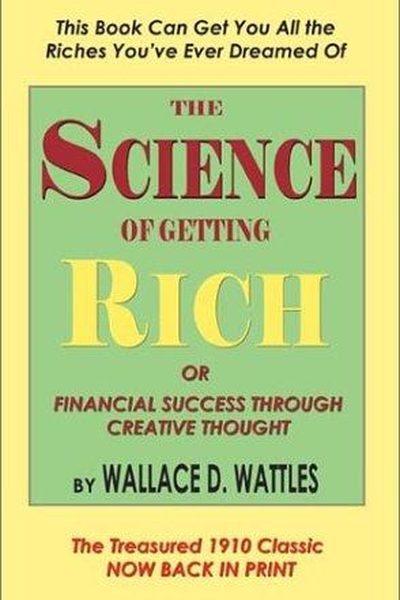
The 1910 classic that inspired The Secret and Rhonda Byrne — the original mental-physics book on wealth creation.
📖 OPEN THE FULL INTERACTIVE BREAKDOWN →🌐 Read it in Hindi, Hinglish, Gujarati, Tamil & 22 more languages — free, with audio.
💡 The Big Idea
Written in 1910, Wattles' tiny book argues wealth is not a zero-sum game: there is a thinking stuff from which all things are made, and by thinking in a 'Certain Way' — clear vision, gratitude, and action in the present — anyone can attract the formless substance into their lives. Its practical core: do all you can do today, in your current place, in the most efficient way — and wealth follows as a natural result of a certain habit of mind plus consistent action.
🧠 The 6 Key Lessons
Lesson 1: Wealth Is Your Right — and It's Not Zero-Sum
The Right to Be Rich
Wattles' opening claim: every person has the right to be rich — not as greed but as fullness of life. Wealth isn't stolen from others; it's created. The universe's 'formless stuff' responds to thought, and there's enough for everyone who learns to think and act in the certain way.
📖 Example: Wattles distinguishes the 'competitive mind' (there's only so much, I must take it) from the 'creative mind' (I can make more value). The creative mind is where wealth comes from. Read the full example →
⚡ Do this: Notice your default: competitive or creative? Reframe one area of scarcity ('not enough clients') as creation ('I can serve more people better').
Lesson 2: Thinking in a Certain Way
Thinking in a Certain Way
The core practice: form a clear, detailed mental picture of what you want — down to the specifics — and hold it without doubt, while acting on the present. Vague wishing does nothing; clear vision plus gratitude for what you have aligns your mind with receiving more.
📖 Example: Wattles: 'The man who can sincerely thank God for the things he has is the man who is ready to receive more.' Gratitude is the tuning fork; the mental picture is the blueprint. Read the full example →
⚡ Do this: Write a detailed mental picture of your goal (income, house, work) in present tense, as if done. Read it twice daily for a week.
Lesson 3: Act in the Present, in the Certain Way
Acting in a Certain Way
Thinking alone is not enough — you must act, TODAY, where you are, with what you have. The 'certain way' of acting: do everything you do in the most efficient, excellent manner possible, and use every opportunity to advance toward your vision. Don't wait for perfect conditions; create them by motion.
📖 Example: Wattles' instruction: 'Do not wait for a change of environment. Do not wait for tomorrow. Begin now to do all that you can do where you are.' The farmer doesn't wait for the ideal farm; he improves the one he has. Read the full example →
⚡ Do this: Do one concrete action toward your vision TODAY — even tiny. Wattles' rule: every day, advance. No exceptions.
Lesson 4: Gratitude: The Receiver's Frequency
Gratitude
Gratitude is not politeness — it's a mechanism. The mind that is grateful is in harmony with receiving; the mind that constantly wants more without appreciating what it has closes the channel. Wattles makes gratitude a daily, disciplined practice, not a mood.
📖 Example: The book's instruction is literal: 'When you rise in the morning, thank the One for the opportunity to live; before you sleep, review and thank for the day.' The habit retunes attention from lack to plenty. Read the full example →
⚡ Do this: Start a 3-line daily gratitude log — morning and night. Include one thing you ALREADY have that you used to take for granted.
Lesson 5: The Advancing Life: Grow or Stagnate
The Certain Way of Life
Wattles' final law: every living thing must advance or decline. The rich-getting mindset is the advancing life — always improving, creating, giving more value. The person who stops growing starts dying; the person who serves more gets more. Wealth is a byproduct of an expanding life.
📖 Example: Wattles: 'The advancing man goes forward; he does not stand still nor go backward. He gives every person more in use value than he takes from them in cash value.' Service plus advancement equals wealth. Read the full example →
⚡ Do this: Upgrade one skill or offer this week so you give MORE value than you take. That gap is where wealth is created.
Lesson 6: Gratitude and Vision Compound Into Creation
Gratitude
Wattles's 1910 classic pairs practical action with a mental discipline: be grateful for what you have, form a clear picture of what you want, and act efficiently toward it every day without anxiety about how it will arrive. The mental state is not mystical — it keeps you open, calm and consistent long enough for the practical steps to compound.
📖 Example: Wattles instructs readers to spend the morning in gratitude and the day in purposeful action, refusing worry about the mechanism. Practitioners report that this combination sustains the effort that luck eventually rewards — the vision steadies the hands. Read the full example →
⚡ Do this: Each morning for one week, write one thing you're grateful for and one clear image of your goal before starting work.
✅ 5-Step Action Plan
- Shift from competitive to creative mindset daily.
- Write your detailed mental picture in present tense.
- Do one advancing action every single day.
- Keep a 3-line gratitude log, morning and night.
- Add more use-value than you take — this week.
⚠️ When This Doesn't Work
Wattles' 1910 classic — 'think and act in a certain way and wealth follows' — is the grandfather of every manifestation book — and Allen Stanford is the proof of its darkest reading: the most 'certain' man in finance, who thought and acted wealth into existence for 20 years — and the wealth was a $7 billion fiction that destroyed 30,000 investors. The book's central flaw is the one every manifestation book inherits: it treats mindset as a substitute for verification. Thinking rich is real; checking the numbers is what makes the thinking true. The richest thinking in history has been done by frauds — and the poor verification has been done by their victims.
💀 The Graveyard Proves It
🏦 Allen Stanford — The Billionaire Who Ran the Largest Ponzi Since Madoff. Burn: $7 billion from 30,000 investors across 100 countries. Read the full case study →
💬 Best Quotes from The Science of Getting Rich
- “There is a thinking stuff from which all things are made, and which, in its original state, permeates, penetrates, and fills the interspaces of the universe.”
- “Get rich without compromise — that is what you must do.”
- “You must relate to the formless mind of the universe in a way that brings you into harmony with it.”
Interactive version: mark lessons as read, listen in your language, share quote cards.