Library › Money & Finance
The Richest Man in Babylon — Summary & Key Lessons
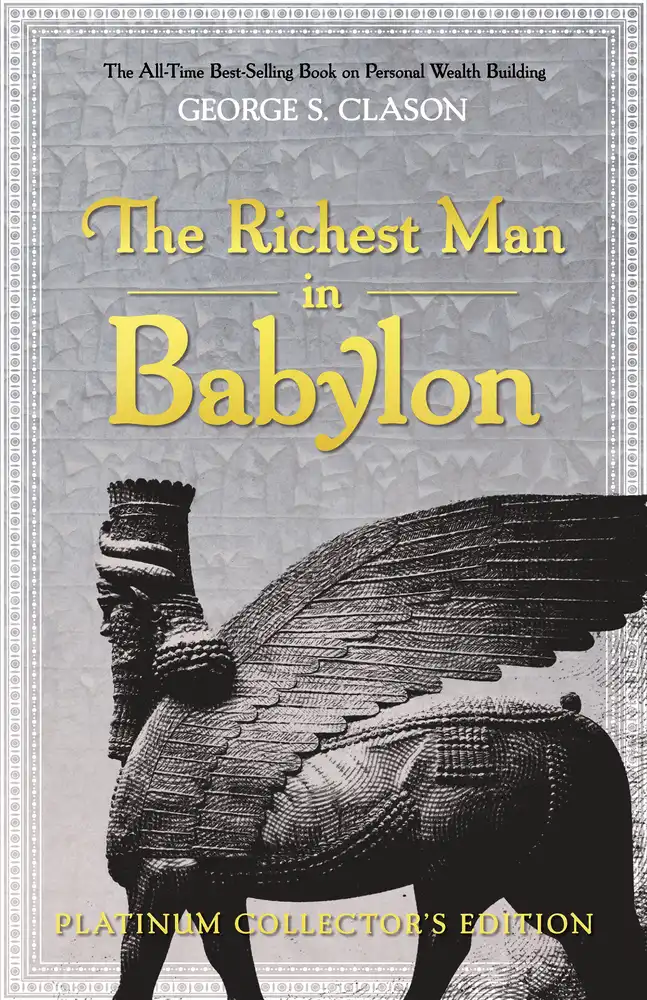
Timeless money wisdom told as ancient Babylonian parables — the original personal finance book.
📖 OPEN THE FULL INTERACTIVE BREAKDOWN →🌐 Read it in Hindi, Hinglish, Gujarati, Tamil & 22 more languages — free, with audio.
💡 The Big Idea
Told through parables set in ancient Babylon — the wealthiest city of the ancient world — Clason's 1926 classic distills personal finance into laws so simple they survive every era: save a tenth of all you earn, make your savings multiply, guard capital fiercely, own your home, insure your future, and invest in your own earning ability. Arkad, the richest man in Babylon, started as a poor scribe; the rules that made him rich fit on one clay tablet.
🧠 The 7 Key Lessons
Lesson 1: Pay Yourself First: The First Cure
The Richest Man in Babylon / Seven Cures, Cure 1
Arkad's foundational discovery, learned from the money lender Algamish: 'A part of all you earn is yours to keep.' Most people pay everyone else — landlord, grocer, sandal-maker — and keep nothing of their own labor. Save at least one-tenth of everything you earn, FIRST, before any spending. You'll barely notice the difference in lifestyle, but the growing pile changes everything: your options, your confidence, and eventually your freedom.
📖 Example: Arkad, a poor scribe carving clay tablets, asked the rich Algamish the secret of wealth. The answer bought with a night's free labor: 'I found the road to wealth when I decided that a part of all I earned was mine to keep. And so will you.' Arkad saved a… Read the full example →
⚡ Do this: Automate it this week: a standing transfer of 10% of income, moving the moment your salary lands. It's not what's left after spending — it's the first bill you pay.
Lesson 2: Control Thy Expenditures
Seven Cures, Cure 2
Here's the mystery Arkad poses: none of the students in his class had equal earnings, yet ALL had empty purses — because what each called 'necessary expenses' had grown to equal their income. That's not necessity; that's desire wearing a disguise. Budget your spending, question every 'essential,' and don't confuse your wants (infinite) with your needs (finite). The gap between the two is where wealth is built.
📖 Example: Clason's insight predates Parkinson's Law by decades: expenses expand to consume all available income — at every salary level. The man earning 10x still ends the month empty. Modern lifestyle inflation is the same clay tablet: the raise arrives, the car… Read the full example →
⚡ Do this: List last month's expenses. Mark each N (need) or D (desire-disguised-as-need). Cut the three biggest D's before next month and route the difference to savings.
Lesson 3: Make Thy Gold Multiply
Seven Cures, Cure 3
A saved coin is a slave that should work for you — and its children (interest) and their children should work too. Wealth isn't the pile itself; it's the STREAM the pile generates. Put every saved coin to labor: lending, sound investments, productive assets. Arkad's fortune came not from his savings but from his savings' earnings compounding across years — an ever-growing army of golden workers.
📖 Example: Arkad's first investment (through the shield-maker Aggar's bronze trade) paid rentals he initially spent on feasts — a mistake, he admits. Once he reinvested the earnings instead, the compounding began: 'the children of my gold began to earn, and their… Read the full example →
⚡ Do this: Check: is your saved money working (invested, earning) or sleeping (idle account)? Move idle savings into the simplest compounding vehicle available to you — this month.
Lesson 4: Guard Thy Treasure & Avoid Tempting Returns
Seven Cures, Cures 4–5 / The Five Laws of Gold
The first rule of investing is not losing: guard your principal. Gold flees the man who invests in businesses he doesn't understand, or who trusts it to those unskilled in its keeping, or who chases impossible returns urged by 'tricksters and schemers.' Before any investment, consult those experienced in that exact trade — wisdom costs nothing next to the losses it prevents. Also: own thy own home (Cure 5) — turning rent into ownership plants your family on solid ground.
📖 Example: Arkad's painful first lesson: he entrusted a year of savings to Azmur the brickmaker — to buy jewels. Sea traders sold Azmur worthless glass; everything was lost. Algamish's verdict: 'Why trust the knowledge of a brickmaker about jewels? Would you go to the… Read the full example →
⚡ Do this: Before your next investment, ask two questions: Do I understand exactly how this makes money? Have I consulted someone with real experience in THIS field (not a friend, not hype)? Two no's = walk away.
Lesson 5: Insure a Future Income & Increase Thy Ability to Earn
Seven Cures, Cures 6–7
Provide in advance for old age and for your family if you're gone — the man who builds this protection sleeps differently (Cure 6). And the final cure is the multiplier on all the others: increase thy ability to earn. Cultivate your skills, study your craft, become wiser at your work — the more you learn, the more you earn, and desire backed by skill is how small ambitions become large fortunes. Respect self-improvement as the leading edge of wealth.
📖 Example: Clason points to the tablets themselves: Babylonian scribes, the educated class, out-earned laborers many times over. And in 'The Luckiest Man in Babylon,' Sharru Nada rises from slave to merchant prince through one asset no one could chain: his skill and… Read the full example →
⚡ Do this: Invest 5% of income and 5 hours a week into skill-building in your field. Set up basic term insurance/emergency fund if you have dependents — this month, not someday.
Lesson 6: Luck Follows Action: The Goddess of Good Luck
Meet the Goddess of Good Luck
Babylon's merchants debate: what is luck? Their conclusion — the goddess of good luck favors men of action. 'Luck' almost always turns out to be an opportunity that was seized, and 'bad luck' an opportunity that was studied, delayed, and lost. Procrastination is the thief that robs you of your windfalls: when opportunity appears, the trained response is prompt, decisive action. Waiting for perfect certainty is how good fortune passes to the man standing next to you.
📖 Example: In the tale, a buyer is offered a fine land deal at a fair price, dawdles ('I'll decide tomorrow'), and loses it forever to a faster man — then calls the faster man 'lucky.' The merchants' verdict: the goddess never visited the procrastinator at all; she… Read the full example →
⚡ Do this: Identify one opportunity you've been 'thinking about' for over a month. Decide within 72 hours: commit fully or close it forever. Train the action reflex.
Lesson 7: Debt: The Camel Trader's Way Out
The Camel Trader of Babylon / The Clay Tablets of Dabasir
Dabasir, an escaped slave drowning in debts, proves a man's soul can be rebuilt along with his purse. His formula, recorded on clay tablets: 20% of income goes to creditors (divided fairly among all), 70% funds living costs, and 10% is still saved — because paying debts while keeping nothing breaks the spirit. Face every creditor honestly, show them the plan, and let discipline do the rest. 'Where the determination is, the way can be found.'
📖 Example: The tablets frame it as an experiment verified: a modern (1920s) professor's colleague, buried in debts, actually followed Dabasir's 70/20/10 plan from the translated tablets — and wrote back debt-free, with savings, promoted, and with his wife's respect… Read the full example →
⚡ Do this: In debt? Apply 70/20/10 today: list every creditor, divide 20% of income among them proportionally, live on 70%, save 10% regardless. Then show each creditor the written plan.
✅ 5-Step Action Plan
- Automate 10% savings — pay yourself first, before anything else.
- Audit expenses: separate true needs from desires wearing disguises.
- Put every idle rupee to work in compounding investments you understand.
- Never invest without consulting someone experienced in that exact field.
- In debt? Run 70/20/10. Spot an opportunity? Act within 72 hours.
⚠️ When This Doesn't Work
The clay-tablet rules assume an honest world where returns come from work. In modern India, 'pay yourself first' and 'make your gold multiply' are exactly the phrases every ponzi and chit-fund scheme uses to sound biblical — GainBitcoin and the Sahara schemes quoted this book's spirit while taking the gold. The Babylon rules are hygiene, not investment advice: they tell you to save, never what to buy. The moment someone promises your 'gold will multiply' at a guaranteed rate, it's a scam wearing Babylonian clothes.
💀 The Graveyard Proves It
🪙 GainBitcoin — India's 'Crypto Guru' and the ₹1 Lakh Crore Mirage. Burn: Est. up to ₹1 lakh crore in Bitcoin. Read the full case study →
💬 Best Quotes from The Richest Man in Babylon
- “A part of all you earn is yours to keep. It should be not less than a tenth no matter how little you earn.”
- “Gold slippeth away from the man who invests it in businesses or purposes with which he is not familiar.”
- “Where the determination is, the way can be found.”
Interactive version: mark lessons as read, listen in your language, share quote cards.