Library › Psychology & People
The Power of Regret — Summary & Key Lessons
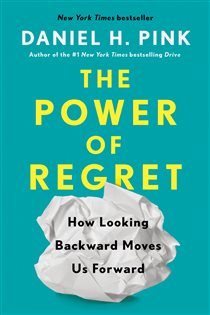
How looking backward moves us forward — the world's most misunderstood emotion, decoded from 16,000 regrets.
📖 OPEN THE FULL INTERACTIVE BREAKDOWN →🌐 Read it in Hindi, Hinglish, Gujarati, Tamil & 22 more languages — free, with audio.
💡 The Big Idea
The 'no regrets' tattoo culture gets the science exactly backward: regret is the most common negative emotion in human life and among the most USEFUL — a cognitive time-machine (counterfactual thinking: 'if only...') that, processed correctly, sharpens decisions, deepens meaning, and boosts performance. Pink's World Regret Survey (16,000+ regrets, 105 countries) found virtually all regrets sort into FOUR families: FOUNDATION regrets ('if only I'd done the work' — small bad choices compounding: not saving, not studying, not exercising), BOLDNESS regrets ('if only I'd taken the risk' — the business not started, the person not asked, the trip not taken; INACTION regrets outnumber action regrets 2-3x and grow with age while action regrets fade), MORAL regrets ('if only I'd done the right thing' — fewest in number, loudest at 3 AM: the bullying, the betrayal, the lie), CONNECTION regrets ('if only I'd reached out' — the largest family: drifted friendships and unsaid words, ended by awkwardness that research shows the other side almost never feels). The reverse-image insight: your regrets are a photo-negative of your values — what you regret reveals what you need (stability, growth, goodness, love). The processing protocol: self-DISCLOSURE (writing/telling converts emotional fog into cognitive material), self-COMPASSION (treat yourself as you'd treat a friend — beats both self-flagellation and self-esteem pumping), self-DISTANCING (advise 'a friend' with your problem; zoom to 10 years out), then extract the lesson and act. Anticipated regret even works prospectively: the 10/10/10 test and 'deathbed audit' de-bias big calls — mainly by pushing you toward boldness and connection, where future-you keeps the receipts.
🧠 The 6 Key Lessons
Lesson 1: The Four Regrets — and What Each One Is Telling You
Parts 1-2
Surface regrets vary infinitely (careers, romance, money, health); deep structure doesn't. FOUNDATION regrets whisper 'do the work': they're conscientiousness debts — tiny reasonable-seeming choices (skip the saving, skip the class, skip the gym) whose compounding only becomes visible decades later; their lesson is boring and non-negotiable: start now, automate virtue. BOLDNESS regrets shout 'take the chance': at every age, in every country, the un-taken risk outweighs the failed attempt — psychology's explanation: failures resolve (you learn, adapt, retell), but 'what might have been' stays open forever, an unclosable loop. MORAL regrets say 'be better': fewest but deepest — decades later people still burn over childhood cruelties and adult betrayals; conscience keeps immaculate books. CONNECTION regrets plead 'reach out': the drifted friend, the unvisited parent, the unsaid gratitude — killed by the awkwardness illusion (we massively overestimate how weird reconnection will feel; recipients report overwhelmingly feeling honored). Diagnose your own top regret's family and you've found your value hierarchy — and this quarter's assignment.
📖 Example: Pink's survey voices: the 52-year-old whose foundation regret ('I treated saving as optional in my 20s') now sets her students' curriculum; the retired lawyer whose boldness regret — not saying yes to a startup co-founder invitation in 1998 — he rates above… Read the full example →
⚡ Do this: Write your three biggest regrets and tag each by family (foundation/boldness/moral/connection). The dominant tag is your value speaking. Design one act per tag this month — an automated habit, a risk taken, an amends made, a call placed.
Lesson 2: Process, Don't Marinate: Disclosure, Compassion, Distance
Part 3
Regret's power depends entirely on processing mode. MARINATING (rumination — replaying the loop) correlates with depression and worse decisions; SUPPRESSING ('no regrets!') forfeits the data. The working protocol: (1) SELF-DISCLOSURE — write about the regret 15 minutes for three days, or tell someone: language forces structure onto emotional fog, and studies show writing about negative experiences (unlike positive ones, which are best savored unanalyzed) reliably reduces their sting while extracting their lesson; (2) SELF-COMPASSION (Kristin Neff's research) — address yourself as you would a beloved friend with the same failure: it outperforms self-criticism (which predicts avoidance) AND self-esteem inflation (which requires denial); normalize ('humans do this') without excusing; (3) SELF-DISTANCING — third-person review ('what should Jash learn from this?'), the 10-year zoom, or the advisor flip ('what would I tell a friend?'): distance converts the regret from wound to case study. Then the closing move: extract ONE if-then rule for the future ('if a friendship matters, then I schedule the call quarterly') — regret's entire ROI is the rule it leaves behind.
📖 Example: Pink's synthesis of the lab evidence: Kross's distancing studies (participants analyzing setbacks in third person showed less distress and better problem-solving than first-person ruminators); Pennebaker's expressive-writing lineage (health and clarity gains… Read the full example →
⚡ Do this: Take your heaviest regret through the full protocol this week: 3 × 15-minute writing sessions → one paragraph in third person ending with 'what should they learn?' → one if-then rule installed on your calendar/systems → if it's a connection regret: send the message today; awkwardness is a liar.
Lesson 3: Use Regret Forward: The Pre-Mortem on Your Life
Part 4
Anticipated regret is decision-making's cheat code — with a manual. It de-biases the big stuff: before major choices, run the DEATHBED AUDIT ('at 80, which option will I wish I'd chosen?' — reliably surfaces boldness and connection, the families old-you weeps over) and 10/10/10 (how will I feel in 10 minutes / 10 months / 10 years — rescuing long-term values from short-term discomfort). Two warnings from the research: don't over-apply it to SMALL decisions (maximizers who anticipate regret on every toothpaste purchase are measurably less happy — satisfice the trivial); and beware its distortions in edge cases (people irrationally avoid switching answers/queues because anticipated regret of action looms larger than inaction — even though the switch is usually right). Pink's operating summary: optimize for the four families in advance — do the boring foundations daily, take the values-aligned risk, keep the moral line unbroken, and make the call — because the entire dataset of 16,000 backward glances compresses into one forward instruction: be bolder and kinder than feels comfortable, starting with the phone in your pocket.
📖 Example: Bezos's founding story — retold in the book as the framework's poster child: the 'Regret Minimization Framework,' invented (he says) to decide on leaving a hedge-fund salary in 1994: 'At 80, would I regret trying and failing at this internet thing? No. Would… Read the full example →
⚡ Do this: Install two rituals: (1) for any decision bigger than a purchase, write the 80-year-old's one-sentence verdict on each option before choosing; (2) monthly, ask 'which future regret am I currently manufacturing?' — then do this month's smallest countermeasure (the call, the deposit, the apology, the application).
Lesson 4: The Regret Résumé and Anticipating Wisely: A Personal Operating System
Coda: Regret and Redemption
Pink's synthesis tool is the REGRET RÉSUMÉ: alongside your CV of achievements, write the honest inventory of your significant regrets — not as self-punishment but as a values X-ray (the CV shows what you did; the regret résumé shows what you CARE about), reviewed annually like any strategic document. From it, derive your personal operating rules: foundation regrets → automate the boring virtue (standing SIP, calendar-blocked health); boldness regrets → install a default-to-action policy for opportunities above a threshold ('when torn between safe and growth, choose growth — signed, past me'); moral regrets → pre-commit your lines BEFORE temptation (the time to decide about integrity is never in the moment); connection regrets → a standing reach-out ritual (one revived contact monthly). Pink adds the FAILURE VACCINE of self-disclosure norms: teams and families that talk about regrets normally (his 'regret circles' — structured sharing of one regret + its lesson) make everyone's future decisions collectively smarter, because hidden regrets teach only their owner, while shared ones teach the room. The closing reframe deserves its own line: regret's message was never 'you are bad' — it was always 'you believed in something better. Go build it.'
📖 Example: Pink's own regret résumé, published in the book as demonstration: kindness withheld in college (connection/moral), risks deferred in early career (boldness), and the entrepreneurial leap delayed years past the evidence (boldness again) — from which his… Read the full example →
⚡ Do this: Write your regret résumé this weekend: your 5-7 significant regrets, each tagged by family, each converted into ONE standing personal rule with a trigger ('when X, I do Y'). Put the rules where decisions happen (wallet card, phone note). Review and update every birthday — your regrets will change; that's the system working.
Lesson 5: The Regret Ladder: What Your Most Common Regrets Say About You
Part 3: The Framework
Pink's research across 105 countries revealed the four most common regrets, forming a 'ladder' from foundation to aspiration: foundation regrets (not studying, not saving, not building health), boldness regrets (not taking the risk, not asking the person out), moral regrets (wronging someone), and connection regrets (losing touch, not being there). The ladder shows a hierarchy of needs — regrets climb from security to love to meaning — and the pattern reveals something hopeful: people's deepest regrets are almost never about what they did wrong in work; they're about the chances not taken in life. Reading your own regrets through the ladder shows you what you actually value — and what to act on now.
📖 Example: Pink cites the dying and the old whose regrets cluster around the same themes: 'I wish I'd had the courage to live my own life' — not 'I wish I'd worked harder'. The ladder shows that the boldness and connection regrets are the ones that hurt most at the… Read the full example →
⚡ Do this: Write your top 3 regrets ever. Map each to the ladder (foundation, boldness, moral, connection) — and pick the category that recurs most as your signal for what to change this year.
Lesson 6: The Optimization: Use Regret to Make Better Future Choices
Part 4: The Method
Pink's closing move: regret isn't just for processing the past — it's a tool for optimizing the future. The technique: 'anticipate regret' — before making a significant decision, ask 'in five years, which choice will I regret more?' The answer, research shows, is a surprisingly accurate guide because it filters out present bias and social pressure. Complement it with the 'regret résumé': a document of your regrets, updated regularly, that you consult before major choices — the accumulated wisdom of your own mistakes, always at hand. The optimization converts regret from a feeling you suffer into an input you use. People who anticipate regret make better decisions — not because they're fearless, but because they let their future selves vote.
📖 Example: Pink describes how the simple question 'which will I regret more in ten years?' helped people make choices about moves, relationships and risks — and how the anticipation consistently steered them toward the bold-but-aligned option rather than the… Read the full example →
⚡ Do this: Before your next major decision, write the 'regret test': 'In five years, which option will I regret more?' Answer in writing, and let that answer carry real weight in the choice.
✅ 5-Step Action Plan
- Tag your top regrets by family — foundation, boldness, moral, connection — and read them as values.
- Process, never marinate: write it, befriend yourself, review it from a distance.
- Convert every processed regret into one installed if-then rule.
- Run the deathbed audit and 10/10/10 on big decisions; satisfice the small ones.
- Send the reconnection message today — the awkwardness is imaginary; the window isn't.
⚠️ When This Doesn't Work
Pink's 'regret is a compass, not a wound' is the most humane psychology book of the decade — and Ronald Wayne is the extreme case: Apple's third co-founder sold his 10% stake for $800 in 1976 because he feared the risk, and the regret became the defining story of his life — not because he made a bad decision, but because he never re-examined the fear that made it. The book's lesson cuts both ways: regret can teach you, and it can also haunt you. The antidote is not avoiding regret — it's making the decision, then owning it forever.
💀 The Graveyard Proves It
🍏 Ronald Wayne — The Man Who Sold 10% of Apple for $800. Burn: ~$300 BILLION (today's value). Read the full case study →
💬 Best Quotes from The Power of Regret
- “Regret is not dangerous or abnormal. It is healthy and universal, an integral part of being human.”
- “What we regret most is not what we did, but what we didn't do.”
- “Regrets are a photographic negative of the good life.”
Interactive version: mark lessons as read, listen in your language, share quote cards.