Library › Money & Finance
The Intelligent Investor — Summary & Key Lessons
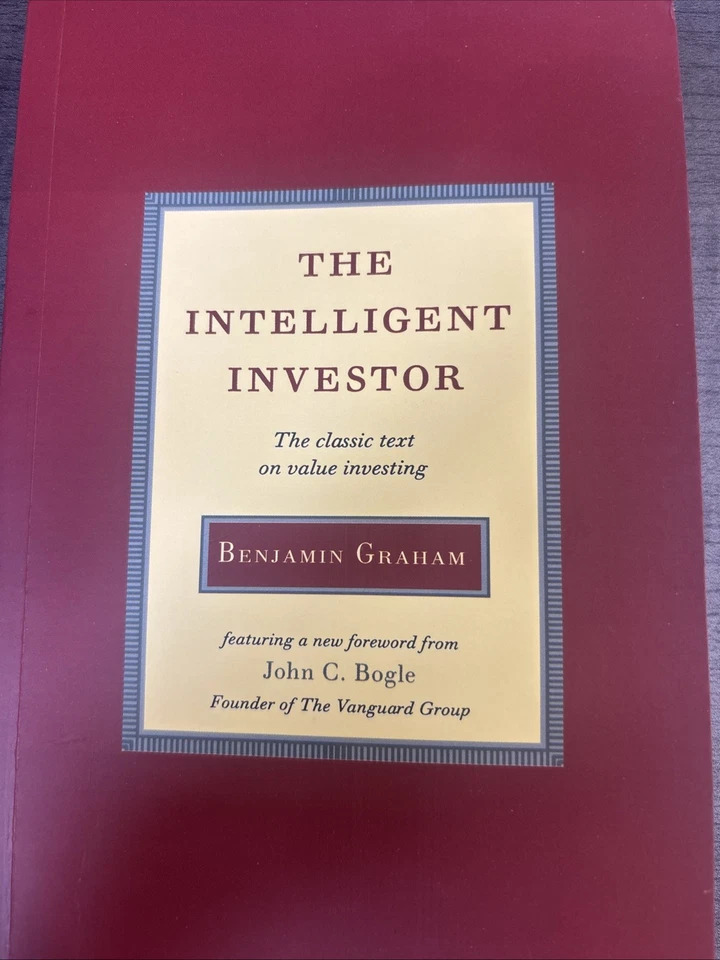
The definitive book on value investing — Mr. Market, margin of safety, and the discipline Warren Buffett calls 'by far the best book on investing ever written.'
📖 OPEN THE FULL INTERACTIVE BREAKDOWN →🌐 Read it in Hindi, Hinglish, Gujarati, Tamil & 22 more languages — free, with audio.
💡 The Big Idea
Graham — Buffett's teacher and the father of security analysis — built the intellectual foundation of rational investing on a handful of unbreakable ideas: an INVESTMENT operation promises safety of principal and adequate return through analysis (everything else is speculation, however respectable it looks); the market is a manic-depressive business partner (Mr. Market) whose daily quotes are options, not orders; a stock is a piece of a business, not a ticker symbol; returns are protected not by brilliance but by the MARGIN OF SAFETY — buying so far below conservative value that even bad luck and error can't destroy you; and the investor's real battlefield is internal: temperament beats IQ. Know whether you're a defensive or enterprising investor, act accordingly, and never confuse a rising price with being right.
🧠 The 6 Key Lessons
Lesson 1: Investment vs. Speculation: Know Which Game You're Playing
Chapter 1: Investment versus Speculation
Graham's foundational boundary: 'An investment operation is one which, upon THOROUGH ANALYSIS, promises SAFETY OF PRINCIPAL and an ADEQUATE RETURN. Operations not meeting these requirements are speculative.' Three tests, all mandatory — and by them, most market activity (including most professional activity) is speculation wearing a suit: buying on tips, momentum, stories, or the expectation that someone will pay more tomorrow. Speculation isn't illegal or even always foolish — but it becomes fatal when mistaken for investing: when done with money you can't lose, or when the speculator believes his luck is analysis. Graham's prescription for the honest speculator: wall it off — a strictly limited 'mad money' account, never refilled from winnings' euphoria, never merged with the investment program. The catastrophic error isn't speculating; it's not KNOWING you're speculating.
📖 Example: Zweig's commentary (in the modern edition) supplies the eternal exhibit: the dot-com bubble, where 'investors' bought companies without earnings, products, or plausible futures at any price — analysis absent, principal unprotected, returns assumed — and… Read the full example →
⚡ Do this: Audit every holding against Graham's three tests: did analysis precede purchase? Is principal protected by the price paid? Is the expected return adequate rather than fantastic? Anything failing goes into a capped, separate speculation account — or out.
Lesson 2: Mr. Market: Your Manic Business Partner
Chapter 8: The Investor and Market Fluctuations
Graham's most famous invention: imagine you own a business share with a partner, Mr. Market, who every day names a price at which he'll buy yours or sell his. Some days he's euphoric and quotes absurd highs; some days he's despondent and quotes panicked lows. Two properties make him useful: he ALWAYS returns tomorrow with a new quote, and he NEVER minds being ignored. The intelligent response: his quotes are options, never verdicts — exploit his depression (buy), consider exploiting his mania (sell), and otherwise let him rave while your view of the business's actual value governs. The tragedy Graham diagnosed: most investors invert the relationship, letting the quote INSTRUCT them — buying his euphoria, selling his panic — which converts the market's chief gift (liquidity plus periodic mispricing) into its chief hazard. Price fluctuations have exactly one true message for the owner: opportunity or noise. Nothing else.
📖 Example: Graham's own arithmetic proof spans the book: the same company's stock quoted at wildly different prices within months while the business barely changed — the quotes measured Mr. Market's mood, not the enterprise. Buffett's application became legend: buying… Read the full example →
⚡ Do this: Write your Mr. Market protocol before the next panic: at what price would you happily buy MORE of what you own? Keep the list current. When quotes drop toward it, consult the business's value — not the news, not the mood, not the quote's opinion of itself.
Lesson 3: Defensive or Enterprising: Choose Your Lane Honestly
Chapters 4–7, 14–15: Portfolio Policy
Graham splits all investors by effort and temperament, not intelligence. The DEFENSIVE investor prioritizes safety and freedom from bother: prescription — mechanical diversification (25–75% split between quality bonds and stocks, rebalanced), 10–30 large, prominent, conservatively financed companies with long dividend records, bought at reasonable price multiples, or (in the modern reading) simply index funds; then STOP — no forecasting, no dancing. Dollar-cost averaging automates the temperament. The ENTERPRISING investor accepts real work — genuine security analysis, hunting bargains in unpopular large companies, special situations, and net-nets — for the chance of better returns. Graham's stern warning between the lanes: there is no comfortable middle; the 'half-enterprising' investor who dabbles with neither discipline nor devotion gets speculation's risks with investment's returns. Beating the market is a full-time job — treat it as one, or don't apply.
📖 Example: Graham's own defensive checklist did its quiet work for generations: adequate size, strong finances (current assets twice current liabilities), twenty years of dividends, no earnings deficit in a decade, moderate P/E and price-to-assets — filters that… Read the full example →
⚡ Do this: Declare your lane in writing: defensive (automated plan, index/quality list, rebalancing calendar, no forecasts) or enterprising (define your analysable niche and weekly research hours). If you can't fund the enterprising hours, the defensive lane isn't settling — it's self-knowledge.
Lesson 4: Margin of Safety: The Three Most Important Words in Investing
Chapter 20: 'Margin of Safety' as the Central Concept
Asked to compress sound investing into one motto, Graham answers: MARGIN OF SAFETY — the gap between price paid and conservatively estimated value, sized to absorb bad luck, bad analysis, and a future nobody can forecast. The engineer's logic: build the bridge for 30,000-pound trucks and run 10,000-pound ones across it. Its functions: it renders precise forecasting UNNECESSARY (you profit even if the future is mediocre, because you didn't pay for brilliance); it converts diversification into a mathematical ally (each purchase has favorable odds; the group makes the odds reliable); and it draws the true line between investment and speculation better than any label — the speculator's 'margin' is his opinion that he's right, the investor's margin is arithmetic that survives his being partly wrong. Growth investing can qualify — but only when the growth is bought below conservative appraisal, which enthusiasm almost never permits. Risk, properly defined, isn't volatility: it's the permanent loss that arrives from overpaying.
📖 Example: Graham's bond-cover illustration sets the template: a railroad earning five times its interest charges has a margin; one earning them barely, none — and the same logic prices equities. The concept's negative proof is every bubble's autopsy: buyers of the… Read the full example →
⚡ Do this: Before any purchase, write the margin explicitly: your conservative value estimate, the current price, and the discount percentage. Set your personal minimum (Graham's disciples use a third to a half below value) — and when no margin exists anywhere, discover Graham's most underrated position: cash, and patience.
Lesson 5: The Investor and His Self: Temperament Is the Edge
Chapters 8, 20 & Zweig's Commentary
Graham's deepest teaching wears the plainest clothes: 'The investor's chief problem — and even his worst enemy — is likely to be himself.' Markets don't produce most losses; reactions to markets do — chasing what just rose (buying euphoria), fleeing what just fell (selling despair), mistaking a bull market for personal genius, and abandoning sound plans at maximum-pain moments, which are precisely when plans matter. The armor is structural, not motivational: written policies decided in calm (allocations, buy criteria, rebalancing dates) that pre-commit future behavior; automation (dollar-cost averaging) that removes decisions from mood's jurisdiction; ignoring quotations for months at a time as a POLICY; and measuring success against your plan and the businesses' performance — never against neighbors, indices' hot years, or last quarter. The intelligent investor, Graham concludes, is a realist who sells to optimists and buys from pessimists — a temperament available to anyone and adopted by almost no one, which is exactly why it still pays.
📖 Example: The book's living proof outlived its author: Buffett — who called the 1949 edition the best investing book ever written — attributes his results not to superior formulas but to Chapter 8 and Chapter 20 'more than any other ideas': treat quotes as servants,… Read the full example →
⚡ Do this: Draft your Investor's Constitution this week: target allocation, buy criteria, rebalancing dates, a maximum quote-checking frequency, and the sentence 'I will not sell because prices fell nor buy because they rose.' Sign it. When the next mania or panic arrives — and it will — obey the calm author, not the excited reader.
Lesson 6: The Investor's Chief Problem Is Himself
The Investor and Inflation
Graham's central warning: the market's biggest danger is not the market but the investor's own emotions — greed at tops, fear at bottoms, and the urge to copy the crowd. He prescribes an 'intellectual and moral' discipline: define your strategy in writing, then refuse to abandon it because of noise. The market is a voting machine in the short run and a weighing machine in the long run.
📖 Example: Investors who bought quality stocks in 2008 panic sold at the bottom, locking in losses, while those who had written their plan beforehand held on and recovered within years. The difference was not intelligence — it was having a pre-committed policy that… Read the full example →
⚡ Do this: Write your personal investment policy in one page — what you buy, why, and when you will NOT sell — and keep it visible for your next panic.
✅ 5-Step Action Plan
- Run every holding through the three-test definition; cap speculation separately.
- Write your Mr. Market buy-list before the next panic arrives.
- Declare your lane — defensive automation or enterprising hours — honestly.
- Never buy without writing the margin: value, price, discount percentage.
- Sign your Investor's Constitution and let it outvote your moods.
⚠️ When This Doesn't Work
Graham's margin of safety assumes the numbers are true. India's Satyam showed what happens when the numbers are fabricated: the 'safest' stock in the index, audited by the biggest firms, turned out to be a $1 billion hole. Graham never priced in fraud because honest accounting was his quiet assumption — it no longer is anyone's. Every 'value' must be re-checked against one brutal question: what would it look like if management was lying, and does anything disprove that?
💀 The Graveyard Proves It
🐅 Ramalinga Raju — Riding a Tiger, Not Knowing How to Get Off. Burn: ₹7,000 crore fake cash. Read the full case study →
💬 Best Quotes from The Intelligent Investor
- “The investor's chief problem — and even his worst enemy — is likely to be himself.”
- “In the short run, the market is a voting machine but in the long run, it is a weighing machine.”
- “The margin of safety is always dependent on the price paid.”
Interactive version: mark lessons as read, listen in your language, share quote cards.