Library › Productivity
Inspired: How to Create Tech Products Customers Love — Summary & Key Lessons
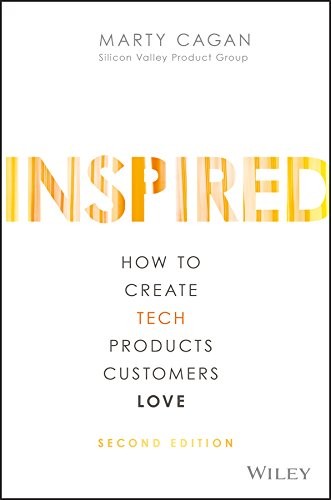
The product management bible: why feature factories ship garbage, and how real product teams discover what's worth building.
📖 OPEN THE FULL INTERACTIVE BREAKDOWN →🌐 Read it in Hindi, Hinglish, Gujarati, Tamil & 22 more languages — free, with audio.
💡 The Big Idea
Cagan (SVPG, ex-HP and Netscape) splits product work into discovery (figuring out what to build) and delivery (building it), and indicts the feature factory model: roadmaps of stakeholder promises, teams as delivery machines, and success measured by shipping rather than outcomes. The core framework: every product idea carries four risks (value: will people use it, usability: can they, feasibility: can we build it, business viability: does it work for our business), and discovery techniques (prototype tests, fake-door, live-data experiments, customer interviews) exist to retire those risks cheaply before engineering spends real money. The org design: small durable teams around outcomes, a true product manager accountable for value, engineers in discovery from day one, and leadership's job as coaching, not commissioning features.
🧠 The 8 Key Lessons
Lesson 1: Half Your Ideas Will Fail: Budget for It
The Inconvenient Truth About Ideas
Cagan's foundational claim: even great teams' ideas fail at 50 percent-plus, so the unit of planning cannot be 'the idea' but 'the validation capacity'. Feature factories pretend every shipped item worked and drown in mediocrity; product organizations expect failure in discovery (cheap) so failures in market (expensive) become rare. Redesign your planning around learning throughput, not feature throughput.
📖 Example: The book's teams test 10-20 ideas per quarter in prototype form, kill most within days, and ship the few that survive all four risk checks: the exact inverse of a quarterly roadmap committed in January. Read the full example →
⚡ Do this: Convert one quarter's roadmap into a hypothesis list. Budget 50 percent of your build capacity for validation experiments and measure how many roadmap items die cheaply.
Lesson 2: The Four Risks Kill More Products Than Bad Code
Value, Usability, Feasibility, Viability
Every idea risks four different failures: value (will anyone use/buy it), usability (can they figure it out), feasibility (can we build it well), viability (does it fit our business model, legal, brand). Teams that test only feasibility (can we ship it) discover value problems at launch, the most expensive possible moment. The discipline: for every idea, name which risk is most likely to kill it, and design the cheapest test for THAT risk first.
📖 Example: Google Glass is the book's canonical ghost: brilliant feasibility and usability engineering, and no answer to value (why would anyone wear this daily?): the linked case study is the four-risk framework's most expensive omission. Read the full example →
⚡ Do this: Take your next planned feature and write the four risks beneath it. Kill or redesign any feature whose value test hasn't run before a single sprint is committed.
Lesson 3: Prototype Is Cheaper Than Apology
Discovery Techniques
Discovery's toolbox exists to retire risks at prototype cost: user interviews (problems, not solutions), concierge tests (do the service manually), fake-door tests (demand before build), live-data prototypes, Wizard-of-Oz. Each technique answers a specific risk in days for a fraction of sprint cost. The craft is matching technique to risk and being honest about what prototypes can't prove (they measure intent poorly; they measure friction well).
📖 Example: A fake-door test (pricing page with a 'coming soon' feature and a waitlist) killed a quarter's planned build in a week when nobody clicked, and redirected the team to what users actually kept asking for. Read the full example →
⚡ Do this: Pick your riskiest roadmap item and design a fake-door or concierge test for it this week. Spend one day, not one sprint, before you decide.
Lesson 4: Product Manager Is Not the CEO of the Product
The Real Role
Cagan explicitly kills the 'CEO of product' cliché: PMs have responsibility without authority and win through influence, deep customer knowledge, data fluency and business context. Their job is being the smartest person on three things (users, data, business) so teams trust their judgment. The hiring lesson: hire PMs who bring evidence and persuasion, not feature commissioning and Jira hygiene.
📖 Example: The book's strong PMs spend 30 percent of time with customers and users, know the numbers cold, and earn engineers' trust by killing their own favorite ideas when evidence says so. Read the full example →
⚡ Do this: Audit your PM calendar this week: hours with customers versus hours in status meetings. Flip the ratio toward customers for one month and watch decision quality change.
Lesson 5: Engineers Belong in Discovery, Not Just Delivery
Bringing the Builders
The fastest feasibility learning comes from engineers in discovery: they spot the cheaper architecture, the buildable version, the 'we already have that' moments. Teams where engineers first see the spec at sprint planning lose both speed and morale. The craft: invite engineers to customer problems (not just proposed solutions) and let them shape what gets tested.
📖 Example: Book examples show engineers collapsing six-month builds to six weeks by proposing an alternative path after hearing the actual customer problem in an interview recording. Read the full example →
⚡ Do this: Bring one engineer to your next customer interview and let them hear the problem raw. Then ask them for the cheapest testable version before anyone writes a spec.
Lesson 6: Outcomes Over Outputs, Always
OKRs for Product Teams
Empowered teams are managed by outcomes (conversion, retention, engagement of a specific segment) not outputs (ship these features). Leaders set outcome targets and constraints; teams choose the roadmap. The hard part is leaders actually releasing the roadmap: most 'empowerment' fails at the moment a founder's pet feature meets a team's evidence against it.
📖 Example: Book examples show teams missing their feature dates and hitting their business outcomes, celebrated; the inverse (hitting dates, missing outcomes) is the feature factory's quiet failure nobody reports. Read the full example →
⚡ Do this: Pick ONE team and give them an outcome target (a metric, a number, a quarter) with total roadmap freedom. Compare their quarter to a roadmap-driven team honestly.
Lesson 7: Discovery Is Never Done: Validate Continuously
The Cadence
Great teams run discovery continuously (weekly user touchpoints, ongoing prototype tests) rather than as a phase before 'real work'. The cadence keeps learning current, kills dying ideas early, and demoralizes nobody (features die in a week, not a quarter). The discipline: discovery is a habit with a calendar, not a project with a deadline.
📖 Example: The book's teams book user tests every Tuesday and Thursday regardless of roadmap state, so there is always fresh evidence and nothing ships on vibes. Read the full example →
⚡ Do this: Book recurring weekly user touchpoints (three interviews or tests) on your team calendar now, and protect them like you protect board meetings.
Lesson 8: Mission, Strategy, Principles, Then Features
The Alignment Stack
Cagan's alignment hierarchy: product vision (5-10 year), product strategy (which markets/personas in which order), principles (trade-off rules), THEN team-level backlogs. Teams shipping features disconnected from this stack optimize locally and die globally. The leadership craft: keep the stack current and visible so every team can check their work against it without a meeting.
📖 Example: Book examples show conflicting features resolved in minutes by a written principle ('we optimize for the user's privacy over engagement'), the stack acting as a decision-making shortcut. Read the full example →
⚡ Do this: Write (or refresh) your one-page vision, strategy and three principles. Kill or reshape any active project that contradicts one of the three principles.
✅ 5-Step Action Plan
- Budget half of build capacity for validation; measure ideas killed cheaply.
- Run the four-risk test on your next feature before sprint commitment.
- Fake-door your riskiest roadmap item this week: one day, not one sprint.
- Flip your PM's calendar toward customers for one month.
- Give one team an outcome target with total roadmap freedom this quarter.
⚠️ When This Doesn't Work
Cagan writes from top-tier B2C/B2B software experience: his patterns fit durable product teams better than tiny startups (where the founder IS the PM), enterprise sales-driven orgs, or hardware timelines, and examples skew to successful SVPG clients. The four-risk framework is commons once seen, which is the point, but operationalizing it needs the coaching he sells. Read it as the operating manual for product discovery, and accept that culture change (not knowledge) is the hard part.
💀 The Graveyard Proves It
🥽 Google Glass — $1,500 to Be Called a 'Glasshole'. Burn: Consumer launch dead in 2 years. Read the full case study →
💬 Best Quotes from Inspired: How to Create Tech Products Customers Love
- “At least half of our ideas are just not going to work.”
- “Your roadmap is a list of promises your teams haven't validated.”
- “Minimize the cost of learning, not the cost of shipping.”
Interactive version: mark lessons as read, listen in your language, share quote cards.