Library › Business & Startups
Great by Choice — Summary & Key Lessons
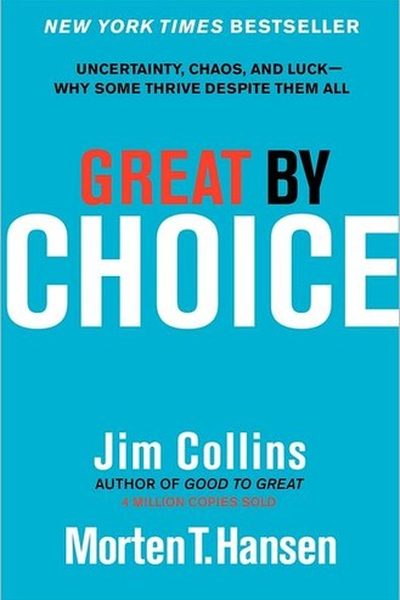
Uncertainty, chaos and luck — why some thrive despite them all. The 10xers' rules: 20 Mile March, bullets before cannonballs, and the SMaC recipe.
📖 OPEN THE FULL INTERACTIVE BREAKDOWN →🌐 Read it in Hindi, Hinglish, Gujarati, Tamil & 22 more languages — free, with audio.
💡 The Big Idea
Collins studied companies that outperformed extreme environments (the 10xers) vs comparable companies that didn't. The 10xers shared: 1) Fanatic discipline — the 20 Mile March (consistent progress in good AND bad times), 2) Empirical creativity — bullets first (cheap experiments) then cannonballs (big bets only after evidence), 3) Productive paranoia — prepare for what you can't predict, 4) The SMaC recipe — a simple, specific, stable operating formula. Luck matters; what you do with it is a choice.
🧠 The 6 Key Lessons
Lesson 1: The 20 Mile March: Discipline Beats Talent
The 10xers
10xers set a performance floor AND ceiling they hit in every condition — like walking 20 miles a day regardless of weather. They don't sprint in boom times or panic in busts. This consistency builds credibility, momentum and calm. The 'ceiling' matters as much as the floor: don't overreach in good times.
📖 Example: In the chaotic airline industry post-deregulation, Southwest marched 20 miles: consistent growth and profit every single year, while high-flying competitors crashed. Same storm, different discipline. Read the full example →
⚡ Do this: Define YOUR 20-mile march: the minimum you do daily/weekly in bad times, and the maximum you allow yourself in good times.
Lesson 2: Bullets Before Cannonballs
Bullets & Cannonballs
Great companies test the world with cheap, fast 'bullets' — small experiments — and only after a bullet hits the target do they fire a 'cannonball' (big investment). Cannonballs without bullets are gambling; bullets without cannonballs are dabbling.
📖 Example: Apple's iPod was a bullet from an existing MP3-player experiment; the massive iTunes + iPod cannonball followed the hit. Amazon tested Prime as a small experiment before betting billions. Collins' 'bullets before cannonballs' — test small, then fire big. His… Read the full example →
⚡ Do this: Before your next big bet, design the cheapest possible test (one customer, one ad, one prototype). Fire the bullet first.
Lesson 3: Productive Paranoia: Prepare for the Unpredictable
Productive Paranoia
10xers are paranoid in a productive way: they keep cash reserves, build buffers, and run 'what if' drills — not because they can predict crises, but because they know they can't. They prepare for storms they can't name. The calm during chaos is manufactured beforehand.
📖 Example: Intel prepared for 'the disaster scenario' — and when the memory business crashed overnight, the prepared plans kicked in instantly. Companies without buffers didn't survive the same storm. Read the full example →
⚡ Do this: Run a 'what if' drill: what would you do if your main income/plan vanished in 30 days? Write the one-page response now, while calm.
Lesson 4: The SMaC Recipe: Simple, Concrete, Stable
The SMaC Recipe
10xers operate on a SMaC recipe — a short list of simple, concrete rules (e.g., 'no debt, low fares, point-to-point routes') that stays remarkably stable for decades. The recipe is their operating identity: they change it rarely and only with evidence. Complexity is the enemy of consistency.
📖 Example: Southwest's SMaC recipe stayed almost unchanged for 25 years — every new initiative was filtered through it. When the recipe changed, it changed deliberately, once. The SMaC recipe — a set of simple, concrete rules — kept Southwest profitable through… Read the full example →
⚡ Do this: Write YOUR SMaC recipe: 4-6 simple rules that define how you operate. Filter your next 3 decisions through it. Change it rarely.
Lesson 5: Return on Luck: Luck Is What You Make of It
Return on Luck
Everyone gets lucky and unlucky; the difference is return on luck. 10xers turn good luck into more (investing the windfall) and bad luck into less (containing the damage). Luck is an input; the return is a choice. In daily life, return on Luck rewards the patient and punishes the impatient — the difference is rarely talent and almost always consistency.
📖 Example: Both Southwest and PSA got the same lucky break (deregulation) — Southwest converted it into a durable advantage; PSA squandered it. Same luck, different return. Collins' 'return on luck': when the lucky break came, great leaders were ready with a prepared… Read the full example →
⚡ Do this: Think of your last piece of good luck: did you invest it or spend it? And your last bad luck: did you contain it or let it compound?
Lesson 6: The 20-Mile March: Consistency Beats Heroics
The 20-Mile March
Collins's finding: companies that outperformed through chaos maintained a disciplined, self-imposed standard — the 20-mile march — hitting their target in good times and bad, never overreaching in booms or collapsing in busts. The march is not about the number but about the consistency and the constraints it creates. Fanatical discipline under uncertainty is the winning temperament.
📖 Example: In the race to the South Pole, Amundsen marched exactly 20 miles daily regardless of weather and won; Scott pushed further on good days and starved on bad ones, and perished. The discipline of the fixed march outperformed the strategy of the opportunistic… Read the full example →
⚡ Do this: Define your own 20-mile march — the minimum daily or weekly output you'll hold even on bad days — and keep it for 90 days.
✅ 5-Step Action Plan
- Define your 20-mile march (floor AND ceiling).
- Design one cheap bullet-test before your next big bet.
- Write your one-page disaster-response plan now.
- Write your SMaC recipe and filter decisions through it.
- Compute your return on the last two pieces of luck.
⚠️ When This Doesn't Work
Collins' '20-mile march' is the most disciplined strategy framework ever — and Spirit Airlines is its live experiment: no company marched its 20 miles more faithfully — consistent execution, strict discipline, razor-thin costs, decade after decade — and it still went bankrupt when the environment stopped cooperating: grounded engines, a blocked merger, a pandemic. The 20-mile march assumes the road stays marchable. Collins' own data underweights the cases where disciplined execution meets an environment that simply doesn't care about your discipline. March on — but budget for the blizzard that no march can out-discipline.
💀 The Graveyard Proves It
✈️ Spirit Airlines — The Budget Airline That Bet Everything on 'Bare Fare'. Burn: $3.8B debt → Chapter 11 bankruptcy. Read the full case study →
💬 Best Quotes from Great by Choice
- “The 20 Mile March: a hallmark of 10xers is progress in good times and bad, year after year.”
- “First fire bullets, then fire cannonballs.”
- “We cannot predict the future, but we can prepare for it.”
Interactive version: mark lessons as read, listen in your language, share quote cards.