Library › Money & Finance
The Dhandho Investor — Summary & Key Lessons
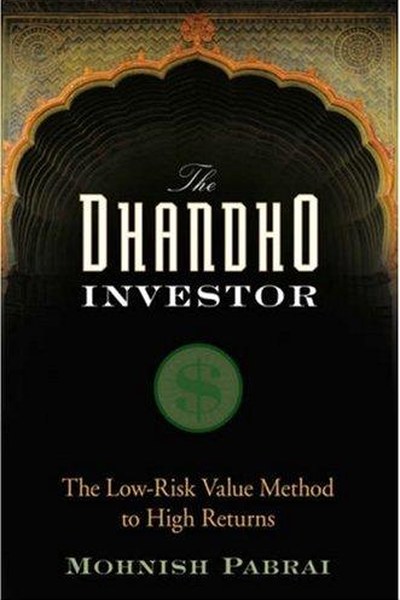
Low-risk, high-return investing — the Pabrai way.
📖 OPEN THE FULL INTERACTIVE BREAKDOWN →🌐 Read it in Hindi, Hinglish, Gujarati, Tamil & 22 more languages — free, with audio.
💡 The Big Idea
Dhandho is the Gujarati art of business: heads I win, tails I don't lose much. Pabrai applies it to stocks — buy great businesses at prices that make loss unlikely and gain probable, hold patiently, and never pretend to understand what you don't. The book is a practical, humble manual: copy proven frameworks shamelessly, think in probabilities, and let time do the compounding.
🧠 The 7 Key Lessons
Lesson 1: Dhandho — Heads I Win, Tails I Don't Lose Much
The Dhandho Framework
Pabrai's central idea comes from Gujarati business families: make bets where the downside is small and the upside is large. The 80-year-old Patel motel owner who buys a struggling motel cheap, works hard and turns it around is the archetype. The lesson: asymmetric bets compound. In investing, in careers, in startups — the winning move is usually not the boldest but the one where you can't get hurt badly.
📖 Example: Patels built a motel empire by buying run-down properties at low prices with high leverage and sweat — massive upside, limited downside. The practical edge: 'dhandho' is not a one-time decision — it's a habit that compounds with every repetition, which is… Read the full example →
⚡ Do this: Review your next big decision and ask: what is the worst-case loss? If it's survivable and the upside is several times larger, it's a Dhandho bet.
Lesson 2: Copy Shamelessly — Learn from Masters
Clone the Masters
Pabrai admits openly: he is a clone of Warren Buffett and Charlie Munger. Instead of inventing his own method, he studied, copied and adapted theirs. The lesson: originality in investing is overrated — proven frameworks are a gift. You don't need a new idea; you need the discipline to execute a good old one. Find a master whose approach fits your temperament and copy it with attribution.
📖 Example: Pabrai's 'clone' portfolio mirrored Buffett's holdings and returned far above market for years — proof that copying well-executed is not cheating. Here's the part that usually gets missed: 'copy shamelessly' works quietly. You won't see it working in a day;… Read the full example →
⚡ Do this: Pick one investor, athlete or operator whose method you admire. Study their framework and write down how you would apply it this quarter.
Lesson 3: Margin of Safety Is the Whole Game
Price and Value
The core of value investing: buy a business for less than it is worth, so that even if you are wrong about some details, you survive. Pabrai's version: a margin of safety turns uncertainty into advantage. The lesson: price is what you pay, value is what you get — and the gap between them is your protection. Buying great things at fair prices is fine; buying good things at great prices is where fortunes are made.
📖 Example: When Pabrai bought a business at half its conservative value, even a 30% valuation error still left him profitable — the margin did the work. The real test of this lesson is a bad day: the principle that survives a crisis, a tight deadline and a doubting… Read the full example →
⚡ Do this: Before any purchase or commitment, ask: am I getting more value than I'm paying? If the gap isn't clear, walk away.
Lesson 4: Simple Businesses Win
Stick to What You Understand
Pabrai invests almost exclusively in boring, simple, predictable businesses — insurance, banks, consumer goods — because he can model them. The lesson: your circle of competence is a moat. Fancy industries are not advantages; they are traps for people who don't understand them. Deep knowledge of a plain business beats shallow knowledge of an exciting one, every time.
📖 Example: Pabrai famously said he'd rather understand a lemonade stand deeply than pretend to understand biotech — the lemonade stand is where his edge lives. In practice, 'simple businesses win' shows up in tiny daily choices long before it shows up in outcomes — the… Read the full example →
⚡ Do this: List the three industries or domains you understand most deeply. When considering an opportunity, ask: is this inside that circle?
Lesson 5: Patience Is the Engine
Time and Compounding
Pabrai's returns look ordinary in any single year; they compound because they don't reverse. The lesson: the investor's real asset is time — not intelligence, not information. Every trade, every panic, every chase of a hot tip breaks the compounding curve. Sitting still is an action. The boring portfolio held for decades beats the brilliant one traded weekly, almost every time.
📖 Example: Buffett's wealth is famously 99% earned after age 50 — not because he got smarter, but because compounding got more time. Most people nod at this principle and change nothing. The gap between agreeing and acting is where the whole game is won or lost. Read the full example →
⚡ Do this: Pick one long-term investment or skill you keep second-guessing. Decide today to not touch it for 12 months, and set a review date.
Lesson 6: Think in Probabilities, Not Certainties
Probabilistic Thinking
Pabrai thinks like a gambler with an edge: no single bet matters, the portfolio matters. Every investment is a probability — some will fail, and that's priced in. The lesson: don't judge decisions by outcomes (the market can be wrong for years) but by the quality of the reasoning. A good decision can have a bad result; a bad decision can have a lucky result. Judge the process.
📖 Example: Pabrai expected some of his holdings to fail — he sized each bet so that failures were annoying, not fatal, and winners paid for all of them. The uncomfortable truth about this lesson: it requires doing the boring version first — the unglamorous reps that… Read the full example →
⚡ Do this: For your next decision, write your expected probability of success and the size of loss if wrong. Then decide based on expected value, not hope.
Lesson 7: Know What You Don't Know
Intellectual Honesty
Pabrai's edge is not brilliance but honesty: he passes on most opportunities because he refuses to fake understanding. The lesson: the most expensive words in investing are 'this time it's different' and 'I'm sure'. Admit ignorance early — it costs nothing — and wait. The investor who can say 'I don't know' can never be fooled into a permanent loss.
📖 Example: Pabrai's famous restraint — holding cash for years when nothing cheap appeared — protected him from the crashes that destroyed the overconfident. know What You Don't Know Read the full example →
⚡ Do this: Write down one area where you are currently pretending to know more than you do. Either study it properly or exit the position.
✅ 5-Step Action Plan
- Reframe your next big bet: worst case survivable, upside several times larger?
- Pick one master to clone and write their framework in your own words.
- Before any purchase, verify the gap between price and value.
- Identify your circle of competence and refuse one opportunity outside it.
- Choose one investment or skill to leave untouched for 12 months.
⚠️ When This Doesn't Work
Pabrai's 'heads I win, tails I don't lose much' is the sanest investing framework ever — and Jesse Livermore is the warning about what happens when genius meets the framework's absence: the greatest trader of his era, who understood markets better than anyone, made and lost two fortunes because he never institutionalized the 'don't lose much' part — every bet was his genius against the market, and the market eventually took the genius too. Pabrai's book is about discipline; Livermore is the proof that the discipline, not the intelligence, is the product. The caveat: the smarter you are, the more you need the framework — your confidence is the risk.
💀 The Graveyard Proves It
🐻 Jesse Livermore — The Man Who Won 1929 and Lost Everything Anyway. Burn: $100M (≈ $1.5B today). Read the full case study →
💬 Best Quotes from The Dhandho Investor
- “Heads I win, tails I don't lose much.”
- “The only way to get rich is to not lose money — and the only way to not lose money is to buy businesses with a margin of safety.”
- “Risk comes from not knowing what you're doing.”
Interactive version: mark lessons as read, listen in your language, share quote cards.