Library › Business & Startups
Built to Last — Summary & Key Lessons
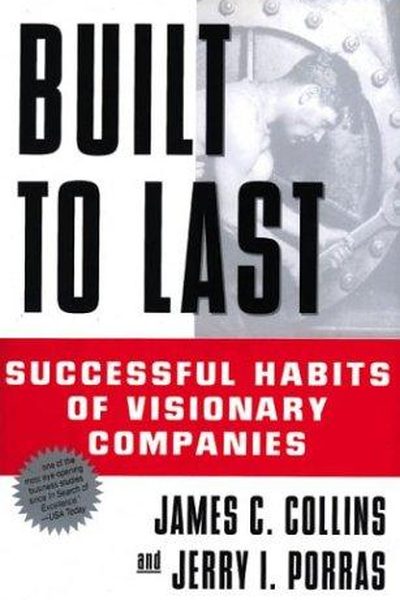
Successful habits of visionary companies — the classic study of what makes companies great for decades, not quarters.
📖 OPEN THE FULL INTERACTIVE BREAKDOWN →🌐 Read it in Hindi, Hinglish, Gujarati, Tamil & 22 more languages — free, with audio.
💡 The Big Idea
Collins and Porras studied 18 'visionary' companies (that outperformed 50+ years) vs their peers. The findings: visionary companies are driven by a core ideology (values + purpose) that never changes, big hairy audacious goals (BHAGs) that stretch the company, cult-like cultures, and leaders who are clock-builders — they build organizations that thrive beyond them. Profit is a means, not the mission.
🧠 The 6 Key Lessons
Lesson 1: Clock-Building, Not Time-Telling
The Best of the Best
Great leaders build organizations that can thrive without them — the clock — rather than being the genius who tells the time. Time-tellers create dependency; clock-builders create institutions. The test: does the company get better or worse when the founder leaves?
📖 Example: Henry Ford was a time-teller (the company stumbled after him); the early HP founders were clock-builders (the company kept compounding for decades). The clock survives the clockmaker. Read the full example →
⚡ Do this: Build one system this week that works without you: a process, a checklist, a documented decision. That's your first clock-gear.
Lesson 2: Core Ideology: The Untouchable Identity
Core Ideology
Visionary companies have a core ideology — values and purpose — that stays fixed for decades while everything else changes. The ideology is the 'why we exist' that survives strategy shifts, CEOs and products. Companies without one drift with every trend.
📖 Example: 3M's 'never kill a new product idea' and HP's 'The HP Way' survived half a century of radical change. The ideology wasn't a slogan on the wall; it shaped hiring, money and decisions. Read the full example →
⚡ Do this: Write your core ideology in one line: 'We exist to ___, and we will never compromise ___.' Post it where you work.
Lesson 3: BHAGs: Big Hairy Audacious Goals
BHAGs
Visionary companies set goals so big they're slightly scary — putting a man on the moon, becoming the company 'most known for' something. A BHAG is clear, compelling and risky; it focuses the whole organization for 10-30 years. Small goals produce small companies.
📖 Example: Boeing's 1950s BHAG: 'Build the first commercial jet airliner' — a decade-long bet that defined the industry. Nike's early BHAG: crush Adidas. Both focused enormous effort on one audacious target. Read the full example →
⚡ Do this: Write a 10-year BHAG for yourself or your work: one sentence, big enough that saying it out loud feels slightly uncomfortable.
Lesson 4: Cult-Like Cultures
Cult-Like Cultures
Visionary companies are so clear about who fits that they feel cult-like: intense onboarding, strong values, and a willingness to reject brilliant people who don't fit. This isn't brainwashing — it's alignment. When everyone shares the ideology, trust and speed multiply.
📖 Example: The authors note IBM's 'IBM-ers' and Nordstrom's rule-book-replacement 'use your good judgment' — cultures so strong they self-select the right people and eject the wrong ones quickly. Read the full example →
⚡ Do this: Write your personal 'fit test': 3 values you won't compromise in a team or partner. Start saying no to mismatches — fast.
Lesson 5: Try a Lot of Stuff, Keep What Works
Home-Grown Evolution
Visionary companies don't succeed from one perfect plan — they succeed from rapid experimentation: try lots of things, keep what works, kill what doesn't. The authors call it 'evolutionary progress' — like biological mutation, most attempts fail quietly, and a few become breakthroughs.
📖 Example: 3M's Post-it came from a failed adhesive; Sony's path to the Walkman was a chain of accidental discoveries kept alive by a culture that allowed experiments. The plan was the process, not the product. Read the full example →
⚡ Do this: Run one cheap experiment this week: try a new approach, channel or idea for 7 days with no attachment. Keep it if it wins.
Lesson 6: Clock Builders Build the Company, Not Just the Product
Clock Building, Not Time Telling
Collins and Porras's distinction: visionary companies are built by 'clock builders' who create organizations that can thrive beyond any single product or leader, while 'time tellers' build careers around their own genius. The product is the company's first expression; the company is the product. Design the institution, and it outlives every idea it ships.
📖 Example: The founders of companies like HP and Sony obsessively developed management, values and succession systems, not just products — which is why those firms survived decades and multiple technology shifts. Their competitors, built around a founder's single… Read the full example →
⚡ Do this: Identify one process or system in your work that could outlive you — a document, a routine, a succession plan — and build it this quarter.
✅ 5-Step Action Plan
- Build one system that works without you.
- Write your core ideology in one line.
- Set one 10-year BHAG — say it out loud.
- Write your 3-value fit test and enforce it.
- Run one no-attachment experiment this week.
⚠️ When This Doesn't Work
Collins & Porras' 'built to last' is the most famous business book ever — and Avon is its monument and its warning: 138 years, a legendary culture, iconic products, 'built to last' in every sense — and the company still filed for bankruptcy, because 'last' is a direction, not a duration. The book's great companies all had one thing in common the authors underweight: they kept re-inventing what they were built to be. Avon kept being Avon while the world changed around it. Built to last is a promise you must re-earn every decade — the alternative is to be built to last until you're not.
💀 The Graveyard Proves It
💄 Avon — 138 Years of 'Ding-Dong, Avon Calling' Ends in Bankruptcy. Burn: $12B peak revenue → bankruptcy; $1.2B+ debt. Read the full case study →
💬 Best Quotes from Built to Last
- “It is better to understand the clock than to tell the time.”
- “Big Hairy Audacious Goals — clear, compelling, and risky — are a powerful mechanism to stimulate progress.”
- “Visionary companies pursue a cluster of objectives, of which making money is only one — and not necessarily the primary one.”
Interactive version: mark lessons as read, listen in your language, share quote cards.