Library › Power & Strategy
The Art of Strategy — Summary & Key Lessons
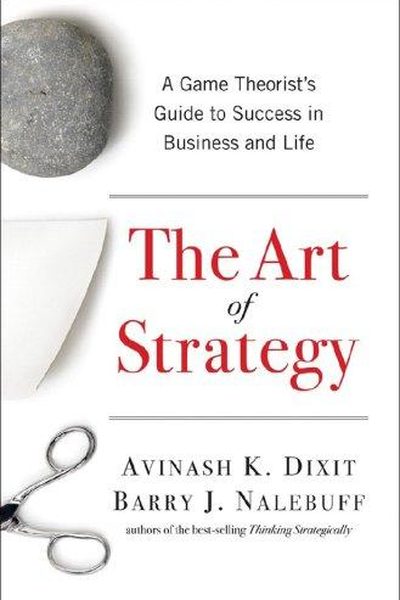
A game theorist's guide to success in business and life — thinking several moves ahead, from two Princeton professors.
📖 OPEN THE FULL INTERACTIVE BREAKDOWN →🌐 Read it in Hindi, Hinglish, Gujarati, Tamil & 22 more languages — free, with audio.
💡 The Big Idea
Dixit and Nalebuff, two of the world's leading game theorists, translated the science of strategy into practical rules for everyday competition. The core idea: in any interaction, your best move depends on what others will do — which depends on what they think YOU will do. Master the tools — dominance, backward induction, commitment, brinkmanship, cooperation, mixed strategies — and you can out-think opponents in business, negotiation, auctions and life, where most people only think one move ahead.
🧠 The 6 Key Lessons
Lesson 1: Think Two Moves Ahead: Backward Induction
The Game
Chess masters think many moves ahead; most of us think one. The art of strategy is backward induction: start from the end you want, then reason backward about what each player will do at every step — and choose your first move accordingly. In negotiation, business and life, the person who thinks two moves ahead beats the person who reacts.
📖 Example: The authors' classic: when one airline raises prices and another must respond, the smart airline anticipates the response before acting. In bidding wars, the winner often plans for the other's counter before making the first bid. Read the full example →
⚡ Do this: Before your next big decision, write the chain: 'If I do X, they'll likely do Y; then I'll do Z; and we end at W.' Is W where you wanted to be?
Lesson 2: Change the Game: Move First, or Rewrite the Rules
Simultaneous Moves
When moves are simultaneous — both decide without seeing the other — the winner changes the game itself: move first (commit before others choose), or add a move that rewrites the rules. Game theory's deepest lesson: the rules aren't fixed; the best strategists don't play the game they're given, they change it.
📖 Example: Southwest Airlines changed the game by choosing a different strategy space (short hauls, fast turns); Apple changed the music game by adding a legal download store nobody else thought to build. Movers who set the rules define the competition. Read the full example →
⚡ Do this: Ask: 'What rule of this game am I accepting that I could actually change?' List two ways to alter the game — not just play it better.
Lesson 3: Credible Commitments: Burn the Bridges That Bind You
Credible Commitments
A promise is only powerful if it's credible — and credibility often requires removing your own options. When you burn the bridges (make retreat impossible), your commitment becomes believable and opponents must adapt to it. This is why companies pre-announce capacity, why negotiators walk away publicly, and why armies burn boats.
📖 Example: The classic: a general who burns his boats tells the enemy 'retreat is impossible, I WILL fight to the death' — the enemy, facing a desperate army, may choose not to fight at all. In business, putting a launch date on your website is a small bridge-burning. Read the full example →
⚡ Do this: Make one commitment credible this week: announce it publicly, put money behind it, or remove the exit. Watch how others' behavior toward you shifts.
Lesson 4: Brinkmanship: The Fine Art of Not Quite Falling
Brinkmanship
Sometimes the best move is to bring the situation to the edge of disaster — without falling in — to force the other side to blink first. The authors explain brinkmanship through the Cuban Missile Crisis: Kennedy made the threat credible by visibly preparing war while offering an exit ramp. In business: ultimatums, strikes, and 'walk away' negotiations are brinkmanship — powerful only if the other side believes you might actually go over.
📖 Example: The authors dissect how unions win by being willing to strike longer than the company can wait; how a startup threatening to leak a competitor's flaw gets a settlement. The key is a credible threat plus a face-saving exit for the other side. Read the full example →
⚡ Do this: In your next negotiation, prepare a credible 'walk away' — something real you'll do if they don't move. Then, at the moment of pressure, offer them an exit ramp.
Lesson 5: Cooperation: Tit for Tat Is the Champion
Cooperation
The authors cover the famous prisoner's dilemma and the computer tournament that found the winning strategy: tit for tat — start cooperatively, then mirror what the other side does (cooperate with cooperation, punish betrayal). It wins because it's nice, retaliatory, forgiving and clear. In repeated dealings — business relationships, partnerships, life — reputation for reciprocity is a winning asset.
📖 Example: In Axelrod's tournament, the simplest strategy beat the cleverest: tit for tat. The authors apply it to business partnerships: be trustworthy first, respond proportionally to betrayal, forgive quickly once the other side returns to cooperation. Read the full example →
⚡ Do this: Identify one repeated relationship where you're stuck in distrust. Play tit for tat deliberately for a month: cooperate first, mirror exactly, forgive the moment they cooperate.
Lesson 6: Look Forward and Reason Backward
Strategic Moves
Dixit and Nalebuff's signature tool: start from the outcome you want, then reason backward to what must happen just before it, and before that — until you reach a move you can make today. Backward induction turns vague ambition into a chain of concrete choices, revealing which moves create options and which close them.
📖 Example: A student who wants a scholarship in five years reasons backward: accept into a top program → strong application → high grades → specific courses now → changes his course selection today. The distant goal becomes a to-do list. Read the full example →
⚡ Do this: Pick a goal five years out and write the chain of preconditions backward until you reach one action you can take this week.
✅ 5-Step Action Plan
- Backward-induct your next big decision — write the full chain.
- Find one game rule you can change instead of just playing better.
- Make one commitment credible: announce, deposit, or burn a bridge.
- Prepare a credible walk-away for your next negotiation.
- Run tit for tat in one relationship for a month.
⚠️ When This Doesn't Work
Rumelt's 'strategy is about leverage and surprise' is the deepest strategy text since Sun Tzu — and Troy is its warning: the Greeks' strategy was perfect — surprise, deception, leverage — and it worked exactly as designed, and the victory became a curse: the conquerors' arrogance after the horse opened a decade of wandering, suffering and loss. Strategy that wins the battle can lose the aftermath. Rumelt teaches you to design the move; the book that teaches you what comes after the move has not been written yet — Troy is its first chapter.
💀 The Graveyard Proves It
🐴 The City of Troy — The Original Free Gift. Burn: The city, the war, everything. Read the full case study →
💬 Best Quotes from The Art of Strategy
- “In game theory, unlike chess, the rules of the game are not fixed — you can change them.”
- “The key to strategy is to put yourself in the shoes of the other players — all of them.”
- “A good strategy must be able to survive the test of being observed.”
Interactive version: mark lessons as read, listen in your language, share quote cards.