Library › Power & Strategy
The 22 Immutable Laws of Marketing — Summary & Key Lessons
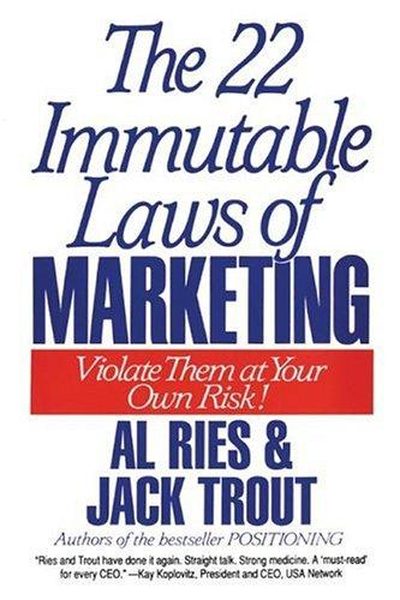
Violate them at your own risk — the two dozen rules that decide which brands live and which get forgotten.
📖 OPEN THE FULL INTERACTIVE BREAKDOWN →🌐 Read it in Hindi, Hinglish, Gujarati, Tamil & 22 more languages — free, with audio.
💡 The Big Idea
Ries and Trout distilled marketing into 22 immutable laws — the rules of the mind-game they invented with Positioning. The laws are brutal and memorable: the Law of Leadership (it's better to be first than better), the Law of Category (create a category you can be first in), the Law of the Mind (being first in the mind beats being first in the market), the Law of Exclusivity (two brands can't own the same word in a prospect's mind). Break a law and the market breaks you.
🧠 The 6 Key Lessons
Lesson 1: The Law of Leadership: First Beats Better
Leadership
The first law is the whole game: it's better to be first than to be better. The leader's advantage isn't quality — it's the mind's stubborn preference for what it knew first. Most studies of pioneer brands show the first mover keeps the lead for decades, even against 'better' followers. If you can't be first in a category, create a new category to be first in.
📖 Example: Heinz was first in ketchup, not 'best' by every measure — yet holds the category. In computers, the first personal computer brands are gone, but the categories they created (spreadsheets, databases, word processing) were owned by whoever got in first. Read the full example →
⚡ Do this: If you're late to your market, don't copy the leader — name a new subcategory you can enter first, even a tiny one.
Lesson 2: The Law of the Mind: Minds Beat Markets
The Mind
Being first in the MARKET is not the same as being first in the MIND — and only the mind counts. Launching a product before the competition but failing to register it in the prospect's mind hands the win to whoever gets the mind first. The mind is where the battle is won, so marketing must be aimed at memory, not just distribution.
📖 Example: The authors note that in many categories the 'first' product didn't win — the first one to own the mind did. In Japan, the first English-language school (NOVA?) — the case that matters is this: being remembered beats being invented. Read the full example →
⚡ Do this: After your next launch, measure one thing above sales: what percentage of your target audience can NAME you a week later. If it's low, you lost the mind.
Lesson 3: The Law of Exclusivity: One Word Per Mind
Exclusivity
Two brands cannot own the same word in a prospect's mind. If a competitor owns 'safety' (Volvo) or 'search' (Google) or 'delivery' (Amazon), that word is off-limits for you — no matter how hard you advertise. The successful strategy is to find a word nobody owns and claim it exclusively, then defend it with everything.
📖 Example: Federal Express owned 'overnight' — when the category changed, FedEx found 'guaranteed.' BMW couldn't take 'safety' from Volvo, so it took 'driving.' Domino's took 'delivery' when others were still fighting over 'taste.' Read the full example →
⚡ Do this: List the 5 words your category's customers care about. Which are already owned? Claim the strongest unowned one as yours — in every message, for a year.
Lesson 4: The Law of Focus: Narrow to Grow
Focus
The most powerful concept in marketing is owning a word in the prospect's mind — and the way to own it is focus: narrow your product, your message, your company until you're the best at one thing. The mind hates companies that are 'everything to everyone'; it loves the one that stands for something specific.
📖 Example: Ries and Trout's favorite contrast: Coca-Cola narrowed to one product and became the world's most valuable beverage brand, while companies like 'the everything store' of earlier eras diluted themselves into obscurity. Read the full example →
⚡ Do this: Write your company's one word. Now cut every product, feature or message that doesn't reinforce it — starting this quarter.
Lesson 5: The Law of Sacrifice: Give Up to Win
Sacrifice
To succeed you must sacrifice: narrow your product line (sacrifice of line), your target (sacrifice of market), and your constant change (sacrifice of fads). The leader's trap is doing everything for everyone; the winner gives something up and becomes the biggest in the smaller thing it kept.
📖 Example: Burger King sacrificed the grill to be 'flame-broiled'; Pepsi sacrificed 'everyone' to target the young; McDonald's early success came from sacrificing menus (10 items) for speed. The companies that refused to sacrifice — trying to be all things — are… Read the full example →
⚡ Do this: Name what you'll give up this quarter: one product line, one customer type, or one tempting trend. Write it down; honor the sacrifice.
Lesson 6: The Law of the Category: Be First by Being Different
The Laws
Ries and Trout's complementary law: if you can't be first in an existing category, create a new one you can own. The best marketing doesn't fight for a crowded slot — it redefines the game. Category creation turns a 'me too' product into a 'first of its kind' statement.
📖 Example: Instead of competing with established soft drinks, energy drinks created their own category and owned it; instead of fighting search giants, a new tool can become 'the search engine for developers'. The new category is the moat. Read the full example →
⚡ Do this: Position your next product or project as the first in a niche category and name that category in your pitch.
✅ 5-Step Action Plan
- If you're late to a market, invent a subcategory to enter first.
- Measure mind-share after your next launch, not just sales.
- Find the unowned word in your category and claim it exclusively.
- Narrow: write your one word, cut what doesn't reinforce it.
- Sacrifice one line, one market, or one fad — on purpose.
⚠️ When This Doesn't Work
Ries & Trout's immutable marketing laws are the most cited in the field — and RJR's smokeless cigarette is the proof that obeying every law can still fail: RJR followed the laws perfectly — category creation, brand positioning, 'the law of the category' — and spent $325 million launching Premier, a product engineered to obey every marketing rule and wanted by nobody. The laws describe how markets work; they cannot create desire where none exists. Marketing law is necessary, never sufficient — the product still has to be something humans actually want to smoke.
💀 The Graveyard Proves It
🚬 RJR's Smokeless Cigarette — $325M for a Cigarette Smokers Hated. Burn: $325M, 4 months on shelves. Read the full case study →
💬 Best Quotes from The 22 Immutable Laws of Marketing
- “It's better to be first than it is to be better.”
- “The easiest way to get into a person's mind is to be first.”
- “If you want to be successful today, you have to narrow the focus — not broaden it.”
Interactive version: mark lessons as read, listen in your language, share quote cards.