Why Did Snapdeal Fail?
The $6.5 Billion Startup That Refused the War — and Lost Everything
📜 What Happened
In 2015-16, Snapdeal was India's #3 e-commerce giant — Kunal Bahl and Rohit Bansal had raised over $1.6B and were locked in a brutal war with Flipkart and Amazon. Then the money ran out and the board pushed a merger with Flipkart. Bahl refused, famously telling the board to 'back off'. The company's response was to shrink: massive layoffs (80% of staff), abandoning categories, retreating to a niche of unbranded value products. But the war had already been lost — the market had moved on. By 2017-19 the once-$6.5B company was effectively sold for scraps. Refusing the merger saved control and destroyed the company.
☠️ The Fatal Mistake
Mistaking control for victory — refusing a dilutive merger while burning cash in a two-front war (Flipkart + Amazon) meant the company shrank itself to irrelevance instead of consolidating at scale.
🧠 The Lesson (Free for You)
In a market war, the exit is a strategy, not a surrender. A founder who protects their equity while the competition destroys the market is protecting a sinking ship. Know when consolidation beats pride.
📕 The Antidote Book
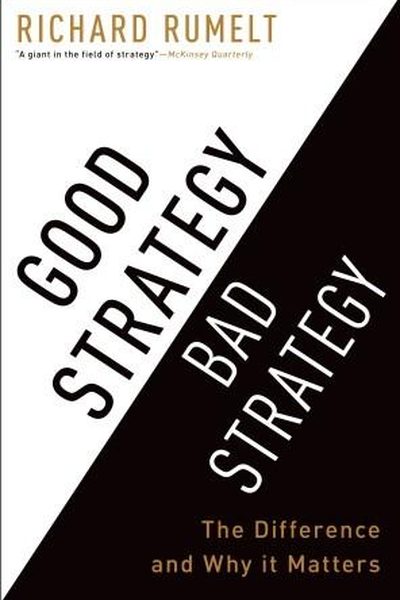
Richard Rumelt — called 'the man who made strategy interesting' by McKinsey — analyzed thousands of real strategies and found most are empty: goals, budgets and vision statements dressed up as strategy. Real strategy…
📖 OPEN THE FULL INTERACTIVE BREAKDOWN →Searchable, filterable, free to read — they paid billions; your lesson is free.