Why Did The Credit Rating Agencies Fail?
The Triple-A Stamp That Helped Sink the World
📜 What Happened
In the years before 2008, S&P, Moody's and Fitch stamped more than $3 trillion of subprime-mortgage securities with their highest rating: triple-A — the same grade as U.S. Treasury debt. The ratings were, in practice, paid for by the issuers whose products they rated; the analysts were judged on market share; and the models were fed with two years of housing data that could never see a nationwide decline. When the music stopped, more than half of AAA-rated subprime securities defaulted or were downgraded to junk. The U.S. Department of Justice extracted $1.375B from S&P (2015) and $864M from Moody's (2017). The failure was not corruption alone — it was noise: the same judgment made by thousands of analysts, all wrong the same way, presented as an objective stamp.
☠️ The Fatal Mistake
Selling certainty as a product — a judgment manufactured by conflicted, noisy processes was dressed as a precise, verified grade.
🧠 The Lesson (Free for You)
Ratings are opinions wearing uniforms. The agencies' lesson: when judgment is repeated at scale without measurement of its own variance, the noise is not random — it is correlated error, and correlated error is the most expensive kind. Never trust a single score without asking who paid for it and how often it is wrong.
📕 The Antidote Book
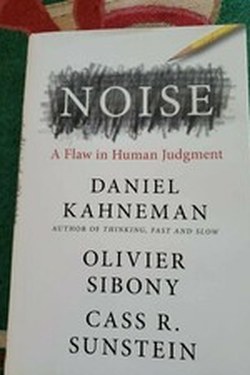
Bias is the average of our errors; noise is the scatter — and it is often the bigger problem. The same case gets different sentences from different ju…
📖 OPEN THE FULL INTERACTIVE BREAKDOWN →Searchable, filterable, free to read — they paid billions; your lesson is free.