Why Did The Holi Festival Crowd Disaster Pattern Fail?
When a Festival Turned on Its Neighbours
What happened
This entry covers a recurring Indian catastrophe rather than one company: the festival crowd crush, examined through its most documented early instance and the pattern that followed. At the 1954 Prayag Kumbh Mela, on the main bathing day, a crowd surge killed around 800 people by official counts, among the deadliest stampedes in recorded history, in the presence of the young republic's leadership and under the eyes of its administration. The mechanics have repeated at temples, festivals, railway stations and political rallies ever since: enormous devotional crowds moving through narrow approaches to a sacred point, a rumour or a slip, pressure with nowhere to go, and death by compressive asphyxia standing up. After every disaster, committees blame the crowd's indiscipline. The autopsy says otherwise: crowds of this density are physics, not mobs, and the failures are upstream, in route design, one way flows, barricade engineering, real time counting and the willingness to stop a ritual queue before the sacred geography becomes a trap. India now deploys serious crowd science at the largest Kumbhs, which have grown far bigger with far fewer deaths, proof that the pattern is a design problem, not a national character flaw.
The fatal mistake
The perennial first mistake is worshipping the schedule over the flow: the auspicious hour concentrates millions into minutes, while administration plans for the day. Second, routes built for processions become traps when entry and exit share geography, so pressure meets itself head on. Third, the absence of real time numbers: for decades no one at a control point knew the density already inside the corridor they kept feeding. Finally, post disaster blame aimed at devotees, which guarantees the design lessons stay unlearned for the next festival on the calendar.
The lesson
Density is the only honest metric: above four or five people per square metre, a crowd stops being a gathering and becomes a fluid, and must be engineered like one. One way flow, holding areas that meter release, and the authority to pause the ritual are the entire technology; everything else is commentary. Count in real time and give the counter power to close gates against VIPs and priests alike. And after each tragedy, audit the route before blaming the pilgrims: the crowd is the one element of the system that cannot redesign itself.
The antidote book
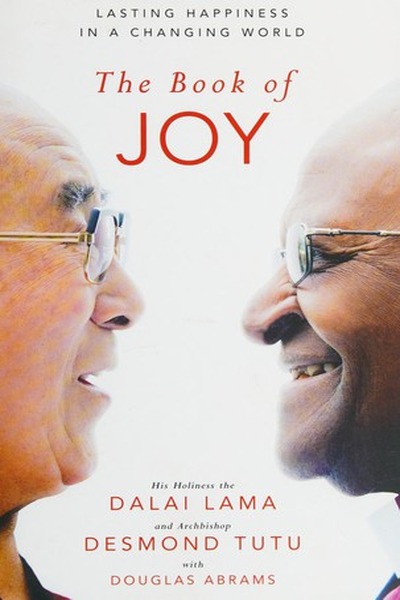
Joy is not the absence of suffering but a skill - built through gratitude, forgiveness, humility and compassion.
READ THE SUMMARY OPEN INTERACTIVE BOOKQuestions people ask about The Holi Festival Crowd Disaster Pattern
Why did The Holi Festival Crowd Disaster Pattern fail? The perennial first mistake is worshipping the schedule over the flow: the auspicious hour concentrates millions into minutes, while administration plans for the day. Second, routes built for processions become traps when entry and exit share geography, so pressure meets itself head on. Third, the absence of real time numbers: for decades no one at a control point knew the density already inside the corridor they kept feeding. Finally, post disaster blame aimed at devotees, which guarantees the design lessons stay unlearned for the next festival on the calendar.
How much was lost? A festival stained by communal violence
What is the lesson? Density is the only honest metric: above four or five people per square metre, a crowd stops being a gathering and becomes a fluid, and must be engineered like one. One way flow, holding areas that meter release, and the authority to pause the ritual are the entire technology; everything else is commentary. Count in real time and give the counter power to close gates against VIPs and priests alike. And after each tragedy, audit the route before blaming the pilgrims: the crowd is the one element of the system that cannot redesign itself.
The Holi Festival Crowd Disaster Pattern kyun fail hua? In simple English: The perennial first mistake is worshipping the schedule over the flow: the auspicious hour concentrates millions into minutes, while administration plans for the day. Second, routes built for processions become traps when entry and exit share geography, so... The cost was A festival stained by communal violence.
Keep digging
More historical failures · Open the full Graveyard
Read the antidote book summary: The Book of Joy
Related failures
- Why did The Churning of the Ocean fail? ~5000 BCE (epic) · The Great Co-operation That Produced the Poison First
- Why did The Nanda Empire fail? ~321 BCE · The Richest Empire in India, Lost Because the King Couldn't Keep a Promise
- Why did The Kurukshetra War fail? ~3000 BCE (epic) · The War Everyone Wanted That Destroyed Everyone Who Wanted It
- Why did The Harappan Collapse fail? ~1900 BCE · The Advanced Civilization That Vanished Into Its Own Success
- Why did Easter Island fail? ~1600 · They Cut Down the Last Tree
- Why did Qin Shi Huang fail? 210 BC · The Emperor Who Drank Immortality to Death
They paid full price. You get the lesson in simple English.