Library › Psychology & People
When Breath Becomes Air — Summary & Key Lessons
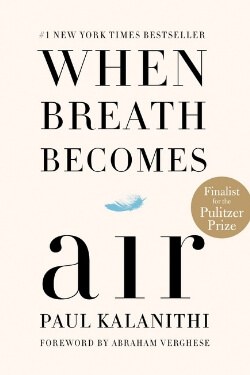
A brilliant neurosurgeon diagnosed with terminal cancer at 36 writes about what makes a life meaningful.
📖 OPEN THE FULL INTERACTIVE BREAKDOWN →🌐 Read it in Hindi, Hinglish, Gujarati, Tamil & 22 more languages — free, with audio.
💡 The Big Idea
Kalanithi had trained his whole life to understand the brain and death from the outside; at 36 he got to study it from the inside. His memoir is the rare book where the dying man is also the expert: he refuses both despair and false comfort, and searches for meaning in medicine, literature, family and the last thing he can do — write. His answer: the meaning of life is not discovered; it is made, moment by moment, in what we love.
🧠 The 10 Key Lessons
Lesson 1: Face the Diagnosis Straight
Chapter 1: The Scan
Kalanithi's response to a terminal diagnosis was not denial but sustained, frightening clarity — learning the statistics, planning the treatment, keeping his own agency. His insight: the terror of the unknown is often worse than the known. Knowledge is a form of freedom; even bad knowledge, because it lets you choose.
📖 Example: The families who asked the hard questions navigated better than those who hoped in silence. Read the full example →
⚡ Do this: For one fear you have avoided, look at the actual facts today — the worst case is usually less vague than the dread.
Lesson 2: Meaning Is Made, Not Found
Chapter 2: The Search
Kalanithi was a literature lover before he was a surgeon; he asked the perennial question — what makes life meaningful? He answers: meaning is not a treasure you locate but a structure you build. His tools: relationships, work, and the honest acceptance of the present. Even dying, he built — the book itself is his building.
📖 Example: A dying man writing for future readers is meaning under construction — not found in advance, made on the spot. Read the full example →
⚡ Do this: Write your current meaning-building project: what are you constructing that outlives the day?
Lesson 3: The Doctor's Chair Flips
Chapter 3: The Conversion
The book's unique vantage: the man who had been the doctor's hand became the patient in the bed. He documents the strange clumsiness of the system he loved — and the enormous difference between data and lived experience. The lesson applies everywhere: expertise about a domain is not the same as living in it; listen to the people inside the experience.
📖 Example: The best product designers use the product themselves; the best doctors will one day be patients too. Read the full example →
⚡ Do this: Spend one hour in the customer's or colleague's actual seat this month — literally, if possible.
Lesson 4: Time's New Currency
Chapter 4: The Numbers
When your horizon collapses, time revalues: minutes with family outweigh ambitions; the future loses its veto. Kalanithi's notes on this are practical: he planned for his daughter's childhood he would not see, wrote for readers he would never meet. The lesson is not morbid — it is a recalibration available to everyone: price your hours by what actually matters.
📖 Example: The dying often regret hours lost to status; the healthy rarely notice the same exchange rate. Read the full example →
⚡ Do this: Run the horizon test on your week: if you had three years, what in this week would change?
Lesson 5: The Asymptote
Chapter 5: The End
Kalanithi's final idea: you cannot reach perfection, but you can believe in an asymptote — a line you approach forever. Life is the approach, not the arrival: meaning lives in the direction of travel, not the destination. The book's last pages were written as he died — the asymptote made visible.
📖 Example: A writer's unfinished book is not a failure; it is the approach itself — the direction is the achievement. Read the full example →
⚡ Do this: Name your asymptote: the direction you are moving in — and give one hour to it today, no completion required.
Lesson 6: Writing Into the Dark
Epilogue: The Keeper of the Letter
Kalanithi's final act is his most instructive: he wrote a book for a daughter who would read it as a young woman he would never meet, and for readers he would never know. That is the definition of meaning fully understood: it is made by what you leave, not by what you keep — and the leaving is itself the living.
📖 Example: A dying man writing for an unborn child: the book is the father's last letter, and it did not die with him. Read the full example →
⚡ Do this: Write one letter to someone who will read it after you are gone — or after this year. The act of leaving is the point, not the length.
Lesson 7: The Neurosurgeon's Two Teachers
Chapter 3: The Anatomy Lesson
Kalanithi trained his hands and mind for a decade on the anatomy of others; his diagnosis turned the scalpel inward. The book's dual perspective is its power — he had learned to treat the patient as a whole life, and then he became the patient whose whole life was being weighed. The training that made him a surgeon — precise, detached, disciplined — was the same training he now needed to face his own mortality.
📖 Example: He describes holding a brain in his hands, knowing it held a life — and later holding his own scan, knowing what the shadow meant. Read the full example →
⚡ Do this: Find one skill you have mastered and ask: how would this skill serve me if my time were short? Then use it that way today.
Lesson 8: The Doctor as Patient: Language Changes
Chapter 4: The Diagnosis
Kalanithi's savage observation: as a doctor he delivered diagnoses in clinical language; as a patient the same language became a wall — he wanted the words not as facts but as a map for hope. The lesson applies to every communicator: information is never neutral, the receiver is always a person with a life at stake, and the difference between a fact and a plan of hope is what medicine (and life) is actually about.
📖 Example: He notes how patients ask 'how long do I have?' — never really wanting the number, but wanting to know there is a plan for the number. Read the full example →
⚡ Do this: Next time you deliver hard news — at work or at home — add one line of path: what happens next, and who will be there.
Lesson 9: The Productivity of the Dying
Chapter 5: The Turn
The book's strangest gift is its honesty about the dying man's work ethic: Kalanithi wrote, practised, researched and fathered — not because denial protected him, but because meaning is built in motion. He rejects the romantic image of the dying slowing down; his death was a sprint of purpose. The lesson is not 'work harder' — it is that purpose and mortality are the same fuel.
📖 Example: He finished the book, became a father, and kept operating — the needle moved forward until the last possible hour. Read the full example →
⚡ Do this: Take one project you keep postponing as 'someday'. Write the someday date as a real date — and begin this week.
Lesson 10: The Verdict on the Verdict
Conclusion: The Afterword
Lucy Kalanithi's afterword completes the argument: the book is not a tragedy about cancer but a demonstration that the shape of a life is decided by character, not length. Paul's death at 37 was not a failed life — the standard he proposed was whether the life had integrity, love and purpose. The verdict on the verdict: what matters is not the number of years but the quality of their edges.
📖 Example: 'His life was short but not small,' she writes — the measure was the love and the work, not the calendar. Read the full example →
⚡ Do this: Write your own afterword tonight: what will people say the life was about? Then let that sentence choose tomorrow's hour.
✅ 5-Step Action Plan
- Face one avoided fear with actual facts today.
- Write your current meaning-building project.
- Spend one hour in another's seat this month.
- Run the three-year horizon test on this week.
- Name your asymptote and give it one hour today.
⚠️ When This Doesn't Work
This is a personal memoir of one family's experience, not medical advice; Kalanithi's choices (proceeding with aggressive treatment) were his, and other paths are no less worthy. The literary voice is unmatched, but it is one voice.
💀 The Graveyard Proves It
🍏 Steve Jobs — Nine Months of Fruit Juice vs. Cancer. Burn: Possibly his life Read the full case study →
💬 Best Quotes from When Breath Becomes Air
- “The question isn't how long you live, but what makes life worth living.”
- “Even with the diagnosis, there was a life — and I had to create it.”
- “You can't ever reach perfection, but you can believe in an asymptote.”
Interactive version: mark lessons as read, listen in your language, share quote cards.