Library › Creativity
The Practice: Shipping Creative Work — Summary & Key Lessons
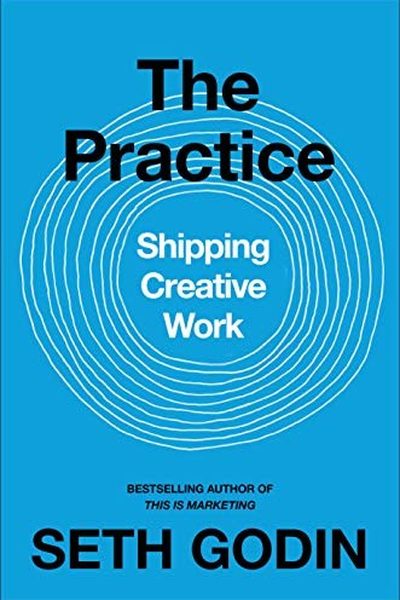
Seth Godin's daily creed: creativity is not a talent you wait for — it is a practice you show up to.
📖 OPEN THE FULL INTERACTIVE BREAKDOWN →🌐 Read it in Hindi, Hinglish, Gujarati, Tamil & 22 more languages — free, with audio.
💡 The Big Idea
Godin — author of 20 bestsellers and the most prolific blogger alive — reframes creativity as a practice, like yoga or sport: something you do daily, not a gift you wait for. The enemy is the 'lizard brain' that wants safety and approval. The cure is shipping: making art that is generous, risky and novel, and putting it into the world where it can help people. Volume beats brilliance; persistence beats talent.
🧠 The 6 Key Lessons
Lesson 1: Creativity Is a Practice, Not a Talent
The Practice
Godin dismantles the 'talent myth': creativity is not a bolt of lightning gifted to the chosen few — it is a practice, a daily discipline like brushing your teeth. You don't wait to feel like practicing; you practice, and the feeling follows. The artist is not someone with more talent; the artist is someone who keeps showing up.
📖 Example: Godin has published a blog post every single day for more than a decade — good days and bad days, travel days and sick days. The volume itself became his advantage: thousands of reps of shipping. Read the full example →
⚡ Do this: Choose your form (writing, designing, recording, coding) and commit to a daily minimum — one paragraph, one sketch, one rep. Protect the streak.
Lesson 2: The Lizard Brain Is Not Your Boss
The Resistance
The lizard brain — the oldest, fear-driven part of you — hates risk, criticism and uncertainty, which is exactly what creative work is made of. It whispers 'wait,' 'not good enough,' 'they'll laugh.' Godin's instruction is simple: the lizard brain gets a vote, not a veto. Acknowledge the fear and ship anyway.
📖 Example: Musicians, writers and startup founders Godin works with all report the same inner voice before launching anything. The ones who succeed have not silenced it — they have learned to hear it and move anyway, like a tennis player's stage fright between points. Read the full example →
⚡ Do this: Name the fear that's blocking your current project ('it will be judged'). Then ship one small piece of it publicly — a draft, a demo, a post.
Lesson 3: The Muse Is Boring
Showing Up
Waiting for inspiration is a trap — the 'muse' rewards boring, consistent attendance. Godin's model: creativity is a slot machine; you pull the lever daily, and the wins come from volume. Most breakthroughs arrive in the middle of ordinary sessions, not in dramatic flashes of genius.
📖 Example: Godin compares the practice to a daily newspaper column: some days are gems, most days are solid, a few are duds — but the audience stays because the column always arrives. Consistency builds trust; trust builds an audience. Read the full example →
⚡ Do this: Set a non-negotiable 'butt in chair' time daily. Same hour, same place, tiny output quota. Inspiration will learn your schedule.
Lesson 4: Ship It: Art That Doesn't Reach People Is a Hobby
Shipping
Unshared work is not art — it is a hobby. Shipping means putting your work where it can be seen, used and judged: published, posted, sold, performed. Shipping is frightening because it invites criticism, and criticism is how the lizard brain keeps you small. But shipping is also the only way your work can help anyone.
📖 Example: The famous 'TED talk about the refrigerator' — Godin's 'somebody should make this' idea — became a thing because he made the prototype, shipped it, and told the story. Ideas that ship get better; ideas that hide die. Read the full example →
⚡ Do this: Pick one finished-but-unshared project and give it a public deadline this week. Announce the deadline to one person who'll hold you to it.
Lesson 5: Small Is Big: The Power of Tiny
Scale
You do not need a million followers or a masterpiece. Godin's 'smallest viable audience' idea: make work for the smallest group that truly needs it, and delight them completely. Tiny audiences compound — and tiny consistent outputs beat rare mega-projects because only shipping creates trust.
📖 Example: Godin points to niche creators — the YouTuber for 5,000 model-train fans, the newsletter read by 800 specialists — who thrive while generic 'mass appeal' accounts starve. Small and specific beats big and vague. Read the full example →
⚡ Do this: Define the smallest group that would genuinely love your work. Make your next piece specifically for them, and tell them directly.
Lesson 6: Shipping Is the Discipline That Makes You an Artist
The Practice
Godin reframes creative work as a practice — a daily commitment to ship, regardless of mood, feedback or readiness. The artist is not the one with the best ideas but the one who consistently turns ideas into finished, shared work. The practice itself is the identity; the output is just evidence.
📖 Example: A writer who publishes one imperfect essay weekly builds skill, audience and trust, while a perfectionist who polishes one masterpiece for years builds nothing. The shipped essays compound; the masterpiece stays hypothetical. Read the full example →
⚡ Do this: Pick a small creative output and ship it weekly — imperfect and public — for four weeks straight.
✅ 5-Step Action Plan
- Commit to a daily minimum creative output — one paragraph, one sketch.
- Give the lizard brain a vote, never a veto: name the fear, ship anyway.
- Set a fixed 'studio hour' daily and treat it as non-negotiable.
- Give one stalled project a public shipping deadline this week.
- Define your smallest viable audience and make the next piece for them.
⚠️ When This Doesn't Work
Pressfield's 'ship the work' is the essential creative commandment — and Kozmo is its cautionary tale: the company shipped relentlessly — 1-hour delivery across nine cities, a brilliant product, a decade ahead of its time — and died because shipping the work is not the same as shipping a business. Kozmo's founders were the most productive shippers of their generation; they shipped themselves straight into bankruptcy when the economics of each delivery were structurally impossible. Ship the work, yes — and ship the spreadsheet.
💀 The Graveyard Proves It
🚲 Kozmo.com — Free 1-Hour Delivery of a Single Candy Bar. Burn: $280M. Read the full case study →
💬 Best Quotes from The Practice: Shipping Creative Work
- “Creative work is not a selfish act — it's a generous one.”
- “The work is the practice. The practice is the work.”
- “Shipping is the work. Everything else is a hobby.”
Interactive version: mark lessons as read, listen in your language, share quote cards.