Library › Psychology & People
Nudge — Summary & Key Lessons
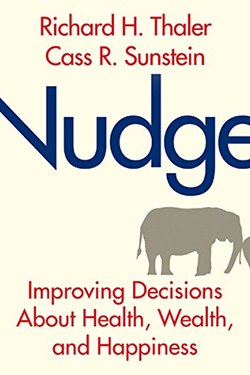
Improving decisions about health, wealth and happiness — by designing choices, not commanding them.
📖 OPEN THE FULL INTERACTIVE BREAKDOWN →🌐 Read it in Hindi, Hinglish, Gujarati, Tamil & 22 more languages — free, with audio.
💡 The Big Idea
Humans are not Econs — we are Humans: lazy, present-biased, loss-averse and easily confused. Thaler and Sunstein show that the same insights that explain our errors can be used to fix them. The nudge toolbox: smart defaults, good feedback, mapping options simply, and gentle reminders. The goal is 'libertarian paternalism' — steer choices toward welfare while leaving the door open.
🧠 The 9 Key Lessons
Lesson 1: Default Power
Chapter 1: Defaults
Whatever is the default is what most people get — organ donation, retirement savings, app permissions. The evidence is enormous: opt-out systems for savings triple participation versus opt-in. The lesson cuts both ways: companies and apps design defaults every day; the ethical question is whether the default serves the user or the designer.
📖 Example: A company that auto-enrols staff in pension saving at 3% creates wealth the opt-in version never would. Read the full example →
⚡ Do this: Audit the three biggest defaults in your life (savings, subscriptions, notifications) and re-set them deliberately.
Lesson 2: The Map of Human Error
Chapter 2: Biases
The book catalogues the systematic bugs: present bias (we overvalue now), loss aversion (losses hurt twice as much as gains please), status quo bias (inertia), overconfidence, and the planning fallacy. Knowing the list is a life skill — every one of these biases is exploited daily by pricing, marketing and design.
📖 Example: Free trials exploit present bias; 'only 2 left' exploits scarcity and loss aversion; yearly plans exploit overconfidence. Read the full example →
⚡ Do this: List your three costliest recent decisions and name the bias that shaped each.
Lesson 3: Choice Architecture
Chapter 3: The Design
Choice architects are everywhere — the person who decides the order of a menu, the layout of a form, the size of a portion. Nudges work by reordering, defaulting, simplifying and warning. The book's canonical examples: putting fruit at eye level in cafeterias, simplifying mortgage forms, paying teachers for gains not losses.
📖 Example: Moving the healthy option to eye level in a cafeteria changed sales by double digits — no one was forced. Read the full example →
⚡ Do this: Redesign one environment you control (desk, kitchen, app) so the good choice is the easy choice.
Lesson 4: The Save More Tomorrow Trick
Chapter 4: Saving
The most famous real-world nudge is Thaler's 'Save More Tomorrow': commit future pay rises to higher savings. It beats willpower because it never asks people to sacrifice today. The general technique: pre-commit decisions for your future self, when your present self is too weak to choose.
📖 Example: A commitment to run at 6 am, made with a friend the night before, works better than the 6 am decision itself. Read the full example →
⚡ Do this: Set one automatic commitment for your future self this week: one pre-scheduled, hard-to-cancel action.
Lesson 5: Nudge Ethically
Chapter 5: The Limits
The book's own guardrails: nudges must be transparent, easy to refuse (the 'choice is still yours' test), and aimed at the user's welfare, not the designer's profit. A dark pattern is a nudge in the wrong direction. The test is simple: would you be comfortable if your choice design were published on the front page?
📖 Example: The 'subscribe' button in green and the 'decline' link in grey is a dark pattern; offering a clear monthly/annual toggle is not. Read the full example →
⚡ Do this: Audit any nudge you create or live with: is it transparent, refusable, and for the user's good?
Lesson 6: The Nudge Wars: When Is It Legitimate?
Chapter 5: Libertarian Paternalism
Thaler answers the criticism his own idea attracts: a nudge is legitimate when it steers without forbidding, keeps every option available, is transparent and reversible, and makes the chooser better off by the chooser's own standards. The same tool — a default — can be a service or a manipulation; the difference is measured in consent and welfare, not in cleverness.
📖 Example: An opt-out organ-donation default saves thousands of lives; an opt-out data-sharing default enriches the company. Same mechanism, opposite ethics. Read the full example →
⚡ Do this: Audit one default you set for others (a form, a meeting time, an auto-renew): is it for them or for you?
Lesson 7: The Nudge Manifesto: Libertarian Paternalism
Chapter 1: The Philosophy
Thaler and Sunstein's famous framing: it IS possible to steer people toward better choices while preserving their freedom to choose otherwise — 'libertarian paternalism'. The belief is that choice architecture is unavoidable (some design always exists), so the only question is whether it is designed well or badly. Nudges are not mandates: the person remains free; the arrangement just makes the better choice the easier one.
📖 Example: A cafeteria that puts fruit at eye level and desserts behind the counter nudges better eating without banning a single food. Read the full example →
⚡ Do this: Find one choice you design for others — a menu, a form, a team process — and ask: what would the 'good' default be?
Lesson 8: The Power of the Pre-Commitment
Chapter 13: Commitment Devices
When willpower fails, architecture wins: a commitment device removes the future decision from the future self. Save More Tomorrow enrols people in future raises before they feel the loss; gym contracts, quitting-buddy pledges and automatic transfers all work the same way — they turn a resolution into a mechanism. The lesson: never rely on the person you will be at 11pm.
📖 Example: The dieter who orders groceries online with a fixed shopping list is using a commitment device; the one who decides in the aisle is negotiating with hunger. Read the full example →
⚡ Do this: Set up one automatic mechanism this week — an auto-transfer, a blocked site, a scheduled partner check-in — so your future self cannot renegotiate.
Lesson 9: The Index of Freedom
Chapter 15: Freedom and the State
Nudge's final chapter draws the line: nudges must be transparent, cheap to opt out of, and tested; anything hidden, costly or manipulative is not a nudge but a trick. Thaler's own test — would you be comfortable if your choice architecture was public? — is the fastest ethics filter for any design. This 'Index of Freedom' is what separates helpful design from dark patterns, in apps and in government alike.
📖 Example: A loan app that shows the true APR in bold is nudging; one that buries it on page four is exploiting — the difference is visibility and ease of exit. Read the full example →
⚡ Do this: Audit one design you use: could you reverse the default in one tap? If not, you are not being nudged — you are being steered.
✅ 5-Step Action Plan
- Reset your three biggest defaults consciously.
- Name the bias behind your last three costly decisions.
- Redesign one environment so the right choice is the easy one.
- Pre-commit one future action automatically.
- Run the front-page test on every nudge you design or accept.
⚠️ When This Doesn't Work
The 'libertarian paternalism' framing has been criticised as manipulation; behavioural results also replicate less reliably in big real-world settings than in the lab. Use the tools honestly, and prefer transparent choices over hidden ones.
💀 The Graveyard Proves It
📡 Facebook Beacon — The Default That Taught the World About Defaults. Burn: $9.5M settlement + a 200-strong alliance of angry users Read the full case study →
💬 Best Quotes from Nudge
- “A nudge is any aspect of the choice architecture that alters people's behavior in a predictable way without forbidding any options.”
- “Choices are never merely presented; they are always framed — the question is whether the framing is wise.”
- “If you want people to do something, make it easy.”
Interactive version: mark lessons as read, listen in your language, share quote cards.