Library › Psychology & People
Nobody Is Thinking About You — Summary & Key Lessons
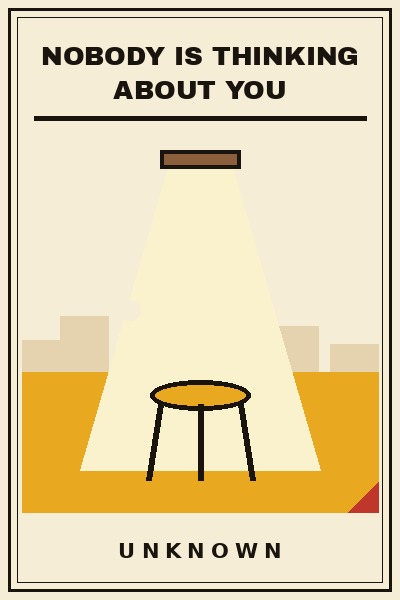
Ten lessons on the spotlight effect: the freedom, comedy and speed that arrive when you realize the audience left.
📖 OPEN THE FULL INTERACTIVE BREAKDOWN →🌐 Read it in Hindi, Hinglish, Gujarati, Tamil & 22 more languages — free, with audio.
💡 The Big Idea
You rehearse the message four times before sending. You replay the meeting comment for three days. You wore the outfit, worried about the belly, postponed the video, skipped the gym class because strangers would watch. Here is the releasing news, delivered with love and evidence: nobody is thinking about you. They are thinking about their message, their meeting, their belly. The spotlight you feel is a projector you run yourself, and everyone runs their own. This book takes that finding seriously, because it is one of the most documented biases in psychology and one of the most profitable to correct. Careers speed up when the fear of looking silly stops editing the attempt. Styles get found. Conversations get honest. And the strange part: the moment you accept the empty theatre, people start finding you more interesting, because finally, someone in the room is watching something other than themselves.
🧠 The 10 Key Lessons
Lesson 1: The Spotlight Experiment
Chapter 1: The Embarrassing T-Shirt
Psychologists ran the perfect study: students wore an embarrassing t-shirt into a room and estimated how many noticed. They guessed about half the room saw it. Reality: about a quarter. The spotlight effect is measurable, large and universal. Your embarrassments are seen at half the volume you broadcast them at, and forgotten at a tenth of the replay rate you run. This is not a motivational poster. It is a finding.
📖 Example: Thomas Gilovich's Cornell experiments, the embarrassing shirt study among them, repeated the effect across looks, intelligence and performance: the observers were busy tracking their own shirts the whole time. Read the full example →
⚡ Do this: Recall your last cringe replay and halve it, then halve it again. That second number is closer to what anyone actually registered. Sleep on that math.
Lesson 2: Everyone Is the Main Character
Chapter 2: Seven Billion Spotlights
The reason nobody is watching you is structural, not personal: every human is wired to run their own spotlight. The uncle at the wedding, the interviewer, the gym regular: all main characters of their own film, all slightly nervous about their own shots. Once this is seen, social life gets lighter and kinder. You stop performing for a jury that is busy being its own defendant.
📖 Example: Weddings prove it yearly: the bride thinks everyone noticed the rain, the caterer thinks everyone noticed the late naan, and the guests remember only the paneer. Same hall, seven hundred private films. Read the full example →
⚡ Do this: At your next gathering, run the experiment live: guess what each person is anxious about. You will laugh. Then notice your own spotlight dim a little.
Lesson 3: Rehearsal Is Where Courage Goes to Die
Chapter 3: The Send Button Tax
The message rewritten five times, the application polished for a month, the video retaken until the light died: rehearsal feels like quality control and functions as courage inflation. The first draft sent teaches you what the market, the person, the room actually thinks, which beats what your fear predicted. Speed of attempts, not quality of rehearsal, is what compounds early in anything.
📖 Example: Pixar's story discipline runs on the opposite of rehearsal: rough first versions shown early to the whole room, because the studio found that protecting ideas from eyes until perfect produced protected, untested, dead ideas. Be bad at first, on purpose, in company. Read the full example →
⚡ Do this: Send one unpolished thing today: the message, the pitch, the demo, the first page. Note the response time. Reality answers faster than rehearsal.
Lesson 4: Cringe Is the Growth Tax
Chapter 4: Pay It Fast
Every new skill has a cringe era: the first videos, the first posts, the first dance classes, the accented English. The people who grow pay the cringe tax quickly and in bulk: early, ugly, in public. The people who stall try to skip the tax through private perfection and pay interest for years instead. The tax never gets dodged, only chosen: small now or enormous later.
📖 Example: Bhuvan Bam's first videos were shot on a weak phone camera in Delhi and are painful to rewatch, which is exactly why the channel that became BB Ki Vines outpaced polished creators who were still lighting their first upload. Read the full example →
⚡ Do this: Identify your cringe era for the thing you keep postponing. Book its first ugly public attempt within seven days. Pay the tax in one instalment.
Lesson 5: The Judged Identity
Chapter 5: When You Believe the Camera
Live long enough under imagined cameras and you become the camera's creature: dress managed, opinion withheld, laugh adjusted, real self in wardrobe. The cost is not just fatigue. It is that nobody ever meets you, including you. Dropping the performance is terrifying precisely once. After that it is energy returned to your account, and the people who like the real version are finally able to find you.
📖 Example: When comedians drop the stage mask on their own shows, as Kapil Sharma did in interviews about his panic years, those consistently become the most shared episodes. The audience had been waiting for the person, not the product. Read the full example →
⚡ Do this: Pick one room where you perform least and one where you perform most. Move one honest sentence from the first room into the second this week. Watch the ceiling hold.
Lesson 6: Nobody Remembers Your Flop
Chapter 6: The Half-Life of Embarrassment
Here is the memory asymmetry: you remember your flop in 4K with surround sound; they have it compressed to a blip, if at all. Ask anyone about a colleague's worst moment from three years ago. They cannot. The flop you are still carrying was processed, recycled and forgotten by its audience long ago. Only the archive in your head keeps screening it, nightly, for an audience of one.
📖 Example: Cricket fans remember Dhoni's helicopter shot; the bowlers who were hit for it remember their own deliveries, not his glory. Sports psychology teams literally use this asymmetry in rehab: the world moved to the next ball. So should you. Read the full example →
⚡ Do this: Do the three-year test: name a colleague's worst moment from 2023. If you cannot, accept that yours are equally recycled. Delete one replay tonight, consciously, on notice.
Lesson 7: Ask for the Thing
Chapter 7: The Freeing Economics of Directness
Most requests die in rehearsal: the mentor email never sent, the discount never asked, the raise never raised, because imagining the no felt worse than living without the yes. But asks are cheap and surprising: mentors say yes to earnest juniors far more than juniors predict, vendors discount for the asking, employers have budgets nobody claimed. Directness is not rudeness. It is respecting everyone's time, starting with yours.
📖 Example: The classic rejection-therapy experiment had students make absurd asks daily to immunize against no, and the side finding was startling: a striking share of absurd asks got yes. Normal, reasonable asks, asked plainly, do far better than that. Read the full example →
⚡ Do this: Make the one ask you have been rehearsing for months. Plain language, specific, one message. Then note the date. Most people find the wait was the expensive part.
Lesson 8: Dress for the Empty Theatre
Chapter 8: Style Is What Survives Nobody Watching
Ironically, the empty-theatre truth is how personal style is born: when you stop dressing for the jury, you start dressing for the body, the work and the mirror you trust. Same for voice, same for opinions, same for your public feed. What remains when nobody is watching is the only thing you will ever own. Build that, and the watchers, when they eventually drift in, meet something consistent.
📖 Example: Ratan Tata's personal uniform of simple suits and the public consistency of his manner became a style precisely because it never performed: decades of the same man in a country that rewards costume changes. Read the full example →
⚡ Do this: Delete one item of costume this month: the watch you cannot afford the EMI on, the persona in your bio, the filter you never post without. Keep a note of what room opens up.
Lesson 9: Use the Empty Room
Chapter 9: The Boldness Dividend
Once the theatre is understood to be empty, boldness becomes cheap: ask the silly question in the seminar, ship the weird idea, wear the traditional fabric to the boardroom, dance at the function badly. Most of your competitors are still rehearsing, which means the entire visible field belongs to whoever shows up unrehearsed. The boldness dividend is collected by people who know the secret: everyone is winging it. Nobody told the others.
📖 Example: Startup lore keeps proving it: the mediocre deck sent beat the perfect deck drafted; the imperfect founder who streamed weekly built the audience the brilliant silent one is still preparing for. The field belongs to the unrehearsed brave, because there is no other kind. Read the full example →
⚡ Do this: Do one visibly unrehearsed thing this week: the question in the room, the live video, the pitch without slides. Log the aftermath. It is always smaller and kinder than forecast.
Lesson 10: And Still: Be Kind to the Audience
Chapter 10: The Flip Side of the Empty Theatre
The closing turn: if nobody is watching you, you are also the only real audience somebody else has in their worst hour. The freedom from imagined scrutiny comes with one duty: real attention, given deliberately, to the few in front of you. Put the phone down and watch the child's performance fully. Hear the friend's story without drafting your reply. The spotlight was always fake. Attention, real attention, is the only standing ovation anybody ever gets.
📖 Example: The most repeated line in every eulogy across cultures is some version of: they showed up, they really listened. Nobody ever eulogizes a great rehearser. Presence is the legacy the empty-theatre truth points you toward. Read the full example →
⚡ Do this: This week, give one person twenty minutes of camera-down, full-face attention. No advice, no parallel task. Notice what it does to them, and to you.
✅ 5-Step Action Plan
- Halve your last cringe replay, then halve it again, and sleep on the math.
- Send one unpolished thing today and note how fast reality answers.
- Book your first ugly public attempt of the postponed thing within seven days.
- Make the ask you have been rehearsing for months, plain and specific.
- Give one person twenty minutes of camera-down attention this week.
⚠️ When This Doesn't Work
This is a TheSmallBook Original: written in-house, published under the name Unknown, with no real author to credit. The lessons are original; the findings cited (Gilovich's spotlight experiments, Pixar's early-shown rough drafts, rejection therapy) are real public work, referenced honestly. Nothing here is therapy: social anxiety that shuts doors deserves professional care, and this book salutes that choice. The theatre is empty. Go be bad at something in it.
💀 The Graveyard Proves It
📞 Nokia — 'We Didn't Do Anything Wrong, But We Lost'. Burn: 50% market share → sold off. Read the full case study →
💬 Best Quotes from Nobody Is Thinking About You
- “The audience you fear left the theatre mid-show. They are watching their own rehearsal.”
- “Cringe is the tax on growth. Free people pay it gladly and quickly.”
- “Being seen trying is the whole advantage. Everyone else is still rehearsing.”
Interactive version: mark lessons as read, listen in your language, share quote cards.