Library › Business & Startups
Losing My Virginity — Summary & Key Lessons
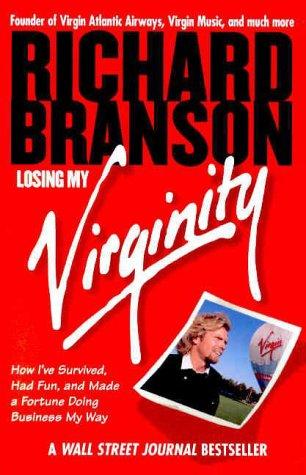
Dyslexic schoolboy to balloon-chasing billionaire: the autobiography of the man who built an empire on fun, lawsuits and protecting the downside.
📖 OPEN THE FULL INTERACTIVE BREAKDOWN →🌐 Read it in Hindi, Hinglish, Gujarati, Tamil & 22 more languages — free, with audio.
💡 The Big Idea
Branson's autobiography covers the first 48 years: the dyslexic schoolboy publishing Student magazine (1968), the mail-order records side that became Virgin Music (with the Manor studio, Mike Oldfield's Tubular Bells, the Sex Pistols), the desperate sale of Virgin Records to Thorn EMI in 1992 (he ran out crying), and the bet-everything launch of Virgin Atlantic, including the famous lawsuit against British Airways' dirty-tricks campaign (won out of court in 1993). The operating doctrine underneath the stunts: protect the downside (negotiate exit rights before launch: sell the 747 back to Boeing if it fails), use the brand to enter stale markets with fun, and treat employees and adventure as the point. The book also contains the empire's failures (Virgin Cola, Virgin Vodka, trains chaos) that our linked case study dissects.
🧠 The 8 Key Lessons
Lesson 1: Protect the Downside Before You Need It
The Boeing Escape Hatch
Before launching Virgin Atlantic with a single secondhand 747, Branson negotiated the right to sell the aircraft back to Boeing after a year if the airline failed. That single clause converted a potentially fatal bet into a survivable experiment, and he used similar exits across ventures. The discipline: every big bet needs a pre-negotiated exit that caps the loss at an amount you can absorb, decided while everyone is optimistic, not after.
📖 Example: The one-aircraft airline was structured so failure meant returning a plane, not bankruptcy; instead the airline survived (and the BA war made it famous), but the clause is what made the launch rational at all. Read the full example →
⚡ Do this: For your riskiest current bet, write the exit clause now: what can you return, resell, sublicense or walk from, and at what capped loss? Negotiate it this week, while you're excited and so are they.
Lesson 2: Enter Stale Markets with a Fun Flag
The Virgin Brand Playbook
Virgin entered categories (airlines, cola, mobile, finance) defined by complacent giants and joyless customer experiences, promising the brand's personality (fun, cheeky, consumer-first) as the differentiator. The strategy works when the incumbent's weakness is experience rather than technology, and when the brand's trust transfers to the new category. It fails when the category needs capabilities the brand doesn't have (our case study's cola war).
📖 Example: Virgin Atlantic's upper-class experience (limo transfers, in-flight bars, charm) beat legacy carriers' grudging service on delight rather than price, turning a one-plane underdog into a category personality. Read the full example →
⚡ Do this: Score your incumbent competitors on customer joy (mystery-shop them). Where the score is lowest and technology matters least, a challenger brand can win on personality.
Lesson 3: Fight Bullies in Court, Not in the Press Alone
The British Airways War
BA ran a dirty-tricks campaign (poaching Virgin passengers, spreading rumors) believing the small airline would fold; Branson responded with meticulous documentation and a libel suit BA eventually settled (damages to Virgin and staff, legal costs, an apology). The lesson: institutional bullying is beaten with records and legal patience, not matching aggression; the underdog's weapon is a paper trail and stamina.
📖 Example: Virgin staff logged every poached booking and whispered rumor; years of receipts turned a giant's confidence into a courtroom embarrassment and a settlement that funded the airline's next phase. Read the full example →
⚡ Do this: Start a contemporaneous log of any competitor bad behavior toward you now (dates, screenshots, witnesses). The cheapest time to build a lawsuit is before you need one.
Lesson 4: Sell the Darling When the Empire Needs Cash
The Record Sale He Cried Through
Selling Virgin Records (the beloved founding business) to fund the airline was Branson's hardest call: he walked out of the signing in tears, but the sale (about a billion dollars) capitalized the venture that defined his life. The lesson: portfolio love is expensive; when one asset can fatally fund another, sell the asset with the safest market, not the one with the boldest future, and grieve on schedule.
📖 Example: Record-label cash cows rarely become airlines; Branson correctly judged which asset could be re-bought in spirit (never in fact) and which could not be built without the other's proceeds. Read the full example →
⚡ Do this: Rank your projects by two questions: which could fund the other, and which could survive without you? If answers differ, you have found the sale and the keeper.
Lesson 5: Advertising Is Theater: Make the Stunt Tell the Story
Balloon Tanks and Brides
Virgin's marketing legend (Branson driving a tank into Times Square against Coca-Cola's billboard, arriving at launches by balloon or barge) worked because each stunt compressed the brand story (underdog, fun, audacious) into a photograph. The craft: a stunt must express the product's positioning, not just the founder's adrenaline; otherwise it's noise that costs budget.
📖 Example: The tank stunt said in one image what cola ads said in a campaign: little Virgin declares war on the giant; press coverage multiplied reach no media buy could match. Read the full example →
⚡ Do this: Design one launch moment this year that a photo could tell without a caption. If the picture needs explanation, simplify the idea until it doesn't.
Lesson 6: Adventure Builds Teams That Slideshows Cannot
The Necker Way
Branson ran companies through shared adventures (balloon flights, island gatherings, informal access: his note-taking on whatever paper exists, employees calling him Richard). The management claim: shared risk and informality build loyalty and candor that corporate retreats simulate badly. It scales imperfectly (the empire's later professionalization required real systems), but as culture seed it works.
📖 Example: Employees recount brainstorming sessions on Necker island where rank vanished; several Virgin innovations (and famous customer saves) trace to conversations no corporate hierarchy would have permitted. Read the full example →
⚡ Do this: Replace one quarterly meeting with a shared physical challenge (hike, build day, sport) with your core team. Watch what people say when the slides are gone.
Lesson 7: Dyslexia Is a Design Constraint, Not a Defect
Reading People Instead of Pages
Branson's dyslexia forced him to build businesses around verbal simplicity: contracts explained aloud, numbers reduced to one page, delegation to people who love detail. The constraint became a communication style customers and staff found clarifying. The lesson: your cognitive difference, engineered around honestly, often becomes your interface advantage.
📖 Example: Virgin contracts and pitches were famously plain-language; executives recall being quizzed until they could explain the deal in one breath, discipline that prevented the over-complicated structures that sink rivals. Read the full example →
⚡ Do this: Rewrite your most complex document (terms, pitch deck, plan) until a distracted teenager understands it aloud. Complexity you cannot speak is complexity you don't control.
Lesson 8: Know Which Losses Are Tuition
Cola, Vodka and the Limits of Brand Magic
Not everything worked: Virgin Cola and Virgin Vodka are the book's quiet admissions (and our case study's subject). The pattern in failures: categories where the brand's promise (fun, service) cannot beat physical advantages (Coke's distribution locks, vodka's shelf economics). The discipline: brand extensions must pass one test: does the brand's core competence change the economics of the category, or only its advertising?
📖 Example: Branson's tank-crush theatrics couldn't fix the shelf: retailers profited from Coke's cooler dominance, so Virgin Cola died on distribution, exactly the failure mode the linked case study documents. Read the full example →
⚡ Do this: For your next extension, write down the PHYSICAL advantage required to win (shelf control, regulatory lock, network density). If your brand adds no physical advantage, it adds nothing but noise.
✅ 5-Step Action Plan
- Attach a pre-negotiated exit clause to your riskiest current bet this week.
- Mystery-shop incumbents for joy; attack where joy is lowest and tech matters least.
- Start a dated evidence log of competitor misconduct today.
- Fix personal burn for three years and route the difference into assets.
- Kill any brand extension that adds advertising, not economics, to a category.
⚠️ When This Doesn't Work
This is Branson's 1998 memoir: self-mythologizing in places, silent on later failures (Virgin Cola's full collapse, Virgin Cars, trains troubles are footnotes here but case studies in hindsight), and written with a ghostwriter's polish over founder memory. Employee and rival accounts sometimes differ from his framing (especially the BA war's finer points). Read it for the downside-protection doctrine and brand playbook, and read the linked case study for what happens when the playbook meets physical distribution.
💀 The Graveyard Proves It
🥤 Virgin Cola — Drove a Tank Through Times Square to Beat Coke, and Coke Didn't Even Flinch. Burn: Briefly outsold Pepsi in UK supermarkets, then vanished from shelves by the mid-2000s; one of Branson's own listed regrets. Read the full case study →
💬 Best Quotes from Losing My Virginity
- “Protect the downside and the upside will take care of itself.”
- “A business is simply an idea to make other people's lives better.”
- “Screw it, let's do it.”
Interactive version: mark lessons as read, listen in your language, share quote cards.