Library › Self-Improvement
Karma Yoga — Summary & Key Lessons
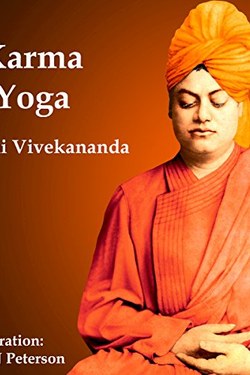
The yoga of work: how to act at full power without being crushed by results — Vivekananda's lectures on karma.
📖 OPEN THE FULL INTERACTIVE BREAKDOWN →🌐 Read it in Hindi, Hinglish, Gujarati, Tamil & 22 more languages — free, with audio.
💡 The Big Idea
Karma yoga is the discipline of doing. Vivekananda's radical claim: work done with attachment binds you to anxiety, while work done as offering frees you to act with total energy. He warns against two false ideals — the lazy renunciate and the anxious achiever. The true worker is calm in the storm, generous in victory, and indifferent to praise, because the work itself is the offering.
🧠 The 10 Key Lessons
Lesson 1: Work Is Worship — Literally
Lecture 1: The Philosophy of Work
Vivekananda refuses the split between the spiritual and the practical: to the karmi, work done well is prayer. The biggest deception in life is selfishness dressed as duty — the person who works only for reward, even for 'the family', is still in the cage. Freedom begins when work is done because it is right, not because it pays.
📖 Example: Two surgeons, equal skill: one operates for the fee and the applause, one for the patient. The second is free; the first is a slave in a white coat. Read the full example →
⚡ Do this: Choose one recurring task and do it this week as an offering — full attention, no reward-seeking.
Lesson 2: Attachment Is the Real Prison
Lecture 2: Attachment
The core mechanism: attachment to results converts any activity into anxiety. Worse, every person attached to a possession or an outcome is, in Vivekananda's phrase, chained to the object of their desire. The cure is not softness — unattached action is the hardest discipline because it requires you to act with everything while owning nothing.
📖 Example: An entrepreneur who treats the business as an extension of his ego cannot make good decisions; the one who serves it treats it well. Read the full example →
⚡ Do this: Identify one outcome you are gripping too hard and add the sentence: 'I will do the work and release the result.'
Lesson 3: The Trap of the False Renunciate
Lecture 3: Renunciation
Vivekananda attacks the person who escapes into spirituality to avoid work: renunciation of action without renunciation of attachment is empty. The kitchen, the office, the family — those are the training ground. The man who 'renounces' the world while burning with ambition is merely hiding; the man who works in the world with a free mind has renounced everything.
📖 Example: A 'spiritual' retreat of a month does more good than a year of escape when it returns you to your real duties — or less. Read the full example →
⚡ Do this: Before you add any practice to your life, ask: does this improve my work and service, or help me avoid them?
Lesson 4: Give Without Needing Thanks
Lecture 4: Charity
The highest form of karma is service without expectation. Vivekananda extends it to motives: even the desire to be seen as generous is ego. Give where the gift cannot return — not as investment in reputation. The modern translation: help without maintaining a ledger of favours owed.
📖 Example: The mentor who advises a junior with no expectation becomes the person everyone silently trusts. Read the full example →
⚡ Do this: Do one act of help this week with no record, no credit, no one to tell.
Lesson 5: Calm Energy Is the Mastery
Lecture 5: Freedom
The result of karma yoga is practical and visible: energy without anxiety. The unattached worker is calm under pressure, quick to recover, generous in victory. Their power is not less than the attached worker's — it is more, because none of it is wasted on worry. Vivekananda's summary is the whole book: be like the ocean, receiving rivers without rising.
📖 Example: The calmest person in a crisis is usually the most powerful — and usually the least attached to the outcome. Read the full example →
⚡ Do this: Track one week: how much of your energy goes to the work, and how much to worry about its results?
Lesson 6: The Motive Test: Working Without Desire
Chapter 2: The Secret of Work
Vivekananda's test for every action is its motive: work done with desire for reward binds the worker, even when the reward is noble. The free person works because work is their nature — like the sun shining or the river flowing — not because of what it buys. Even the desire to help can become a chain; drop the receipt and the work becomes light.
📖 Example: The volunteer who burns out is usually the one keeping score of gratitude; the one who gives without expectation keeps giving for decades. Read the full example →
⚡ Do this: Do three acts of help this week with the receipt torn up — no credit, no mention, no memory of the debt.
Lesson 7: The Stillness Inside Action
Lecture 3: The Path of Action
Karma yoga is often mistaken for ambition or for renunciation; it is neither. The Gita's practice is presence: action done with complete attention, the mind settled inside the act rather than lunging toward its reward. The same work done with scattered mind creates bondage; done with collected mind, it becomes purification. The calm is not the absence of effort — it is the height of it.
📖 Example: A surgeon who stays quiet and precise during a crisis, and a surgeon who panics over the outcome, are doing the same operation — and completely different work. Read the full example →
⚡ Do this: Pick one task today and do it at 100% presence: phone in another room, mind on the task only.
Lesson 8: Samatva: The Secret of Evenness
Lecture 2: The Yoga of Knowledge and Action
The Gita's most practical teaching is samatva — evenness of mind in success and failure. The yogi does not become a stone; he keeps moving while refusing to be inflated or crushed by results. This is the skill behind every sustained career: the same face after a win and after a loss, because the work itself, not the trophy, is the teacher.
📖 Example: After an exam result, one student rushes to celebration, another to despair, a third to the next chapter — the third has understood the lesson. Read the full example →
⚡ Do this: After your next outcome — good or bad — write one line: 'What is the next step?' Let that be your only reaction.
Lesson 9: Work as Offering
Lecture 5: The Discipline of Action
The Gita's radical move: work offered to something larger than your own gain stops producing anxiety. The offering is an attitude, not a ritual — the parent who cooks with love, the coder who builds for users, the worker who serves customers as if serving the divine in them. When the act is the offering, the outcome's power over you shrinks, and the quality of the work mysteriously rises.
📖 Example: Two waiters: one serves to get the tip, one serves to give the guest a good evening. The guests can feel the difference — and the second waiter is never exhausted by rejections. Read the full example →
⚡ Do this: Tomorrow, dedicate every task 'for someone else's good' before you begin. Do it silently, and note how the day felt.
Lesson 10: Ahimsa Inside the Work
Lecture 3: The Path of Action (Ethics)
Karma yoga includes the ethics of the effort itself: non-injury in thought, word and competition. Winning by crushing others builds a soul that must keep crushing. The Gita's warrior ethic is fierce but clean — fight the battle, never the person; compete with skill, never with sabotage. Ambition is allowed; the injury is the line.
📖 Example: A founder who wins a market without badmouthing the competitor keeps both his reputation and his peace; the one who wins by slander inherits a war. Read the full example →
⚡ Do this: This week, win one argument by refusing to attack the person — only the position. Watch how it ends.
✅ 5-Step Action Plan
- Do one recurring task as full offering, no reward-seeking.
- Release one gripped outcome: work, then let go.
- Check each 'practice': does it serve work, or avoid it?
- Give once with no credit, no record, no telling.
- Audit energy: % on work vs. % on worry — then shift the ratio.
⚠️ When This Doesn't Work
Vivekananda's lectures are shaped by 19th-century Hindu revivalism and can sound anti-materialistic; the goal is not passivity but mastery. Modern work culture needs boundaries and rest that the lectures don't address.
💀 The Graveyard Proves It
☕ V.G. Siddhartha — The Coffee King Who Carried It Alone. Burn: A founder India mourned Read the full case study →
💬 Best Quotes from Karma Yoga
- “Do work that is worthy — and do not care for the result.”
- “It is the worker who is the real worshipper.”
- “The world is a gymnasium where we strengthen our muscles by fighting with it.”
Interactive version: mark lessons as read, listen in your language, share quote cards.