Library › Self-Improvement
The Kalam Effect — Summary & Key Lessons
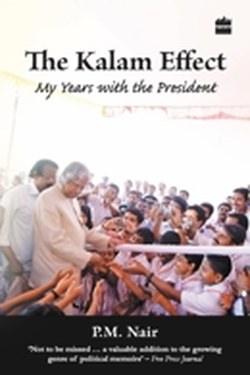
What made A.P.J. Abdul Kalam the 'missile man' who became a people's president — an inside portrait.
📖 OPEN THE FULL INTERACTIVE BREAKDOWN →🌐 Read it in Hindi, Hinglish, Gujarati, Tamil & 22 more languages — free, with audio.
💡 The Big Idea
Kalam's career ran from a paper-boat childhood in Rameswaram to directing India's missile programme to the presidency. This biography by his close aide identifies the 'Kalam effect': leading by example at a scale so quiet it is almost invisible — waking before 5 am, learning continuously, giving credit away, and treating failure as data. His life is a case study in converting ambition into systems.
🧠 The 10 Key Lessons
Lesson 1: Begin Before the Day Does
Chapter 1: Rameswaram
Kalam's discipline started in childhood: he rose before dawn to deliver newspapers, studied under streetlights, and never complained about condition — he adjusted to it. The pattern of a great life was formed early: purpose first, comfort second. His aides note the same schedule survived to the presidency.
📖 Example: A habit formed at 12 (morning delivery + study) carried a man to the Rashtrapati Bhavan — the routine was the rocket. Read the full example →
⚡ Do this: Own your first hour tomorrow: one purpose-driven task before any distraction.
Lesson 2: Give Credit Away
Chapter 2: Teamwork
The Kalam effect in action: at ISRO and DRDO he insisted the team own the achievement. When the SLV-3 launched, he named everyone but himself; when it failed, he took the blame. This asymmetry — credit flows down, blame flows up — created loyalty no paycheck can buy.
📖 Example: After a win, the leader says 'we'; after a loss, the leader says 'I'. Teams follow that leader into fire. Read the full example →
⚡ Do this: In your next win, name three people publicly; in your next loss, take the first sentence yourself.
Lesson 3: Failure Is a Step, Not a Verdict
Chapter 3: SLV-3
The 1979 SLV-3 launch crashed into the Bay of Bengal. The committee wanted to cancel; Kalam and his team asked for a year. In 1980, the same rocket succeeded. His method: separate the failure of the system from the worth of the people, find the single technical cause, and run the experiment again.
📖 Example: A failed launch is a failed test; a cancelled programme is a failed dream. Distinguish the two. Read the full example →
⚡ Do this: For your last failure: write the single technical cause, the one fix, and the re-test date.
Lesson 4: Science Meets Compassion
Chapter 4: The People's President
Kalam carried the scientist's rigour into public life — visiting students, answering every letter, prioritising children's futures. He treated dignity as an engineering parameter: a country functions well when its people believe in it. His popularity came not from rhetoric but from consistency between what he said and what he did.
📖 Example: He flew economy, carried his own luggage, and walked to school functions — credibility earned in inches. Read the full example →
⚡ Do this: Find one place where your actions and your stated values diverge; close the gap this month.
Lesson 5: Dream Big, Structure Small
Chapter 5: Vision 2020
Kalam's signature move: enormous vision translated into a small number of concrete missions (food, water, energy, education, healthcare, infrastructure). He never asked 'is this too big?' — he asked 'what is the first step?' A dream without a first step is a wish; with one, it is a programme.
📖 Example: Vision 2020 was a national dream built from five tangible missions — each with measurable targets. Read the full example →
⚡ Do this: Take your biggest dream and write its first concrete step for this week.
Lesson 6: The Coach Who Saw a Rocket Scientist
Chapter 1: Childhood Influences
Kalam's own teachers — and the strangers who pushed him — teach the book's first lesson: people rise to the expectations held for them. The science teacher who told him he could be a scientist, the father who let him leave a small town, the friends who gave him books — his biography is, in effect, a map of the supports a dream needs.
📖 Example: A young Kalam selling newspapers and doing odd jobs, yet carrying notebooks — he was already collecting the fuel he needed. Read the full example →
⚡ Do this: Be one person's 'coach' this month: tell someone you see the capability they don't yet see in themselves.
Lesson 7: The Rocket Years: Learning to Fail Forward
Chapter 4: The SLV-3 Story
The failure of the first SLV-3 launch — a rocket falling into the Bay of Bengal — is the book's most honest chapter. Kalam does not spin it: the team was humiliated, the press mocked them, and yet the same team regrouped and succeeded. His lesson: failure is data about the system, not a verdict on the people.
📖 Example: The press conference after the failure — where Kalam and the team stood publicly, accepted the humiliation, and said exactly what they would fix — is one of the most admirable moments in Indian… Read the full example →
⚡ Do this: When your next project fails, write two lists: what the failure taught about the SYSTEM, and what it taught about YOU. The second list is shorter — guard it.
Lesson 8: The People's President: Power Is Access
Chapter 9: The Presidency
Kalam's presidency redefined the office not by power but by access: he answered children's letters, visited classrooms, invited young people to Rashtrapati Bhavan. His conviction — that institutions serve people, not the reverse — turned a ceremonial office into a mentoring channel. The Kalam effect: leadership measured by how many futures you touch, not how many orders you give.
📖 Example: His famous reply letters to schoolchildren were written personally — the President who treated a 12-year-old's question as important as a minister's brief. Read the full example →
⚡ Do this: This week, answer one message from someone junior with your full attention. That is power used well.
Lesson 9: The Ignited Minds Formula
Chapter 11: Vision and Will
Kalam's later books repeat a formula: vision plus will, multiplied by sustained hard work, equals achievement. But his deeper point is that vision must be shared — an ignited mind ignites others, and a nation of ignited minds is the true development index. This is why he wrote for children and spoke in schools: one ignited mind at a time.
📖 Example: The 'What can I give?' question he propagated — replacing 'what can I get?' — is the same formula in one line. Read the full example →
⚡ Do this: Write your one-line vision (5 words). Now write who needs to share it for it to happen. Send them the line today.
Lesson 10: The Last Hours: A Life With No Regrets
Epilogue: The Final Day
Kalam died doing what he was doing his entire life: teaching. His last public act was a lecture to students. The book's quiet message in its ending: a life is not measured by its length but by the quality of its final act — and the final act reflects the daily practice of the whole. He prepared no grand exit because he never needed one.
📖 Example: Falling on a stage, mid-sentence, in front of young people — the circle of his life closed exactly where it opened. Read the full example →
⚡ Do this: Ask yourself: if today were my final act, would it match what I claim to be? If not, adjust one small thing now.
✅ 5-Step Action Plan
- Claim the first hour of your day for one purpose task.
- Practice credit-down, blame-up in your next win and loss.
- Convert one failure into: cause, fix, re-test date.
- Close one values-behaviour gap this month.
- Write the first step of your biggest dream — and do it.
⚠️ When This Doesn't Work
This is an admiring account by a colleague, not a critical biography — it smooths the difficult chapters of Kalam's political years. Still, the habits it documents are verifiable and worth copying.
💀 The Graveyard Proves It
🛰️ NASA Mars Climate Orbiter — The $327M Metric Mix-Up. Burn: $327.6M spacecraft Read the full case study →
💬 Best Quotes from The Kalam Effect
- “Dream is not that which you see while sleeping, it is something that does not let you sleep.”
- “If you want to shine like a sun, first burn like a sun.”
- “Failure will never overtake me if my determination to succeed is strong enough.”
Interactive version: mark lessons as read, listen in your language, share quote cards.