Library › Self-Improvement
Jnana Yoga — Summary & Key Lessons
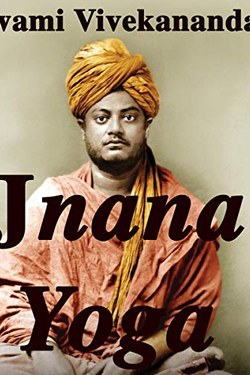
The yoga of knowledge: Vivekananda's razor-sharp lectures on thinking your way to freedom.
📖 OPEN THE FULL INTERACTIVE BREAKDOWN →🌐 Read it in Hindi, Hinglish, Gujarati, Tamil & 22 more languages — free, with audio.
💡 The Big Idea
Jnana yoga is the intellectual path: freedom through right knowledge. Vivekananda's method is relentless questioning — who am I, what is unchanging, what is death? His famous teaching: 'Neti, neti' (not this, not this) — peel away every identification until only awareness remains. It is philosophy as surgery: ideas are not for believing, they are for seeing.
🧠 The 10 Key Lessons
Lesson 1: Question Everything — Even Yourself
Lecture 1: The Need for Inquiry
Vivekananda's starting point is intellectual honesty: most belief is inherited, most identity is assumed. The jnani asks 'why do I believe this?' with the same rigour a scientist asks about a hypothesis. Not to destroy belief, but to replace assumption with direct knowledge. The mind is the only instrument of inquiry — so it must first be taught to doubt itself.
📖 Example: A person who can examine their own political tribe's claims has a mind ready for jnana; the one who cannot is still in a crowd. Read the full example →
⚡ Do this: Pick one belief you hold and argue the opposite side better than its defenders can.
Lesson 2: Neti, Neti — Peel Everything Away
Lecture 2: Discrimination
The method: identify with nothing that can be taken from you. Body? It changes and dies. Thoughts? They come and go. Roles? They end. The practice of 'not this, not this' peels the onion of identity until only the aware presence remains — the witness of all these roles. This is not self-negation; it is finding what you actually are.
📖 Example: A CEO who can say 'I am not my company' makes better decisions and sleeps better. Read the full example →
⚡ Do this: Daily: list your roles (parent, employee, fan…) and reflect that you are the one who holds them, not the roles.
Lesson 3: The Real and the Unreal
Lecture 3: Maya
The doctrine of maya is often mistranslated as 'illusion'; Vivekananda explains it as the mind's inability to grasp reality as it is — time, causality and self are all filtered. The practical point: do not mistake the map for the territory. Every strong opinion is a map; hold it lightly enough to be corrected.
📖 Example: The 'truth' about a rival company in a news cycle is always a partial map — the territory keeps surprising. Read the full example →
⚡ Do this: In one argument this week, ask: 'What would have to be true for the other side to be right?'
Lesson 4: Freedom Is Seeing, Not Collecting
Lecture 4: Knowledge
Jnana is not information — it is transformation. You can quote the Upanishads and still be bound; you can know one truth and be free. The distinction: information is stored knowledge, seeing is immediate knowledge. The jnani's test of an idea is whether it changes perception, not whether it can be repeated in an exam.
📖 Example: A person 'knows' anger is destructive — and still rages. They have information; they have not seen. Read the full example →
⚡ Do this: Take one idea you already 'know' (patience, impermanence) and spend a week actually looking for it in life.
Lesson 5: The Sword of Detachment
Lecture 5: The Last Step
The end of jnana yoga is fearlessness born of discrimination: when you have seen what is real, loss of the unreal is no loss at all. Vivekananda calls detachment the sword that cuts the knot of ego. Notice the paradox — the path of thinking leads to a place beyond thought, where the seer is clear and the storms of the world pass without ownership.
📖 Example: The wisest people you know are usually the most unshakeable — not because nothing bothers them, but because they see what is worth being bothered by. Read the full example →
⚡ Do this: Write the sentence you would need to hear in your worst moment — and rehearse seeing it before the moment arrives.
Lesson 6: Neti Neti: The Negative Method
Chapter 4: The Real Nature of the Self
Vivekananda's path of knowledge uses negation: the Self is known by stripping away what it is not — not the body, not the thoughts, not the name, not the roles. 'Neti, neti' — not this, not this — each negation removes a layer until what remains is the bare witnessing presence that was there before the labels arrived.
📖 Example: Remove the labels 'student', 'Indian', 'anxious', 'son' and ask what is left: the awareness that was watching all of them. That watcher is the starting point of Jnana Yoga. Read the full example →
⚡ Do this: For one day, when the question 'who am I?' arises, answer only by negation — and notice who is still there.
Lesson 7: The Witness, Not the Doer
Lecture 4: The Path of Knowledge
Vedanta's core practice is dis-identification: you are not the thought, the anger, the role — you are the awareness that witnesses them. The witness is untouched; the storm passes through it. This is not dissociation but liberation: the moment you can say 'I notice I am angry', you are no longer owned by the anger. The witness is the first taste of the Self.
📖 Example: During a heated argument, one person is the anger; the other notices the anger rising, names it silently, and chooses the next sentence deliberately. Read the full example →
⚡ Do this: Today, whenever a strong emotion rises, narrate it internally: 'I notice I am —'. Say it ten times; notice the gap it creates.
Lesson 8: The World Is a Dream of the Mind
Lecture 4: Maya and the Seer
Vedanta's dream analogy is not escapism — it is a calibration tool. In a dream, the tiger is real while it lasts; waking does not make the dream meaningless, it makes it smaller. The seen world changes, dissolves and returns; the seer remains. Understanding this does not devalue life — it deflates fear, because the worst case in a dream cannot touch the dreamer.
📖 Example: A nightmare loses its power the instant you remember you are dreaming; a worry loses its power the instant you question its permanence. Read the full example →
⚡ Do this: When a fear feels enormous, ask: 'How big will this be in one year?' Then act on what remains.
Lesson 9: Knowledge Is the Fire That Burns Karma
Lecture 4: Jnana and Liberation
Understanding, in Vedanta, is not information — it is fire. When you truly SEE why a pattern exists, the pattern loses its grip, because no one continues a game once the illusion is exposed. The thief who understands he steals from himself stops stealing; the procrastinator who sees that delay is a fear-reflex starts moving. Insight is the only permanent change agent; willpower is the patch.
📖 Example: A person who finally understands that overwork is a bid for worth doesn't need a productivity app — the drive itself dissolves. Read the full example →
⚡ Do this: Pick one repeated pattern of yours and study it until you can explain it to a friend in two sentences. Insight first, habit change second.
Lesson 10: See the One in the Many
Lecture 4: The Vision of Unity
The sage's vision is not sentimentality but perception: the same self stands behind every face, as the same electricity runs through every appliance. This is the antidote to contempt — the person who annoys you is the same presence wearing a different costume. Practising this vision changes relationships at the root, because you stop negotiating with masks and start meeting beings.
📖 Example: The same light shines through a red window and a blue window — the windows differ, the light does not. Read the full example →
⚡ Do this: Today, meet three people — including one who irritates you — and silently greet the same presence in each. Watch your day change.
✅ 5-Step Action Plan
- Argue the opposite side of one belief, in writing.
- Daily: notice 'I am the one holding the roles, not the roles.'
- In each strong opinion, ask what would make the other side right.
- Take one 'known' idea and observe it in life for a week.
- Write and rehearse your unshakeable sentence for the worst moment.
⚠️ When This Doesn't Work
This path is intellectually demanding and can slide into intellectualism — using philosophy to avoid life rather than clarify it. The metaphysics (one reality behind everything) is a claim, not a proof; hold it as a lens, not a dogma.
💀 The Graveyard Proves It
🎲 The Dice Game — One Game of Dice That Cost a Kingdom Its Honour. Burn: Draupadi publicly humiliated; Yudhishthira's moral authority never recovered Read the full case study →
💬 Best Quotes from Jnana Yoga
- “The world is a great gymnasium where we go to strengthen ourselves.”
- “Neither money nor power nor intellect can free you — knowledge alone frees.”
- “All differences are in name and form; behind them is one reality.”
Interactive version: mark lessons as read, listen in your language, share quote cards.