Library › Psychology & People
Being Mortal — Summary & Key Lessons
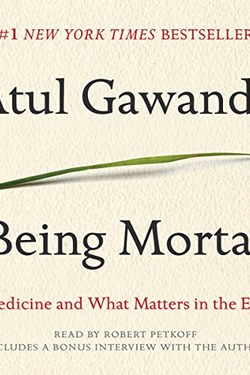
What medicine gets wrong about aging and dying — and what matters when the end is near.
📖 OPEN THE FULL INTERACTIVE BREAKDOWN →🌐 Read it in Hindi, Hinglish, Gujarati, Tamil & 22 more languages — free, with audio.
💡 The Big Idea
Gawande, a surgeon, confronts the taboo: medicine has become so good at prolonging life that it forgets to help people live before they die. Nursing homes focus on safety, not purpose; hospitals treat death as failure. His alternative is counterintuitive: talking honestly about what people value, choosing less intervention when it buys suffering instead of life, and designing old age around agency — even at the end, even in decline.
🧠 The 9 Key Lessons
Lesson 1: Medicine's Failure Is the Failure to Ask
Chapter 1: The Problem
The book's engine is a question doctors avoid: what matters to you, and what are you willing to sacrifice for more time? Gawande shows that when patients are asked, many choose a life even if short — but with their priorities intact. The error of modern medicine is treating the body's agenda as the patient's agenda.
📖 Example: A man who wanted to watch his granddaughter's wedding chose risky surgery; the woman who wanted no hospital chose comfort care — both chose correctly. Read the full example →
⚡ Do this: Write your own answers now: what matters to you, and what would you trade for more time?
Lesson 2: The Assisted Living Revolution
Chapter 2: Agency
Nursing homes were designed for safety — and created warehouses of emptiness. Then one home gave its residents pets, plants and a say — even the freedom to fall. The astonishing result: fewer injuries, fewer drugs, better lives. Agency is not a luxury to add to care; it is the core of care, and it extends to the very end.
📖 Example: A home where residents chose their routines — and even kept a dog — saw falls and antipsychotic use drop dramatically. Read the full example →
⚡ Do this: Give someone in your care (elder, child, colleague) one real choice today — and honour it.
Lesson 3: The Conversation Most Avoided
Chapter 3: The Hard Talk
Gawande provides a script for the conversation about the end: not 'what do you want?' abstractly, but what are your fears, what trade-offs are acceptable, what makes life worth living. The talk is hard and it is also freeing — families who have it fight less, and the dying get what they actually want instead of what everyone guessed.
📖 Example: Families who talked early described less guilt, less conflict and more presence; the un-talked ones fought at the bedside. Read the full example →
⚡ Do this: Have one hard conversation with your family about what a good life looks like — before there is a crisis.
Lesson 4: Courage in the Face of the End
Chapter 4: The Choice
Gawande's record of hospice care is quietly radical: patients who stop aggressive treatment for a terminal illness often live longer than those who keep fighting — with fewer symptoms and more lucid days. The courage is not in the surgery; it is in choosing the trade and owning it.
📖 Example: Hospice patients with pancreatic cancer outlived aggressively treated ones on average in one striking study — quality and quantity aligned. Read the full example →
⚡ Do this: Reframe your own end-of-life plan: pickle comfort, location and 'what makes life worth living' in writing.
Lesson 5: Good Care Is About Life, All the Way
Chapter 5: The Guide
The final chapter is a model conversation with a patient whose daughter asks the question that matters: 'what should I do?' The answer is to ask back. Care is not a plan imposed; it is a good life supported — which in the last season means presence, control and a calm place. Gawande's own father's end is the proof: he lived fully until he stopped.
📖 Example: Gawande's father chose surgery, then chose to stop — and spent his last months at his desk, teaching, working, alive. Read the full example →
⚡ Do this: Ask one older person this week: what makes your days good? Then help deliver it.
Lesson 6: The Task of Aging: From Safety to Purpose
Chapter 3: The Rise of the Nursing Home
Gawande's most hopeful evidence: the elderly do not actually want safety — they want agency, purpose and even a little risk. The home that gave residents plants, a dog and a say in their routines saw falls, prescriptions and misery all fall together. The lesson flips the whole care industry: safety is not the goal; a life with meaning is — and meaning survives frailty.
📖 Example: One assisted-living facility let residents keep pets and choose their days; antipsychotic use dropped, injuries dropped, and people stopped waiting to die. Read the full example →
⚡ Do this: Ask one older person in your life what they want to be in charge of — then genuinely give them that thing.
Lesson 7: The Surgeon's Covenant
Chapter 5: A Better Life
Gawande's confession cuts deep: he offered patients aggressive treatments he would not have chosen for himself — and watched them suffer for a hope that never came. The doctor's covenant is not to sell hope but to tell the truth about trade-offs, then to walk with the patient wherever the truth leads.
📖 Example: The patient who, given the real odds, declined the surgery — and spent his last good months at his daughter's kitchen table, awake and unplugged. Read the full example →
⚡ Do this: At your next health decision (yours or a parent's), ask for the actual odds table — success rates, recovery time, quality of life — not the hopeful sentence.
Lesson 8: The Four Questions Nobody Asks
Chapter 2: Things Fall Apart
Gawande's research finds four questions that change everything at the end of life — yet almost nobody asks them: What do you understand about your condition? What are your fears? What are your hopes? What are the trade-offs you will accept? The tragedy is not that medicine fails, but that doctors and families discuss treatment options while skipping the questions that make those options meaningful.
📖 Example: A patient offered chemotherapy that may add two months with six of suffering — the right answer depends entirely on the fears and hopes nobody asked about. Read the full example →
⚡ Do this: Ask these four questions in your next hard family conversation — about health, money, or plans. The conversation changes when they're answered.
Lesson 9: The Purpose of the End
Chapter 7: Letting Go
The book's quiet conclusion: a good ending is not about length but about what matters — being with loved ones, being without pain, being yourself. Gawande's clinical honesty shows that the attempt to 'fix' everything often costs exactly the things that make life worth living. The skill families and doctors need is not more treatment; it is the willingness to ask 'what matters now?' and let the answer reshape the plan.
📖 Example: The man who chose hospice, went home, and lived his last weeks with his grandchildren — versus the man who died in an ICU after four more procedures. Same disease, different endings, and one had a… Read the full example →
⚡ Do this: Write your own answer to 'what matters most to me in my final months?' Today. Then make sure the people who love you know it.
✅ 5-Step Action Plan
- Write your values and trade-offs now, not later.
- Give one real choice to someone in your care today.
- Hold one early family conversation about the good life.
- Put your comfort wishes in writing with a named proxy.
- Ask what makes an older person's days good — and deliver it.
⚠️ When This Doesn't Work
The book is American and medical-system-specific; choices and costs differ elsewhere. Its core question — what are you willing to trade? — is universal, but it demands nuance when care burdens fall on family or the poor.
💀 The Graveyard Proves It
💊 Purdue Pharma — The Painkiller That Became a National Emergency. Burn: $8.3B federal settlement; family to pay up to $6B; 200,000+ U.S. deaths Read the full case study →
💬 Best Quotes from Being Mortal
- “You may not control your life's course, but you can control its character.”
- “The question is not whether you want to live, but what you are willing to trade to keep living.”
- “Our ultimate goal is not a good death but a good life — all the way to the very end.”
Interactive version: mark lessons as read, listen in your language, share quote cards.