Library › Authors › William D. Cohan
Books by William D. Cohan
William D. Cohan has one book in the library. Every book here is read down to the big idea, the lessons, the lines worth keeping and the actions worth taking. Start with the summary, then buy the full book if it earns a place on your shelf.
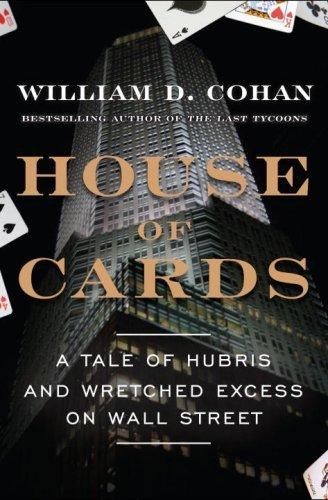
House of Cards: A Tale of Hubris and Wretched Excess on Wall Street
2009 · 12 min · 8 lessons
Cohan's history of Bear Stearns from 1923 scrappiness to subprime collapse, tracing how a culture of trading swagger and leverage made an 85-year-old institution die in seventy-two hours.
Bear Stearns built its personality in the 1920s as the scrappy outsider's firm (traders over bankers, hustle over pedigree) and kept that identity for 85 years, through the greenmail era, the rise of the mortgage machine, and the fateful late decision to double down on subprime securitization while rivals retreated. Cohan details the anatomy of the run: hedge-fund collapses (two Bear-managed subprime funds imploding in summer 2007) destroying counterparty trust, repo financing evaporating as lenders' risk desks...
Lessons in the summary
- Funding Structure Is Life Expectancy
- Counterparty Trust Is the Real Currency
- Culture Compounds Too
- Concentration: The Machine You Love Becomes the Bet You Are
- The Weekend Is the Real Unit of Crisis Time
- Government Becomes Your Partner Whether You Like It or Not
- Leadership Succession at the Top of a Leverage Cycle
- Write the Obituary While Alive
Lines worth keeping
- In a panic, your balance sheet does not matter as much as your lender's opinion of your balance sheet at 3 a.m.
- The culture that made you can also unmaketh you: the swagger that won the eighties wrote the checks the century could not cash.
- Repo financing is a relationship measured in hours. Everything else in banking is measured in quarters.
Questions William D. Cohan helps answer
Read nearby authors next
- Nassim Nicholas Taleb 4 books
- Morgan Housel 3 books
- Saurabh Mukherjea 3 books
- Tony Robbins 3 books
- Michael Lewis 2 books
- Raghuram Rajan 2 books
- Scott Galloway 2 books
- Abhijit V. Banerjee & Esther Duflo 1 book